

ausbrüten
to hatch
To incubate eggs with warmth until the young develop inside them and hatch.
EXAMPLE
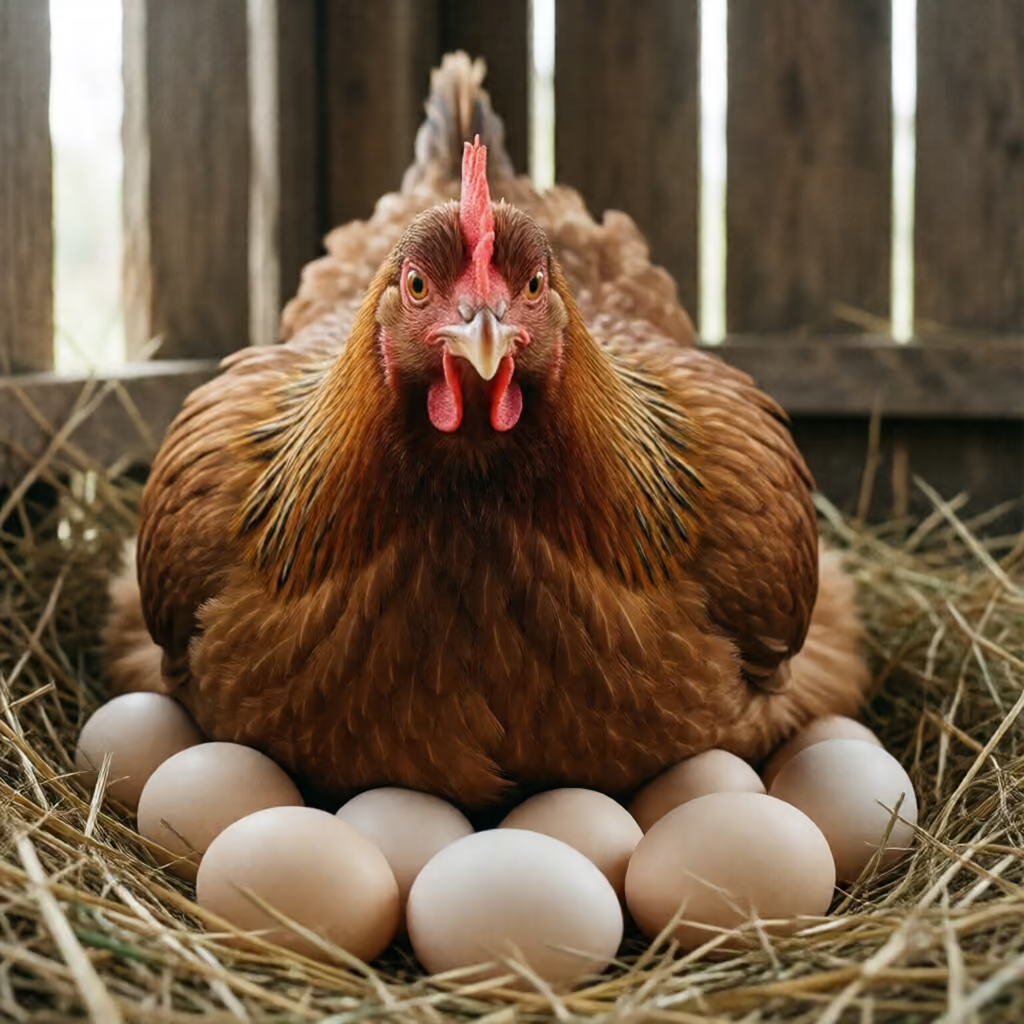
Die Henne brütet in ihrem Nest zwölf Eier aus.
The hen is hatching twelve eggs in her nest.
to hatch / concoct / come down with
ausbrüten – brütete aus – hat ausgebrütet
Loading your saved state.
to hatch
To incubate eggs with warmth until the young develop inside them and hatch.
Die Henne brütet in ihrem Nest zwölf Eier aus.
The hen is hatching twelve eggs in her nest.

to hatch / concoct
Colloquially, to calmly develop and think up a plan, idea, or trick.
Die beiden haben offenbar einen ungewöhnlichen Plan ausgebrütet.
The two of them have apparently hatched an unusual plan.

to be coming down with
Colloquially, to develop an infectious illness before the first clear symptoms appear.
Er fühlt sich schlapp und brütet wahrscheinlich eine Grippe aus.
He feels run-down and is probably coming down with the flu.
| ich | brüte aus |
|---|---|
| du | brütest aus |
| er/sie/es | brütet aus |
| wir | brüten aus |
| ihr | brütet aus |
| sie | brüten aus |
| ich | brütete aus |
|---|---|
| du | brütetest aus |
| er/sie/es | brütete aus |
| wir | brüteten aus |
| ihr | brütetet aus |
| sie | brüteten aus |
| ich | habe ausgebrütet |
|---|---|
| du | hast ausgebrütet |
| er/sie/es | hat ausgebrütet |
| wir | haben ausgebrütet |
| ihr | habt ausgebrütet |
| sie | haben ausgebrütet |
| du | brüte aus! brüt aus! |
|---|---|
| ihr | brütet aus! |
| Sie | brüten Sie aus! |
| ich | hatte ausgebrütet |
|---|---|
| du | hattest ausgebrütet |
| er/sie/es | hatte ausgebrütet |
| wir | hatten ausgebrütet |
| ihr | hattet ausgebrütet |
| sie | hatten ausgebrütet |
| ich | werde ausbrüten |
|---|---|
| du | wirst ausbrüten |
| er/sie/es | wird ausbrüten |
| wir | werden ausbrüten |
| ihr | werdet ausbrüten |
| sie | werden ausbrüten |
| ich | brüte aus |
|---|---|
| du | brütest aus |
| er/sie/es | brüte aus |
| wir | brüten aus |
| ihr | brütet aus |
| sie | brüten aus |
Used for reported speech.
| ich | brütete aus |
|---|---|
| du | brütetest aus |
| er/sie/es | brütete aus |
| wir | brüteten aus |
| ihr | brütetet aus |
| sie | brüteten aus |
Used for wishes and “would”.
| infinitive | ausbrüten |
|---|---|
| with zu | auszubrüten |
| present participle | ausbrütend |
| past participle | ausgebrütet |
'Ausbrüten' (to hatch / concoct / come down with) is a separable verb. In a main clause, 'aus' appears at the end of the sentence; in a subordinate clause, the verb remains together. In the infinitive with 'zu', 'zu' comes between the prefix and the stem.
Der Vogel brütet die Eier geduldig aus.
The bird patiently hatches the eggs.
Die Forscher beobachten, wie der Vogel die Eier ausbrütet.
The researchers observe how the bird hatches the eggs.
Es dauert mehrere Wochen, die Eier auszubrüten.
It takes several weeks to hatch the eggs.
When referring to the development of young animals, 'ausbrüten' (to hatch) is especially often used with 'Eier' (eggs) or 'Gelege' (clutch). Birds or other animals that incubate their eggs often appear as the subject.
Der Pinguin brütet das Ei abwechselnd mit seinem Partner aus.
The penguin takes turns incubating the egg with its partner.
For plans, ideas, and tricks, 'ausbrüten' (to hatch / concoct) is usually used figuratively and colloquially. The word often fits situations in which someone spends some time thinking about something and preparing it.
Die Schülerinnen haben für das Schulfest eine originelle Überraschung ausgebrütet.
The students hatched an original surprise for the school festival.
In this colloquial usage, 'ausbrüten' (to be coming down with) is typically used with an infectious illness. The context often suggests early nonspecific signs such as tiredness, chills, or feeling unwell.
Nach dem langen Flug fühlt sie sich müde und brütet vielleicht eine Erkältung aus.
After the long flight, she feels tired and may be coming down with a cold.