

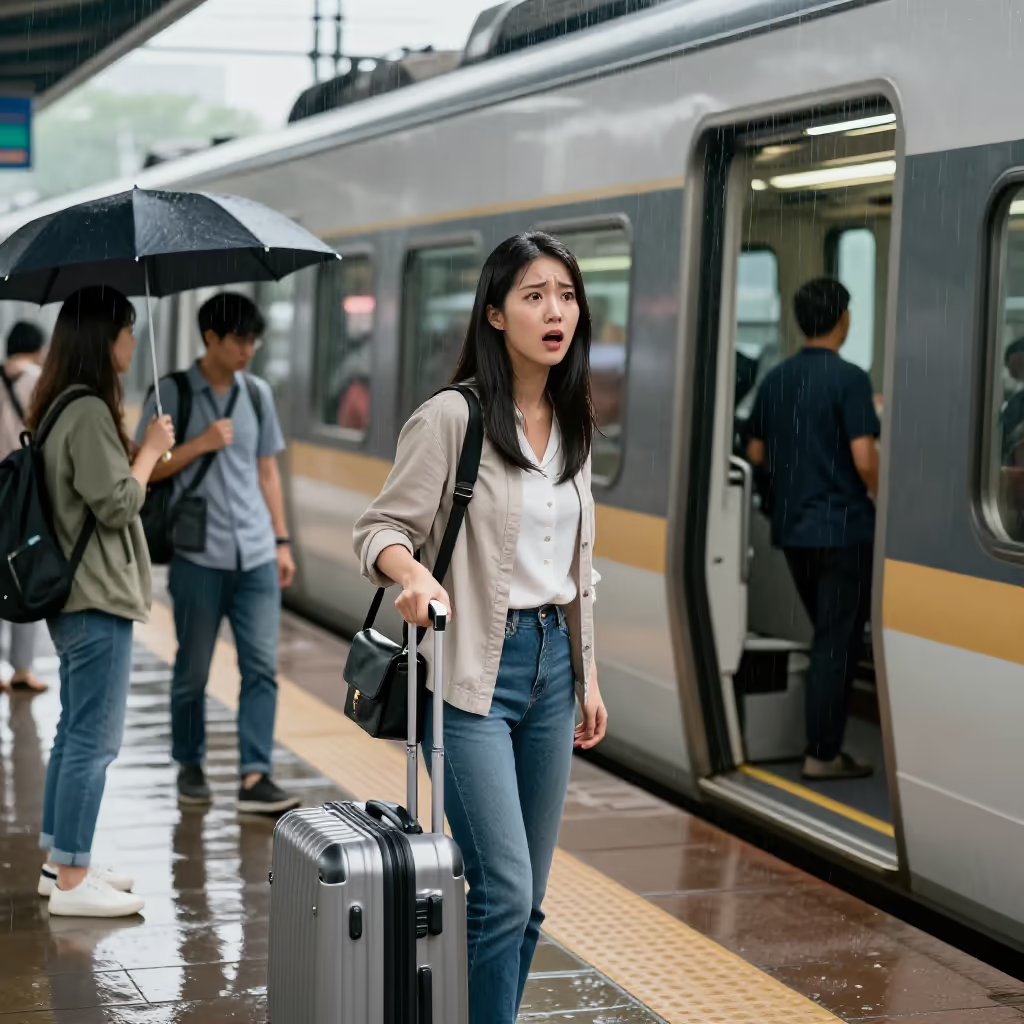
Used to express surprise, disappointment, or annoyance that something happens at a particularly inconvenient or unexpected time, place, or to a particular person.
example
Ausgerechnet heute, wo ich meinen Regenschirm vergessen habe, fängt es an zu regnen.
Today of all days, when I forgot my umbrella, it starts raining.

Usage tips
Origin and meaning
'Ausgerechnet' is the past participle form of 'ausrechnen' (to calculate). As an adverb, however, it has a figurative, emotional meaning and expresses surprise or annoyance, not an actual calculation.
EXAMPLE
Warum musst du ausgerechnet jetzt gehen, wo der Film spannend wird?
Why do you have to leave now of all times, when the film is getting exciting?
Word order
'Ausgerechnet' usually comes directly before the word or phrase that is felt to be especially inconvenient or unexpected. It can refer to people, places, times, or things.
EXAMPLE
Von allen Leuten musste ausgerechnet er den Preis gewinnen.
Of all people, he had to win the prize.
Emotional tone
This word is not neutral. It always adds a subjective, emotional note of irony, disappointment, or disbelief to a sentence.
EXAMPLE
Mein Auto ist die ganze Woche gefahren, aber ausgerechnet heute Morgen springt es nicht an.
My car worked all week, but this morning of all mornings it won't start.
Compare with
near_synonym · confusable
ausgerechnet vs gerade
right now / straight
'gerade' and 'ausgerechnet' can both emphasize that something stands out in a particular way. However, 'ausgerechnet' is used mainly when something is surprising, annoying, or inconvenient. 'gerade' is somewhat more general in this meaning: it can mean 'especially' or 'this exact person, time, or thing'. Learners may confuse the words because both can often be used in similar sentences. When annoyance or surprise is strongly implied, 'ausgerechnet' is usually the better fit.
ausgerechnet
Noah hat ausgerechnet beim wichtigen Training seine Schuhe vergessen.
Noah forgot his shoes during the important training session of all times.
gerade
Gerade im Sommer geben wir mehr Geld für Ausflüge aus.
Especially in summer, we spend more money on outings.