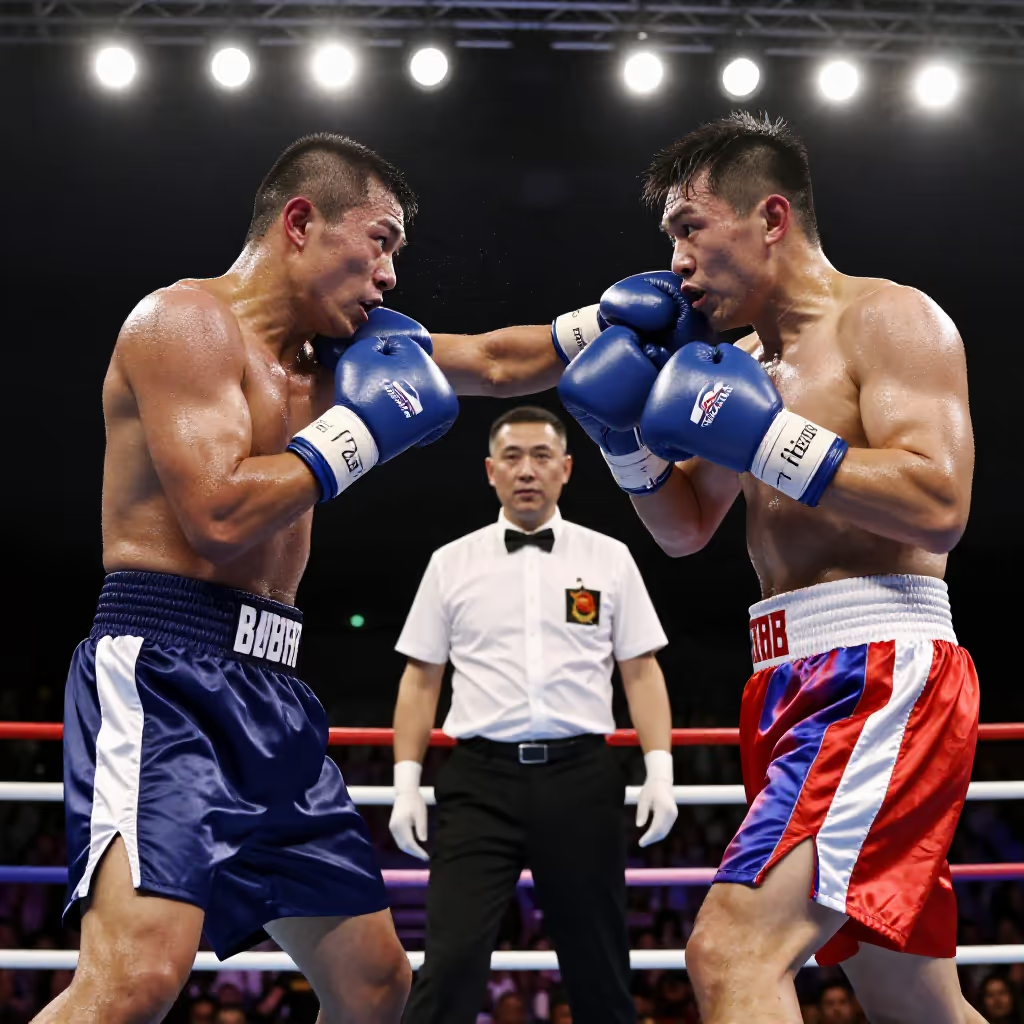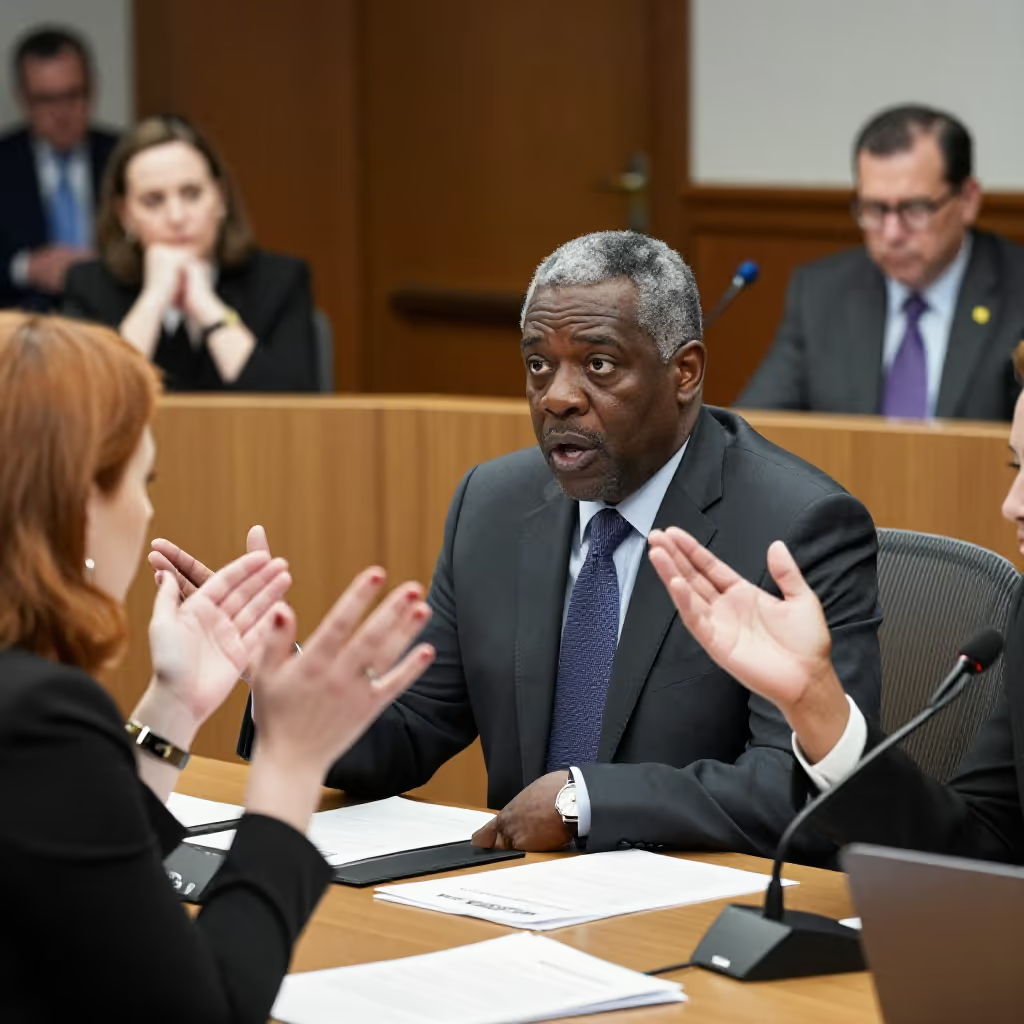
A verbal or intellectual conflict, a debate, or an argument between people or groups with different opinions.
example
Die politische Auseinandersetzung über das neue Gesetz war sehr hitzig.
The political dispute over the new law was very heated.

Usage tips
Word structure
The word comes from the verb 'sich auseinandersetzen' (to deal with/engage with). It consists of 'aus' (out), 'einander' (each other), and 'setzen' (to set/put). The basic idea is to mentally take things 'apart' in order to analyze them, or to place different opinions side by side in order to discuss them.
EXAMPLE
Die Auseinandersetzung mit dem Thema erfordert viel Zeit.
Engagement with the topic requires a lot of time.
Context clue
The preposition 'mit' (+ dative) almost always indicates the meaning 'gedankliche Beschäftigung' (mental engagement/study). If it is about a dispute, the prepositions 'über' (+ accusative) for the topic or 'zwischen' (+ dative) for the parties are often used.
EXAMPLE
Ihre Auseinandersetzung mit der deutschen Philosophie ist beeindruckend.
Her engagement with German philosophy is impressive.
Typical collocations
In the sense of an argument or debate, 'Auseinandersetzung' (dispute) is often combined with adjectives such as 'hitzig' (heated), 'politisch' (political), or 'heftig' (fierce). Typical verbs are 'eine Auseinandersetzung führen' (to have/conduct a dispute) or 'eine Auseinandersetzung scheuen' (to avoid/shy away from a dispute).
EXAMPLE
Die beiden Kandidaten lieferten sich eine hitzige Auseinandersetzung im Fernsehen.
The two candidates had a heated dispute on television.
Fixed preposition
When it is about intensive engagement with a topic, 'Auseinandersetzung' (engagement) is always used with the preposition 'mit' and the dative.
EXAMPLE
Das Buch ist eine kritische Auseinandersetzung mit dem Kapitalismus.
The book is a critical engagement with capitalism.
Compare with
near_synonym · confusable
Auseinandersetzung vs Krieg
war
'der Krieg' and 'die Auseinandersetzung' can both mean a conflict. 'Auseinandersetzung' is especially suitable when people or groups argue or discuss different opinions. The word can sound serious, but it does not have to be violent. 'Krieg' is much stronger and usually means an armed conflict; colloquially, it can also describe a very intense hostility. The risk of confusion arises because both words express conflict and opposition. For discussions and verbal conflicts, 'Auseinandersetzung' is more precise.
Auseinandersetzung
Nach der Auseinandersetzung im Büro sprachen die Kollegen lange mit der Chefin.
After the dispute at the office, the colleagues spoke with the boss for a long time.
Krieg
Der Krieg zerstörte viele Städte und brachte großes Leid.
The war destroyed many cities and caused great suffering.