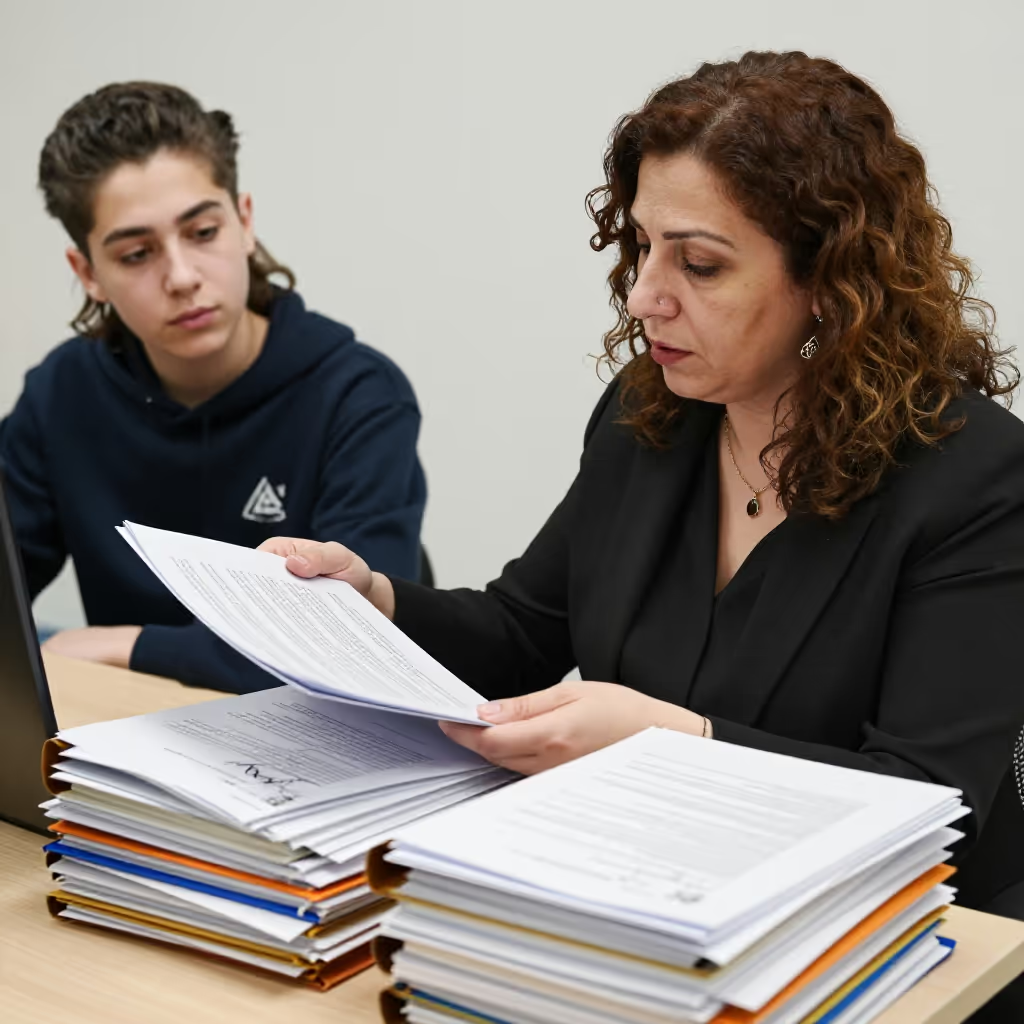
A case, person, or thing that does not correspond to a general rule, norm, or expectation.
example
Normalerweise ist das Museum montags geschlossen, aber heute machen sie eine Ausnahme.
Normally the museum is closed on Mondays, but today they are making an exception.

Usage tips
Word structure
The word is made up of 'aus' (out) and 'Nahme' (from 'nehmen' — to take). An 'Ausnahme' (exception) is therefore literally something that is “taken out” of a rule or group.
EXAMPLE
Für diesen besonderen Fall nehmen wir ihn von der Regel aus.
For this special case, we are exempting him from the rule.
Typical collocation
A very common and useful expression is 'eine Ausnahme machen' (to make an exception). It means that you deviate from a rule for a special case.
EXAMPLE
Der Lehrer macht eine Ausnahme und erlaubt dem Schüler, den Test später zu schreiben.
The teacher makes an exception and allows the student to take the test later.
Fixed expression with dative
The phrase 'mit Ausnahme von' (with the exception of) is a fixed expression that functions like a preposition. It is always followed by the dative.
EXAMPLE
Alle waren pünktlich, mit Ausnahme von meinem Bruder.
Everyone was on time, with the exception of my brother.
Compare with
synonym · confusable
Ausnahme vs außer
except / besides
'außer' and 'mit Ausnahme von' both express that someone or something is not included. 'außer' is short and very common in everyday language. 'Mit Ausnahme von' is longer and sounds a bit more formal or more precise. 'die Ausnahme' is also a noun and refers to the special case itself. Learners may confuse the words because 'Ausnahme' in the phrase does almost the same job as 'außer'. As a practical rule: in normal conversations, people often say 'außer'. When writing or formulating something especially precisely, 'mit Ausnahme von' (with the exception of) works well.
Ausnahme
Mit Ausnahme von Clara haben alle die Miete schon bezahlt.
With the exception of Clara, everyone has already paid the rent.