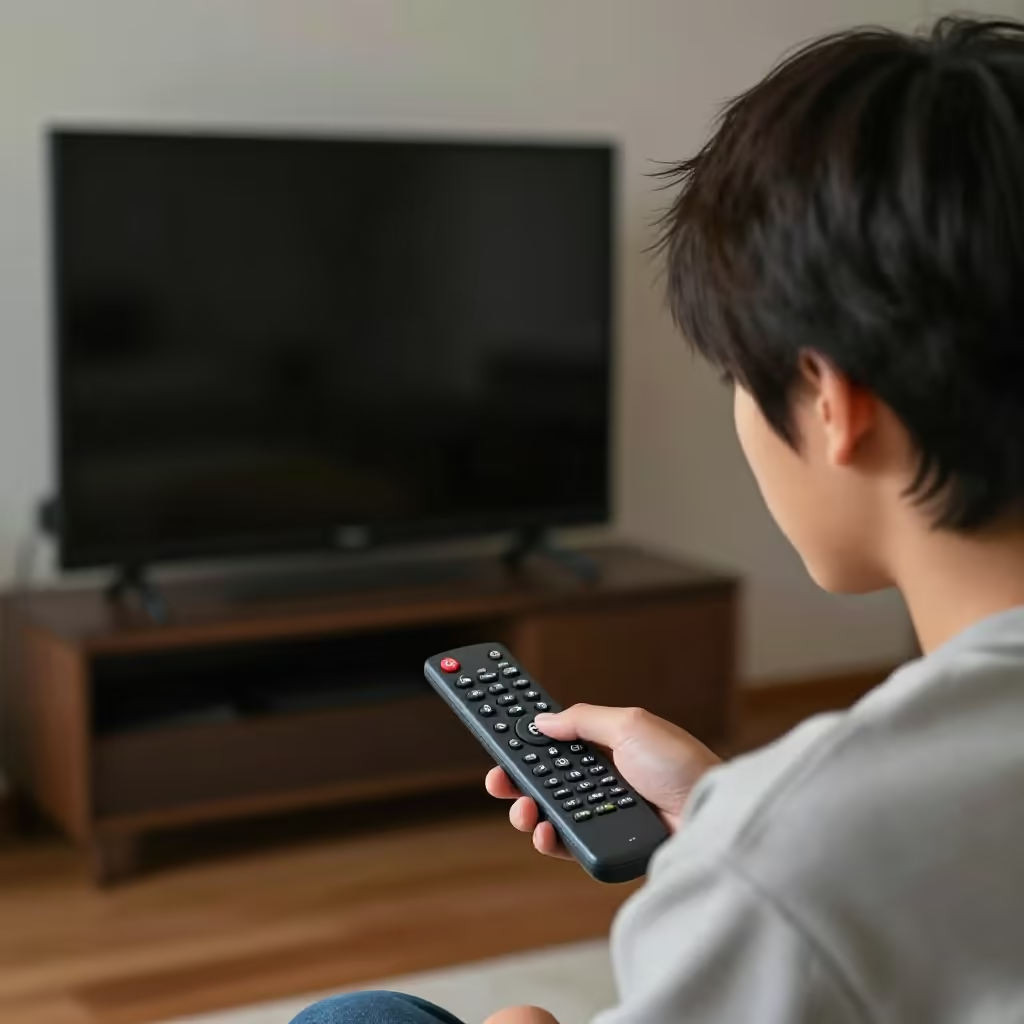
To put an electrical device, machine, or function out of operation by cutting off the power supply.
example
Vergiss bitte nicht, den Fernseher auszuschalten, bevor du schlafen gehst.
Please don't forget to turn off the TV before you go to sleep.

Usage tips
Separable verb
'Ausschalten' (to turn off / eliminate) is a separable verb. The prefix 'aus-' goes at the end in a main clause. In subordinate clauses or in the infinitive with 'zu', the verb stays together.
EXAMPLE
Schaltest du bitte das Licht aus?
Will you please turn off the light?
Typical collocations
In the literal meaning, 'ausschalten' (to turn off) is used with electrical devices or functions. Common objects are: das Licht (the light), das Radio (the radio), den Fernseher (the TV), das Handy (the cell phone), den Motor (the engine), or die Heizung (the heating).
EXAMPLE
Bevor wir in den Urlaub fahren, schalten wir die Heizung aus.
Before we go on vacation, we turn off the heating.
Context clue
You can recognize this figurative meaning from the context of competition, sports, or conflict. The object here is not a device, but a person, group, or factor, e.g. ein Gegner (an opponent), ein Konkurrent (a competitor), or die Konkurrenz (the competition).
EXAMPLE
Die Firma versucht, die Konkurrenz durch niedrigere Preise auszuschalten.
The company is trying to eliminate the competition through lower prices.
Reflexive use
In the meaning 'to mentally switch off', the verb is always used reflexively in German: 'sich ausschalten'. The reflexive pronoun is in the accusative and refers back to the subject.
EXAMPLE
Beim Joggen kann ich mich am besten ausschalten.
I can switch off best when jogging.
Compare with
near_synonym · confusable
ausschalten vs ausschließen
to exclude / rule out
'ausschließen' and 'ausschalten' can both mean that something no longer takes part or no longer plays a role. However, 'ausschließen' is used more with people, groups, rules, or possibilities: someone is not allowed to participate, or a cause is very unlikely. 'ausschalten' is very typically used with devices. It can also mean to eliminate an opponent or disruptive factor from a process. The words can be confused because both begin with 'aus-' and sometimes have a similar result. The simple difference is: you rule out possibilities with 'ausschließen', and you turn off devices with 'ausschalten'.
ausschalten
Bitte schalte den Computer aus, bevor du nach Hause gehst.
Please turn off the computer before you go home.
ausschließen
Nach dem Gespräch kann ich ein Missverständnis nicht ausschließen.
After the conversation, I can't rule out a misunderstanding.