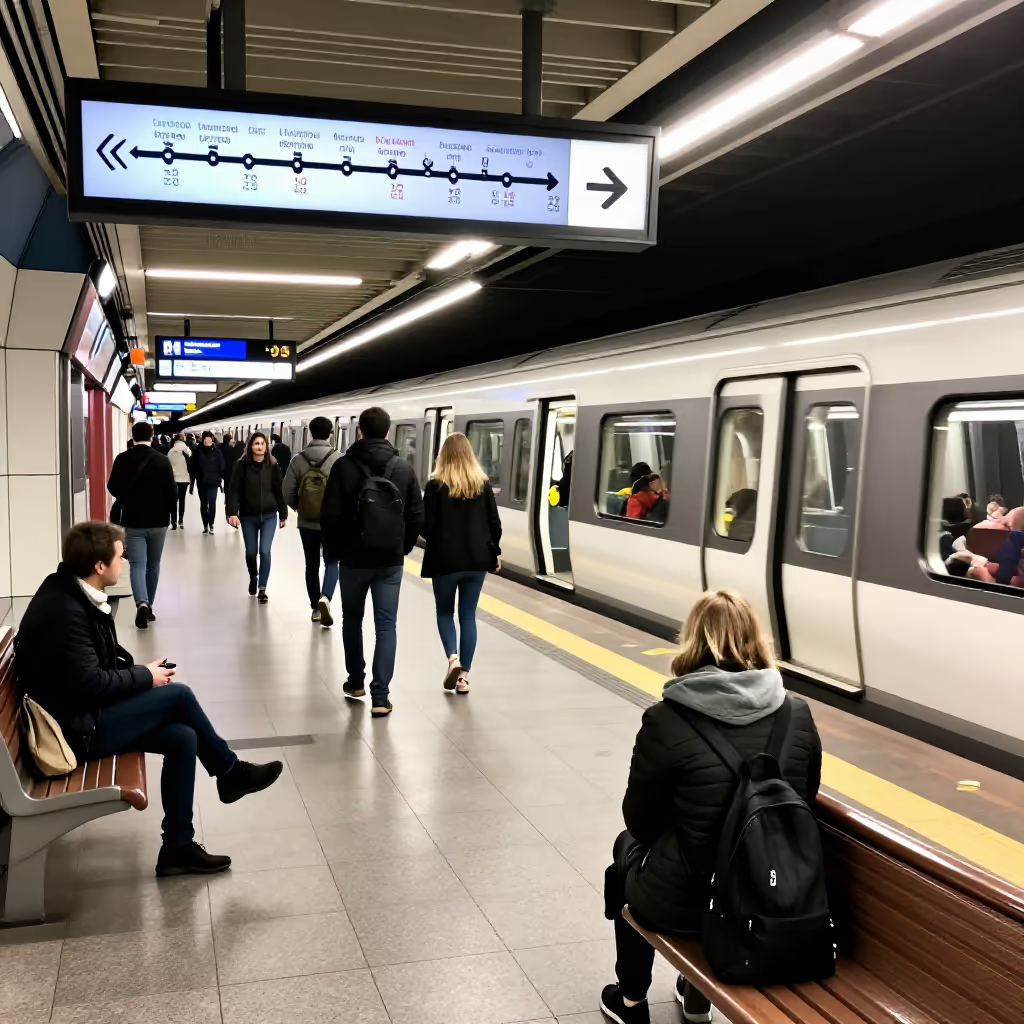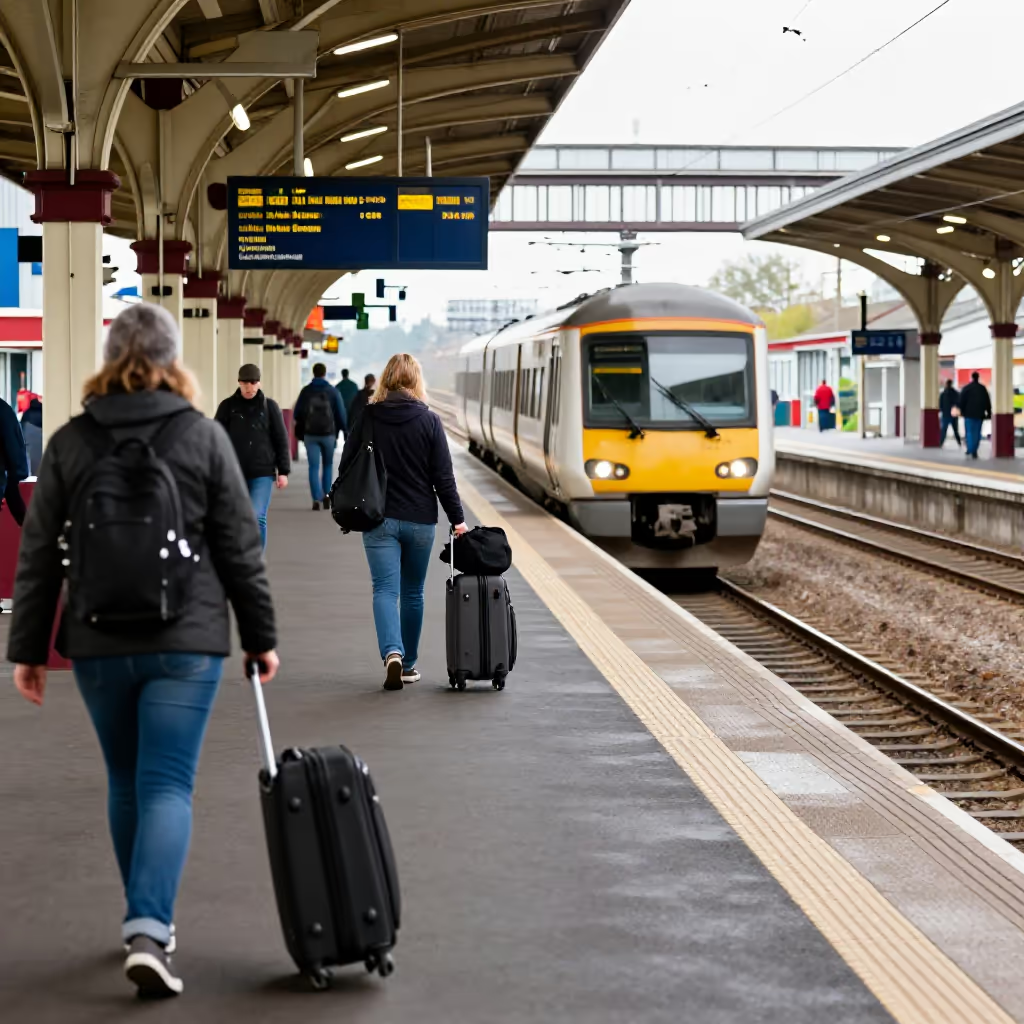
A building or facility on a railway line where trains stop so that passengers can get on and off and goods can be loaded.
example
Mein Zug fährt in zwanzig Minuten vom Hauptbahnhof ab.
My train leaves from the main station in twenty minutes.

Usage tips
Compound word
'Bahnhof' (train station) is a compound noun made up of 'die Bahn' (railway) and 'der Hof' (an open yard/courtyard). Literally, it is therefore a 'yard for the railway', which describes its function as a stopping point for trains well.
EXAMPLE
Viele alte Bahnhöfe haben eine beeindruckende Architektur.
Many old train stations have impressive architecture.
Important prepositions
Different prepositions are used depending on whether you are describing a location or a direction. You wait 'am Bahnhof' (at the station, dative), you go/drive 'zum Bahnhof' (to the station, dative), and the train comes 'vom Bahnhof' (from the station, dative).
EXAMPLE
Ich treffe dich um 15 Uhr am Bahnhof.
I'll meet you at the train station at 3 p.m.
Typical compounds
The word 'Bahnhof' (train station) is the basis for many more specific terms. Depending on the means of transport, people speak of the 'Hauptbahnhof' (main station, Hbf), 'U-Bahnhof' (subway station), or 'Busbahnhof' (bus station).
EXAMPLE
Der Hauptbahnhof in Berlin ist einer der größten in Europa.
The main station in Berlin is one of the largest in Europe.
Colloquial expression
The expression 'nur Bahnhof verstehen' is colloquial and means that you understand absolutely nothing. It is used when a topic is too complicated or explained unclearly.
EXAMPLE
Er hat mir seine wissenschaftliche Arbeit erklärt, aber ich habe nur Bahnhof verstanden.
He explained his scientific paper to me, but I didn't understand a thing.
Compare with
near_synonym · confusable
Bahnhof vs Station
station
'der Bahnhof' and 'die Station' can both be places where public transport stops. 'Bahnhof' is used mainly for trains and often means the whole facility with tracks, platforms, and a building. 'Station' is more general and is especially suitable for the subway, commuter rail, or buses, depending on the city and means of transport. Learners may confuse the words because you can get on and off at both places. If it is clearly about a train and the station building, 'Bahnhof' is more natural. For subway systems or individual stops, 'Station' often sounds appropriate.
Bahnhof
Simon wartet vor dem Bahnhof auf seinen Zug nach Köln.
Simon is waiting in front of the train station for his train to Cologne.
Station
Er steigt an der nächsten Station aus und geht zu Fuß weiter.
He gets off at the next station and continues on foot.