


der Haufen
pile
An unordered collection or stack of things.
EXAMPLE
Auf dem Schreibtisch lag ein großer Haufen Papiere.
There was a large pile of papers on the desk.
pile / bunch
Loading your saved state.
pile
An unordered collection or stack of things.
Auf dem Schreibtisch lag ein großer Haufen Papiere.
There was a large pile of papers on the desk.

a bunch / a lot
Colloquial for a large amount or number of something.
Ich habe noch einen Haufen Arbeit zu erledigen.
I still have a bunch of work to do.

bunch / lot
Colloquial and often slightly derogatory for a group of people.
Was will dieser komische Haufen von uns?
What does this weird bunch want from us?
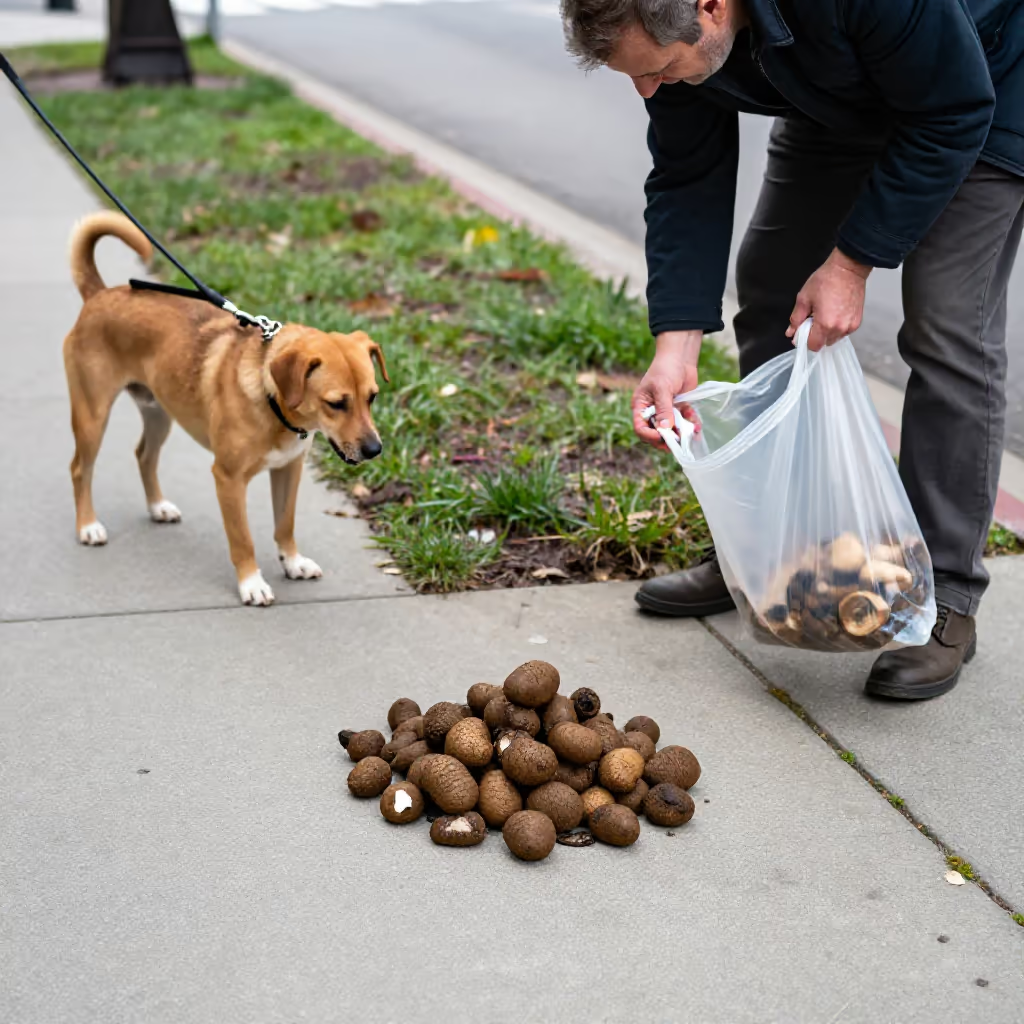
pile / poop
A collection of excrement, usually from an animal.
Pass auf, dass du nicht in den Hundehaufen trittst.
Watch out that you don't step in the pile of dog poop.
'Der Haufen' (the pile) is related to the verb 'häufen' (to pile up), which means 'to heap something up into a mound.' So a Haufen is the result of häufen.
Die Kinder häuften den Sand zu einer großen Burg.
The children piled the sand up into a large castle.
When referring to an unordered quantity, 'Haufen' (pile) is often combined with materials or objects. Typical examples are 'ein Haufen Sand' (a pile of sand), 'ein Haufen Steine' (a pile of stones), or 'etwas auf einen Haufen werfen' (to throw something into a pile).
Im Garten liegt ein großer Haufen Laub.
There is a large pile of leaves in the garden.
In the meaning 'eine große Menge' (a large amount), 'ein Haufen' (a bunch / a lot) is very colloquial. It is used in spoken language for both countable and uncountable things.
Ich habe einen Haufen Ideen, aber keine Zeit.
I have a bunch of ideas, but no time.
When 'Haufen' (bunch / lot) describes a group of people, the word often has a negative or distant undertone. It sounds more disrespectful than the neutral word 'Gruppe' (group).
Ich will mit diesem Haufen nichts zu tun haben.
I don't want anything to do with this lot.
In the meaning 'Exkremente' (excrement), the word is almost always used in the compound 'der Hundehaufen' (pile of dog poop). It is a very everyday word for referring to dog feces.
In vielen Parks gibt es Strafen für nicht entfernte Hundehaufen.
In many parks, there are fines for dog poop that is not removed.
group
Gruppe is a neutral term for several people who belong together. Haufen can also informally mean a group of people, but it often sounds disorganized or slightly derogatory. Use Gruppe for an objective description; Haufen suggests a casual or negative view of the people.

Vor dem Eingang wartet schon wieder dieser laute Haufen Jugendlicher.
That loud bunch of teenagers is waiting by the entrance again.
Vor dem Eingang wartet eine Gruppe von Jugendlichen.
A group of teenagers is waiting by the entrance.