

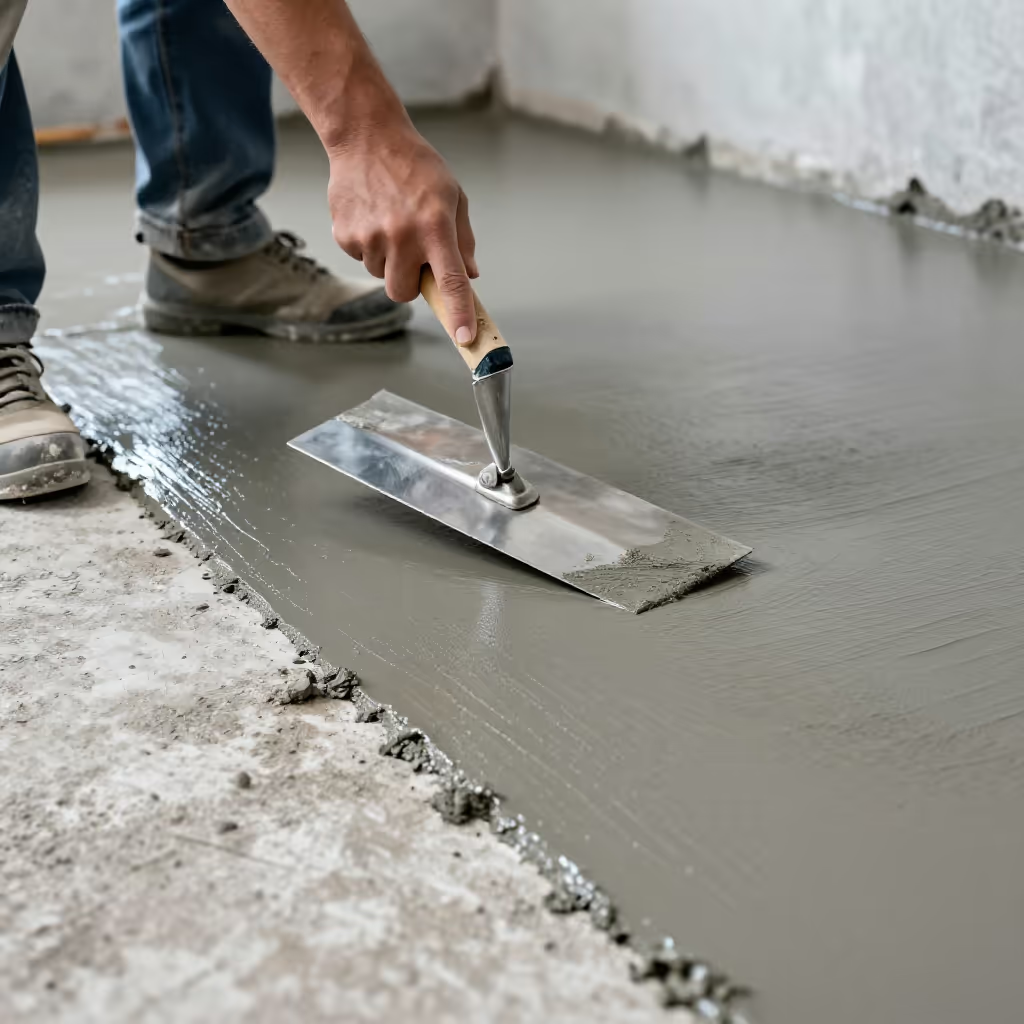
die Schicht
layer
A layer or coating of material that lies on a surface or is embedded between other layers.
EXAMPLE
Eine dicke Schicht Staub bedeckte die alten Bücher.
A thick layer of dust covered the old books.
layer / shift
Loading your saved state.
layer
A layer or coating of material that lies on a surface or is embedded between other layers.
Eine dicke Schicht Staub bedeckte die alten Bücher.
A thick layer of dust covered the old books.

shift
A fixed period of work within a day in businesses or organizations that operate around the clock or in several time blocks.
Ich habe morgen Frühschicht und muss um 5 Uhr aufstehen.
I have the early shift tomorrow and have to get up at 5 a.m.

social class
A group of people in a society who have a similar social, economic, or educational status.
Die Studie analysiert die Unterschiede zwischen den sozialen Schichten.
The study analyzes the differences between the social classes.
You can easily recognize the meaning of 'Schicht' (layer / shift) from the context. In connection with work, a factory, or a hospital, it means the work period. If it is about materials such as dust, paint, or earth, it means a layer. In a social or political context, it refers to groups in society.
Mein Bruder arbeitet im Krankenhaus in der Nachtschicht.
My brother works the night shift at the hospital.
When 'Schicht' means a layer, it is often used with materials and the verbs 'auftragen' (to apply) or 'bilden' (to form). Typical combinations are 'eine Schicht Farbe' (a layer of paint), 'eine Schicht Lack' (a layer of varnish), or 'eine Eisschicht' (a layer of ice).
Der Maler muss noch eine zweite Schicht Farbe auftragen.
The painter still has to apply a second layer of paint.
In a work context, 'Schicht' is often combined into words like 'Frühschicht' (early shift), 'Spätschicht' (late shift), or 'Nachtschicht' (night shift). The phrase 'in Schichten arbeiten' (to work in shifts) is also very common.
Ich kann heute Abend nicht, weil ich Spätschicht habe.
I can't come tonight because I have the late shift.
In this meaning, 'Schicht' is usually used with adjectives like 'sozial' (social), 'gesellschaftlich' (societal), 'ober-' (upper), 'mittel-' (middle), or 'unter-' (lower) to describe groups in society. It often appears in the plural.
Die Studie untersucht die Bildungschancen in verschiedenen gesellschaftlichen Schichten.
The study examines educational opportunities in different social classes.
film
Film and Schicht can both refer to a coating on a surface. A Film is especially thin and continuous. A Schicht, by contrast, can also be considerably thicker or be one of several layers. Use Film for a barely visible coating; otherwise, Schicht is usually more appropriate.
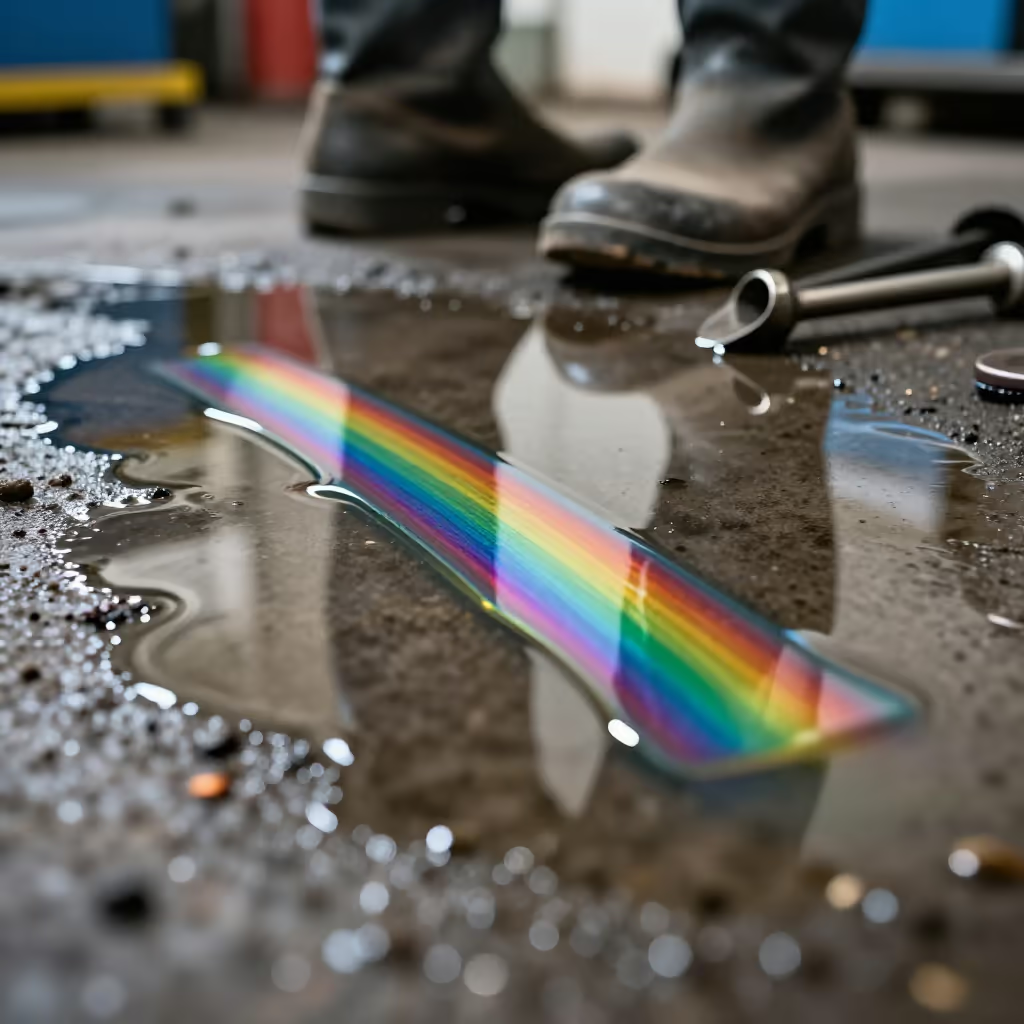
Eine dicke Schicht Lack schützt das Metall.
A thick layer of paint protects the metal.
Ein sehr dünner Film aus Öl schützt das Metall.
A very thin film of oil protects the metal.