

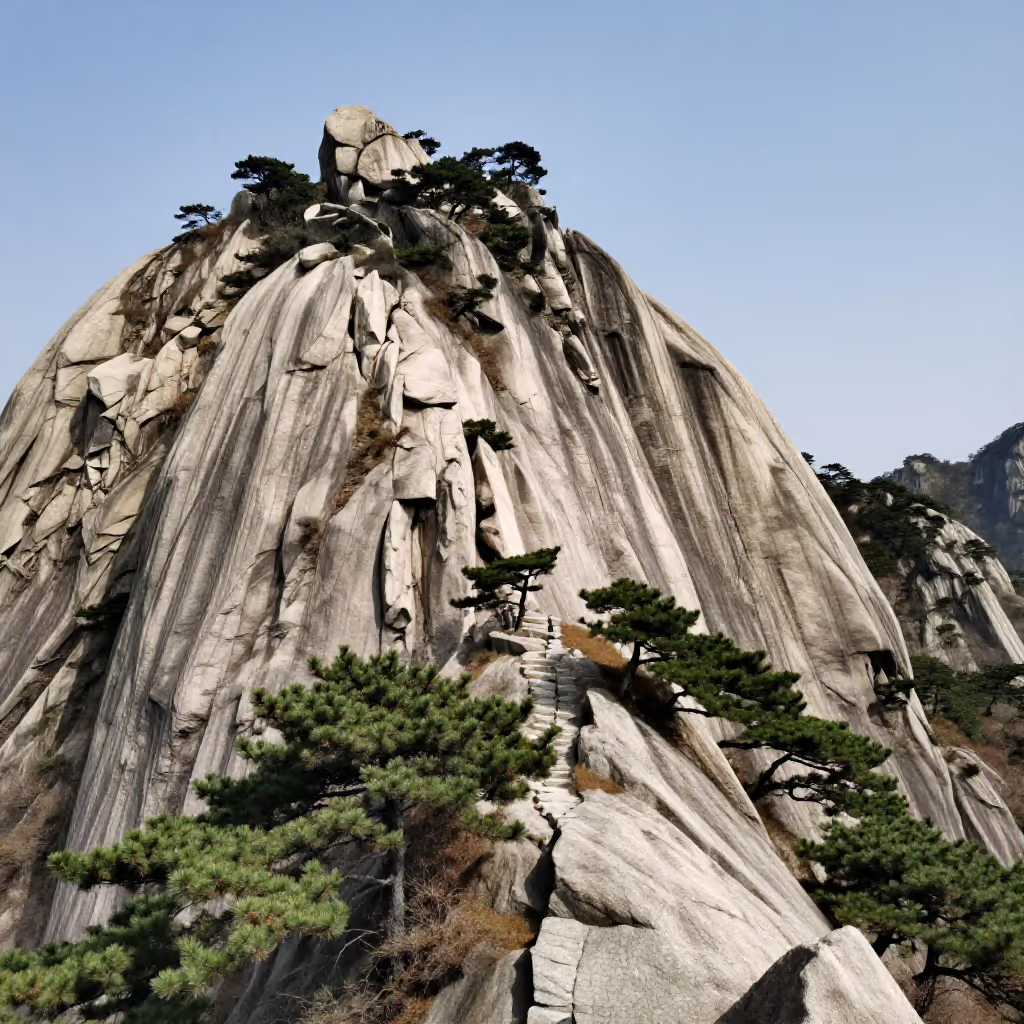
der Berg
mountain
A large, natural elevation of the earth's surface that is significantly higher than the surrounding land.
EXAMPLE
Wir sind auf den höchsten Berg der Region gewandert.
We hiked up the highest mountain in the region.
mountain
Loading your saved state.
mountain
A large, natural elevation of the earth's surface that is significantly higher than the surrounding land.
Wir sind auf den höchsten Berg der Region gewandert.
We hiked up the highest mountain in the region.
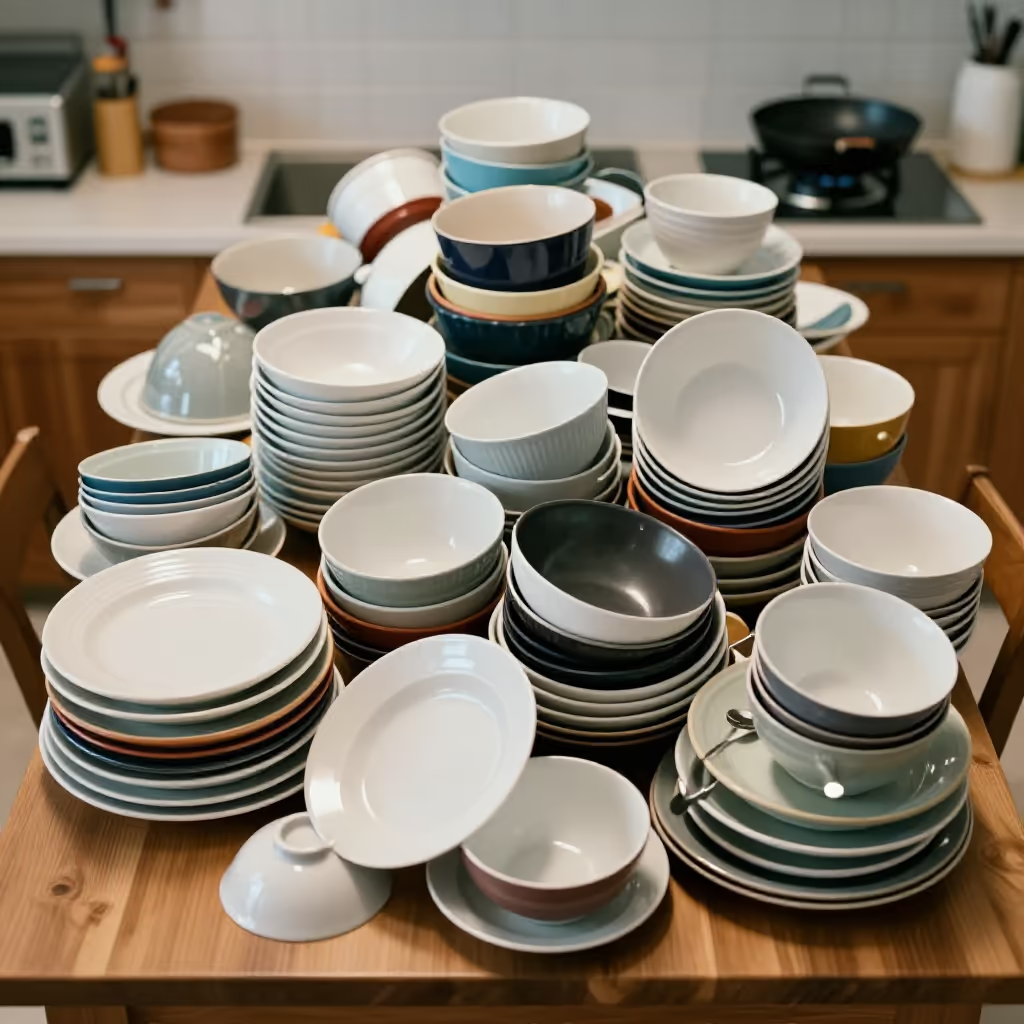
pile / mountain
A large amount or a large pile of something.
Nach der Party hatten wir einen riesigen Berg an schmutzigem Geschirr.
After the party, we had a huge pile of dirty dishes.

to be over the worst
To have overcome the worst phase of an illness or a difficult situation.
Der Patient hatte hohes Fieber, aber jetzt ist er über den Berg.
The patient had a high fever, but now he is over the worst.

to hold back
Not to state one's true opinion or intention openly; to hold something back.
Er hält mit seiner Kritik selten hinter dem Berg.
He rarely holds back with his criticism.
As with many location expressions, 'Berg' (mountain) distinguishes between direction (accusative) and location (dative). You travel 'in die Berge' (to the mountains, acc.), but you hike 'in den Bergen' (in the mountains, dat.).
Im Sommer fahren wir oft in die Berge.
In summer, we often go to the mountains.
To describe a large amount, the structure 'ein Berg' (a mountain/pile) + noun is used. The noun often comes directly after it, without a preposition.
Ich muss heute noch einen riesigen Berg Wäsche waschen.
I still have to wash a huge pile of laundry today.
The idiom 'über den Berg sein' (to be over the worst) is a fixed unit. It means that someone has survived the most difficult phase of an illness or crisis. The person who has made it through is the subject of the sentence.
Nach der Operation war er schnell wieder über den Berg.
After the operation, he was quickly over the worst again.
The expression 'mit etwas hinter dem Berg halten' (to hold something back) means to withhold one's opinion or information. It is often used in the negative to express that someone is very direct.
Sag mir die Wahrheit und halte nicht mit deiner Meinung hinter dem Berg!
Tell me the truth and don't hold back your opinion!
amount / crowd
Die Menge and der Berg can both express that there is a great deal of work. Die Menge describes the quantity neutrally. Der Berg is figurative and often makes the work seem large, burdensome, or difficult to manage.
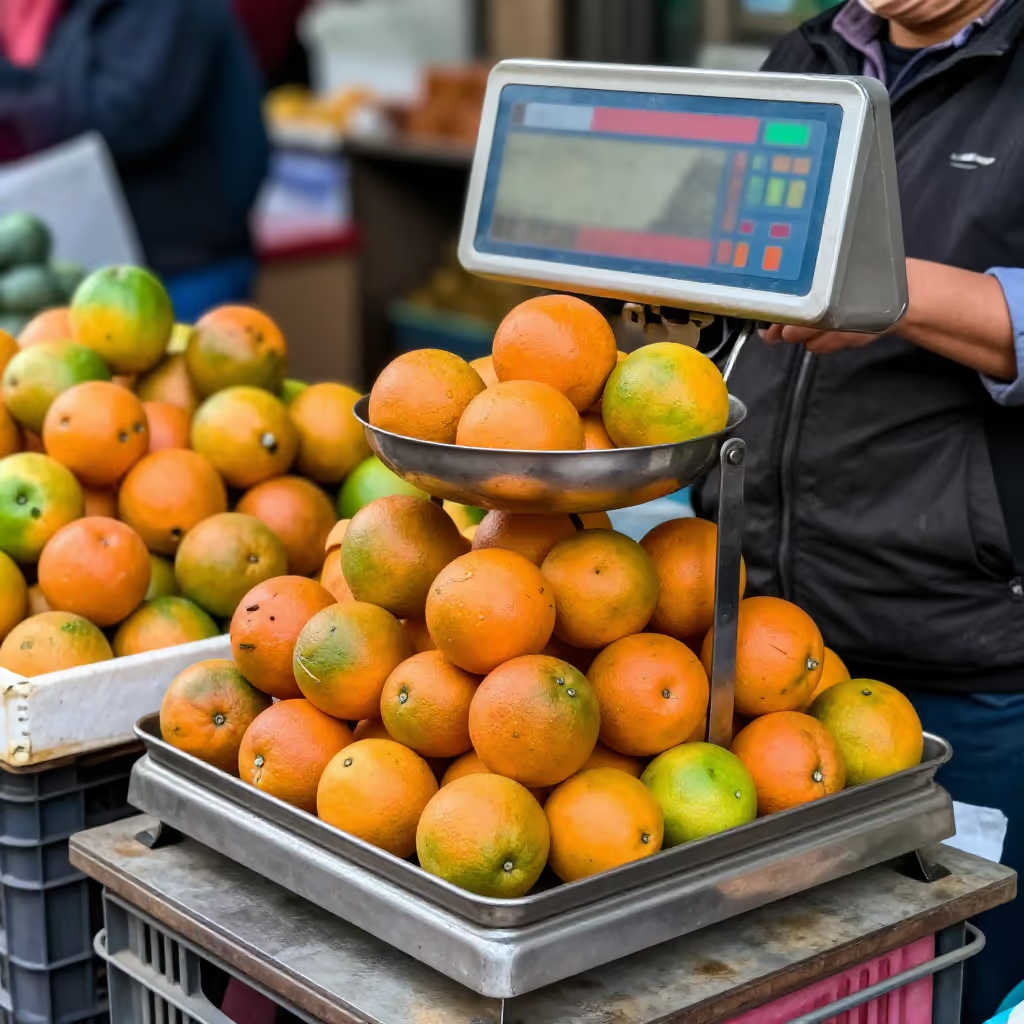
Heute wartet ein riesiger Berg Arbeit auf mich.
A huge mountain of work is waiting for me today.
Heute wartet eine große Menge Arbeit auf mich.
A large amount of work is waiting for me today.