

besetzen
to occupy
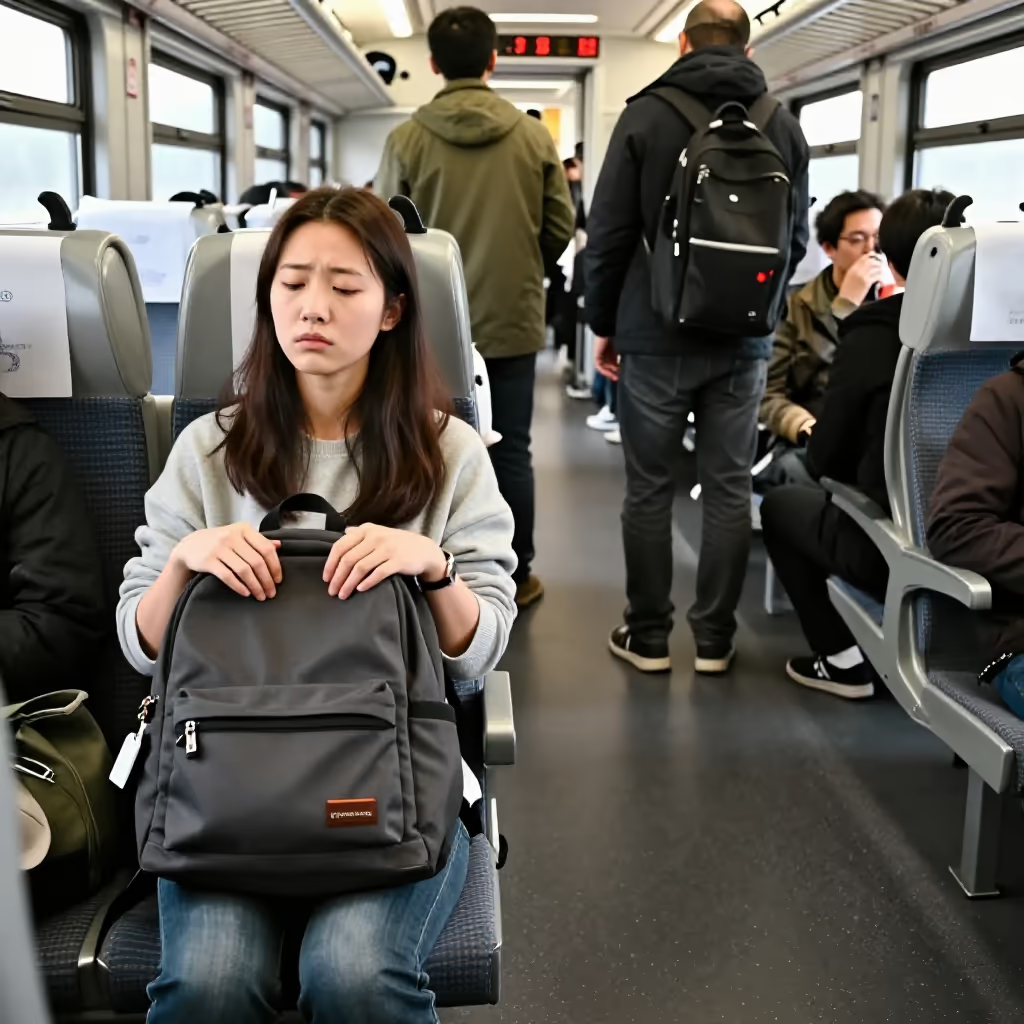
To claim or take a place, seat, or room for oneself so that it is no longer available to others.
EXAMPLE
Entschuldigung, ist dieser Stuhl noch besetzt?
Excuse me, is this chair still occupied?
to occupy / fill / cast
Loading your saved state.
to occupy
To claim or take a place, seat, or room for oneself so that it is no longer available to others.
Entschuldigung, ist dieser Stuhl noch besetzt?
Excuse me, is this chair still occupied?

to fill
To fill a position or job with a person.
Die Stelle des Abteilungsleiters muss dringend neu besetzt werden.
The department head position urgently needs to be filled again.

to cast
To cast a role in a film, play, or opera with an actor or singer.
Der Regisseur hat die Hauptrolle mit einer unbekannten Schauspielerin besetzt.
The director cast the leading role with an unknown actress.
to occupy
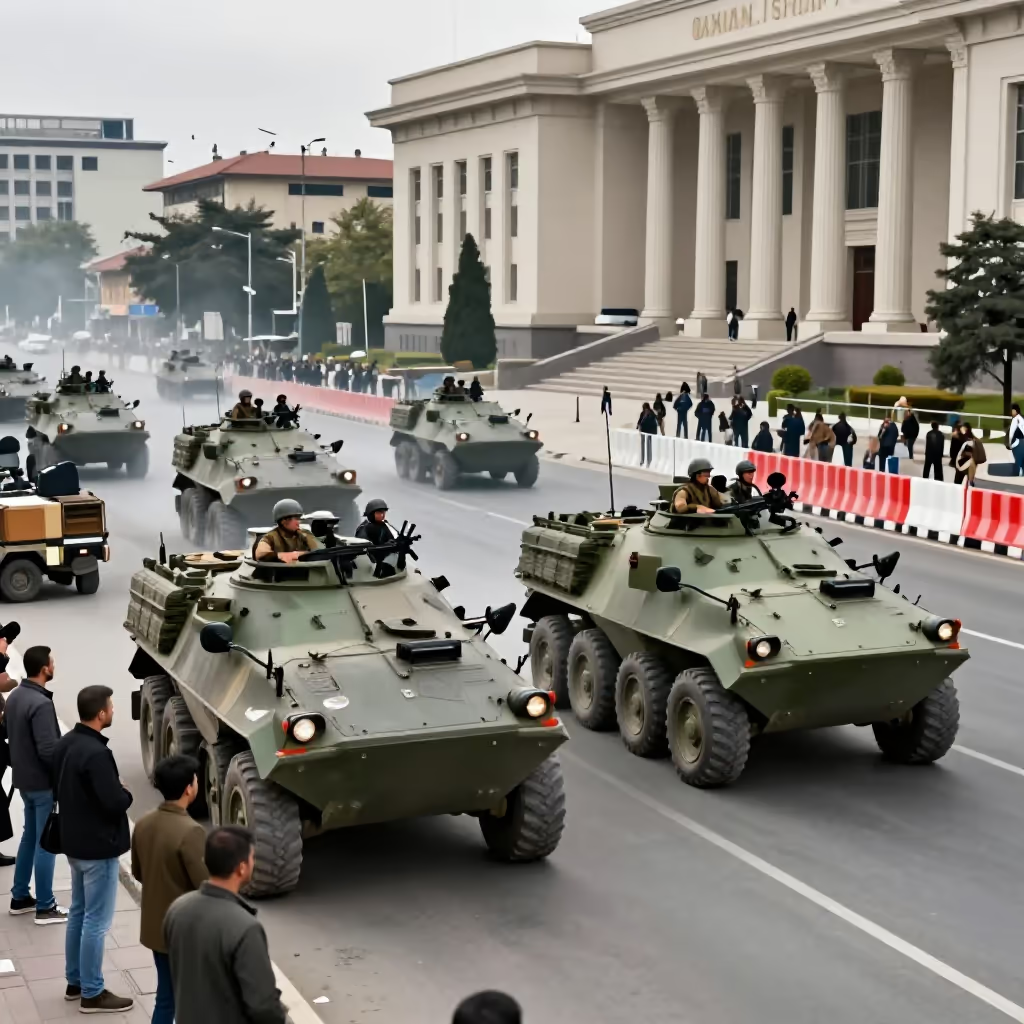
To take over a foreign territory or country militarily and assume control over it.
Die feindlichen Truppen haben die Hauptstadt besetzt.
The enemy troops occupied the capital.
to occupy
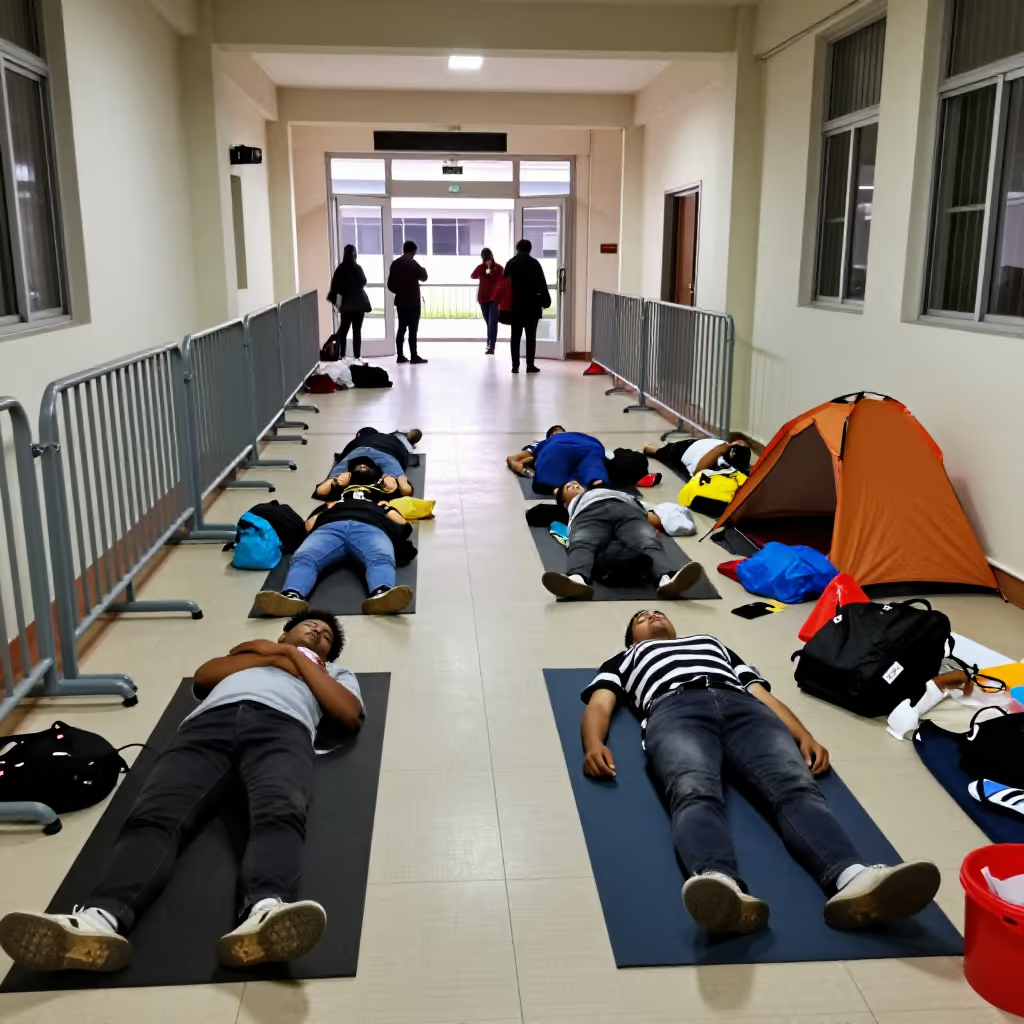
To take unlawful possession of a building or site as a form of protest.
Die Aktivisten haben das leerstehende Haus besetzt, um auf die Wohnungsnot aufmerksam zu machen.
The activists occupied the empty house to draw attention to the housing shortage.
'Besetzen' (to occupy / fill / cast) is an inseparable verb. The prefix 'be-' remains firmly attached to the stem verb 'setzen' (to set / put) in all tenses and sentence constructions.
Er besetzt seit einer Stunde den besten Platz am Fenster.
He has been occupying the best seat by the window for an hour.
The exact meaning of 'besetzen' (to occupy / fill / cast) is almost always made clear by the object of the sentence. Pay attention to whether the sentence is talking about a place, a job, a role in a film, or a territory.
Die Demonstranten besetzten den zentralen Platz der Stadt.
The demonstrators occupied the city's central square.
The past participle 'besetzt' (occupied / taken) is very often used like an adjective to describe that a seat, a phone line, or a toilet is not free.
Ich konnte dich nicht anrufen, die Leitung war ständig besetzt.
I couldn't call you; the line was constantly busy.
In a professional context, 'besetzen' (to fill) is often combined with words such as 'Stelle' (position), 'Position' (position), or 'Amt' (office). The passive is also often used here.
Die Firma konnte die offene Position schnell neu besetzen.
The company was able to fill the open position quickly.
When it is about casting a role, the person is often introduced with the preposition 'mit' and the dative. The structure is: 'eine Rolle mit jemandem besetzen' (to cast a role with someone).
Man hat die Nebenrolle mit einem Nachwuchstalent besetzt.
The supporting role was cast with a young up-and-coming talent.
to take over / take on
Eine Stelle besetzen describes, from an organization’s perspective, that a person is selected and appointed to the position. Ein Amt oder eine Leitung übernehmen describes, from that person’s perspective, that they receive control and responsibility. The perspective determines the choice of words.

Die Firma besetzt im Mai die Leitung der Abteilung mit Nora.
In May, the company fills the department head position with Nora.
Nora übernimmt im Mai die Leitung der Abteilung.
In May, Nora takes over leadership of the department.