

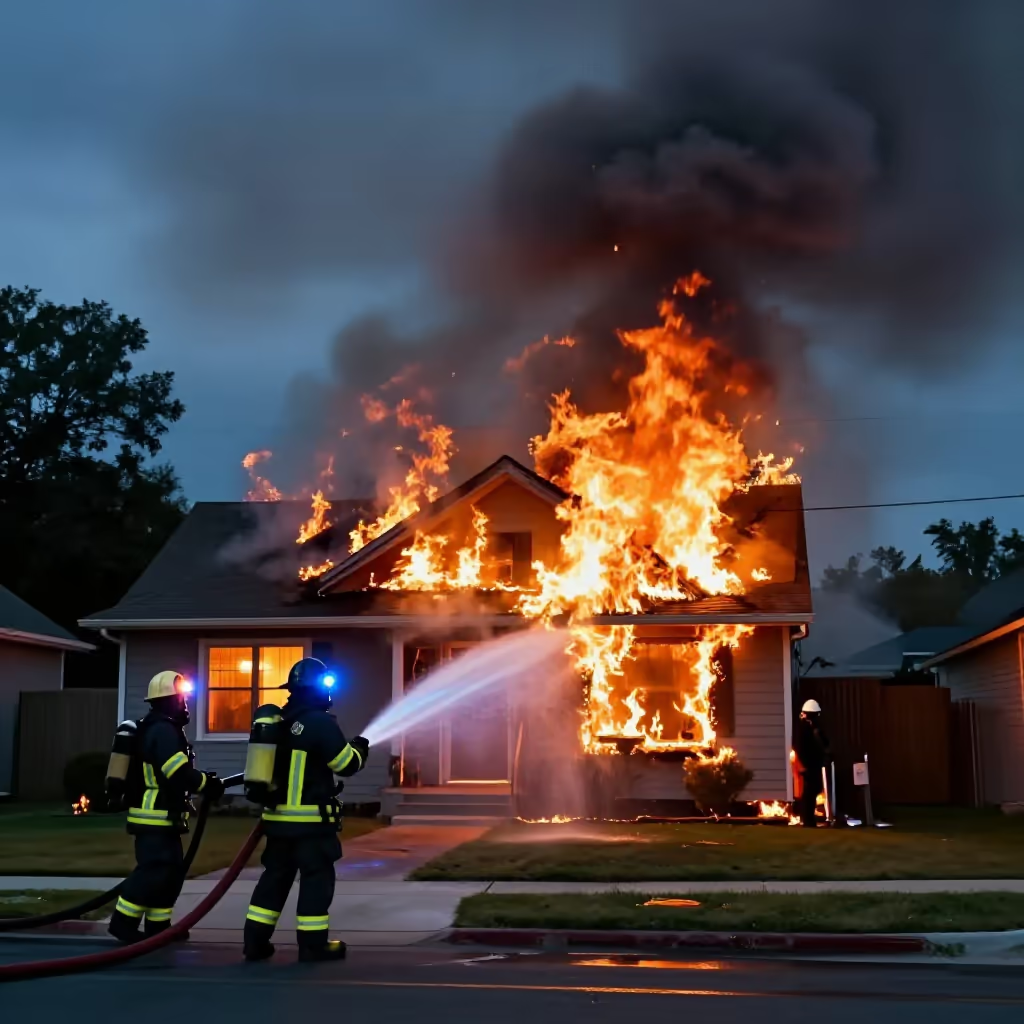
der Brand
fire
An uncontrolled, destructive fire that often causes major damage.
EXAMPLE
Die Feuerwehr war die ganze Nacht im Einsatz, um den Brand im Wald zu löschen.
The fire department was on duty all night to put out the fire in the forest.
fire / brandy
Loading your saved state.
fire
An uncontrolled, destructive fire that often causes major damage.
Die Feuerwehr war die ganze Nacht im Einsatz, um den Brand im Wald zu löschen.
The fire department was on duty all night to put out the fire in the forest.

terrible thirst
Colloquial for very strong thirst.
Nach der Wanderung in der Hitze hatte ich einen riesigen Brand.
After the hike in the heat, I was terribly thirsty.

brandy
A strong alcoholic spirit obtained by distilling fermented fruit or grain; a schnapps.
Nach dem Essen tranken wir einen edlen Brand aus Williamsbirnen.
After the meal, we drank a fine brandy made from Williams pears.

gangrene
In medicine, the death of body tissue due to insufficient blood flow, also called gangrene.
Die schwere Infektion führte bei dem Patienten zu einem Brand im Fuß.
The severe infection caused gangrene in the patient's foot.
The noun 'der Brand' (fire) is derived directly from the verb 'brennen' (to burn). It describes the result or action of burning.
Das alte Lagerhaus ist komplett abgebrannt.
The old warehouse burned down completely.
The four meanings are very different. The context makes clear what is meant: 'Feuerwehr' (fire department) and 'löschen' (to put out) point to fire, 'Durst' (thirst) to the feeling, 'Flasche' (bottle) and 'trinken' (to drink) to alcohol, and 'Arzt' (doctor) or 'Bein' (leg) to the medical meaning.
Der Brand im Dachstuhl konnte schnell gelöscht werden.
The fire in the roof structure was put out quickly.
In connection with fire, there are fixed expressions. A fire can 'ausbrechen' (break out). Someone can intentionally 'einen Brand legen' (set a fire) or 'einen Brand stiften' (commit arson). The fire department must 'den Brand löschen' (put out the fire).
Die Polizei vermutet, dass jemand den Brand gelegt hat.
The police suspect that someone set the fire.
The meaning 'strong thirst' is used only in colloquial language. In formal situations, this expression is unusual.
Gib mir bitte schnell was zu trinken, ich habe einen furchtbaren Brand!
Please give me something to drink quickly, I'm terribly thirsty!
When 'Brand' (brandy) means a spirit, the fruit it is made from is often mentioned. Typical examples are 'Obstbrand' (fruit brandy), 'Williamsbrand' (pear brandy), or 'Kirschbrand' (cherry brandy).
Zum Abschluss des Menüs gab es einen edlen Obstbrand.
To finish the menu, there was a fine fruit brandy.
The meaning 'death of tissue' is a medical technical term. In everyday language, this word is almost never used in this sense.
Der Arzt musste das Bein amputieren, weil der Brand zu weit fortgeschritten war.
The doctor had to amputate the leg because the gangrene was too advanced.
fire
Feuer and Brand can both refer to destructive burning. Feuer can also mean the flames or a controlled source of fire, while Brand specifically emphasizes an uncontrolled, damaging event. When talking about damage to a building, „Brand“ is therefore usually the better choice; „Feuer“ can also be used for the flames in general.
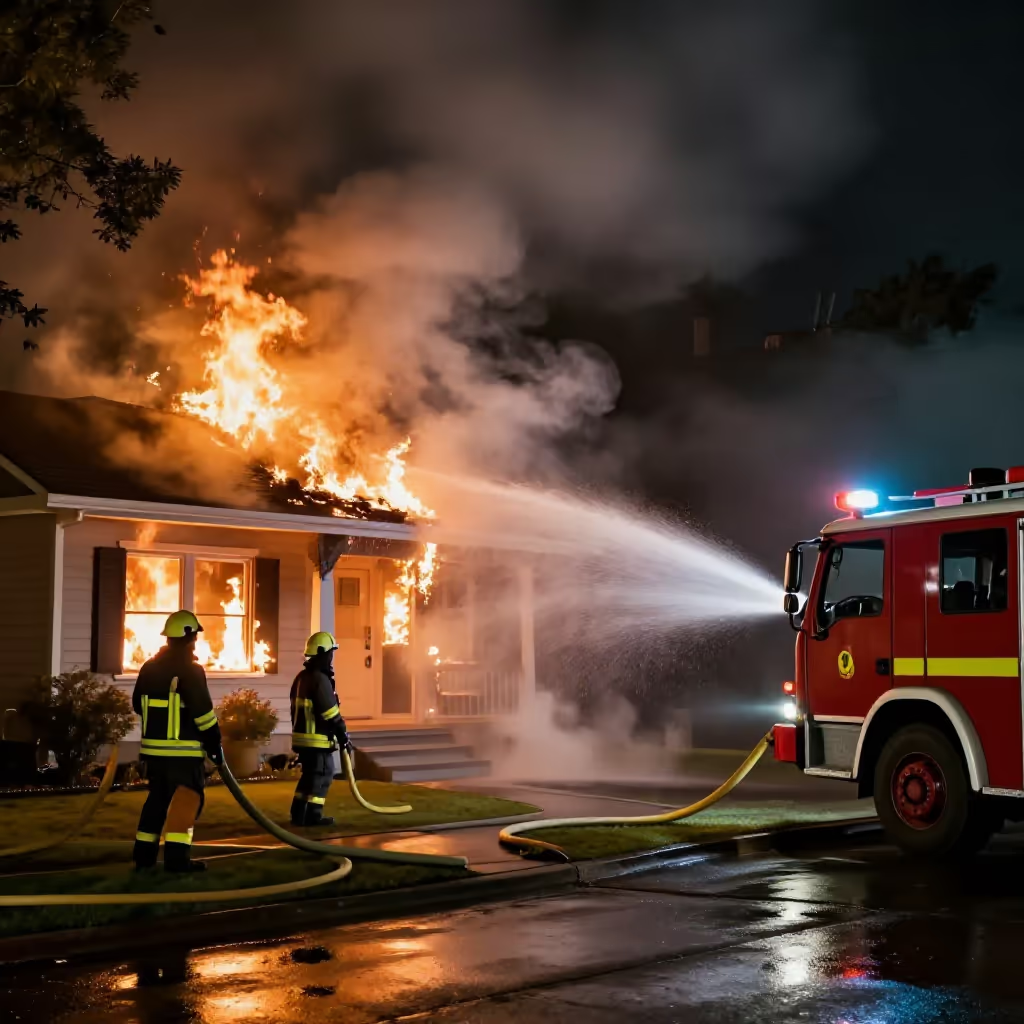
Der Brand im alten Gebäude zerstörte das Dach und mehrere Räume.
The blaze in the old building destroyed the roof and several rooms.
Das Feuer im alten Gebäude breitete sich schnell auf das Dach aus.
The fire in the old building quickly spread to the roof.