


lieb
nice / kind
Describes a person or behavior as nice, friendly, and kind-hearted.
EXAMPLE
Sie ist ein wirklich lieber Mensch und hilft, wo sie nur kann.
She is a really kind person and helps wherever she can.
nice / dear
Loading your saved state.
nice / kind
Describes a person or behavior as nice, friendly, and kind-hearted.
Sie ist ein wirklich lieber Mensch und hilft, wo sie nur kann.
She is a really kind person and helps wherever she can.

to be fond of
To feel strong affection or love for someone. It is often less intense than 'lieben' (to love) and is frequently used for family members and close friends.
Vergiss nicht, ich hab dich lieb!
Don't forget, I'm very fond of you!

dear
Used as a form of address in letters, emails, or direct conversation to express a personal and warm relationship.
Liebe Anna, wie geht es dir?
Dear Anna, how are you?
good / well-behaved
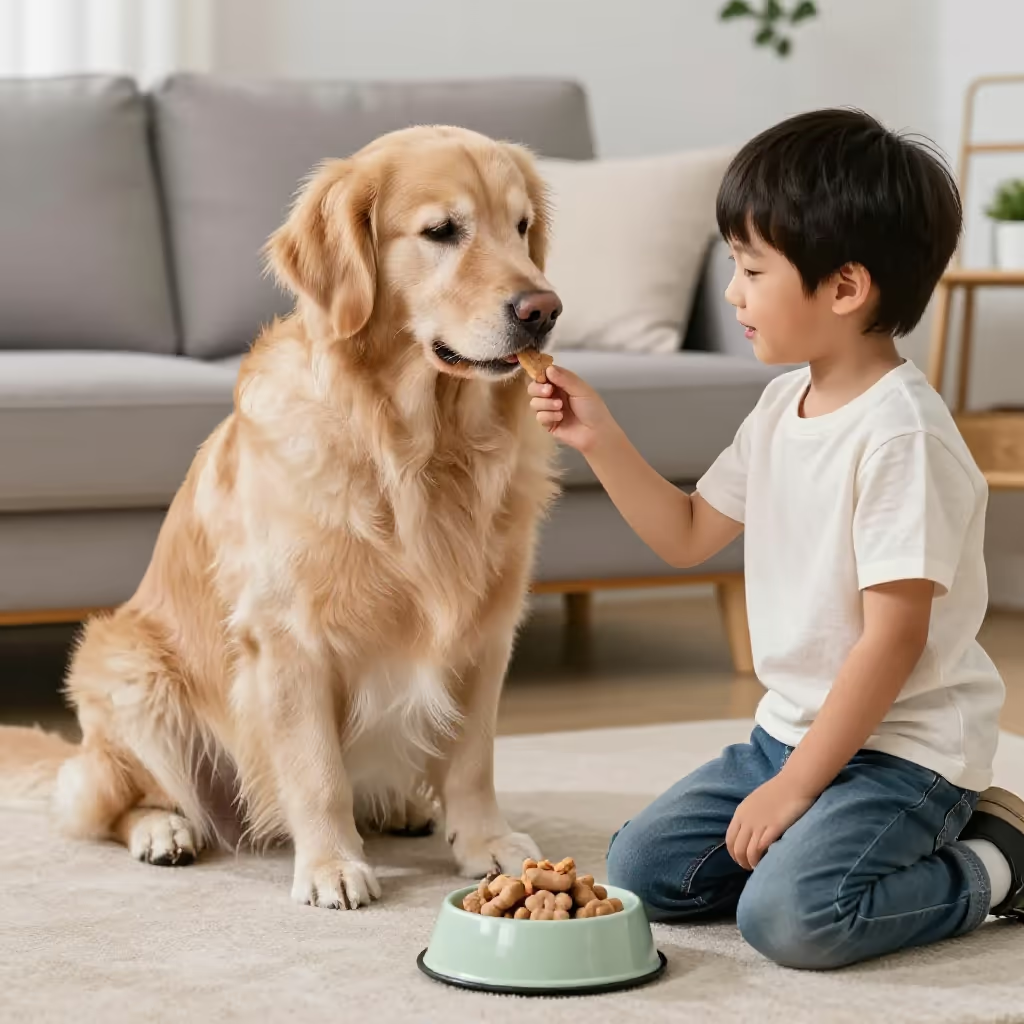
Describes the behavior of children or animals as good, obedient, and well-behaved.
Sei jetzt lieb und räum bitte dein Zimmer auf.
Be good now and please clean up your room.
dear / precious
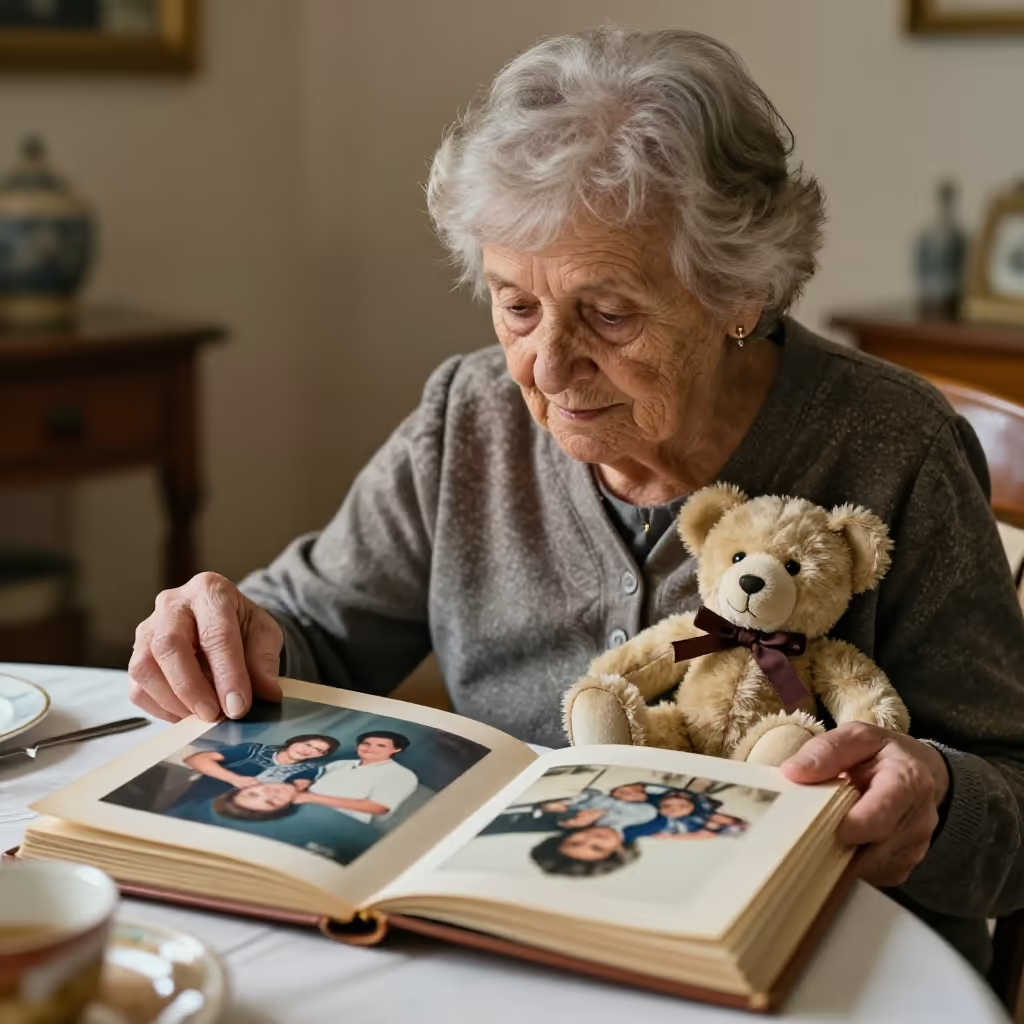
In the expression 'lieb und teuer' (dear and precious), it means valuable or of great sentimental value.
Diese alte Uhr von meinem Großvater ist mir lieb und teuer.
This old watch from my grandfather is dear and precious to me.
The comparative form 'am liebsten' is used very frequently to express a preference. It means 'more than anything else' and is often combined with verbs like 'mögen' (to like), 'essen' (to eat), 'trinken' (to drink), or 'machen' (to do/make).
Am liebsten trinke ich morgens einen Kaffee.
What I like most in the morning is drinking a coffee.
Like most adjectives, 'lieb' can stand before a noun (attributive) or be used with verbs like 'sein' (to be) or 'wirken' (to seem/appear) (predicative). Before a noun, it is declined.
Das ist aber eine liebe Geste von dir.
That's a very kind gesture from you.
The expression 'jemanden lieb haben' (to be fond of someone / to love someone dearly) works grammatically in a similar way to a separable verb. The object is in the accusative, and 'lieb' stands at the end of the sentence. It expresses deep, familiar affection.
Mama, ich hab dich ganz doll lieb.
Mom, I love you very, very much.
In letters and emails, 'lieb' is used as a form of address and declined accordingly. You write 'Lieber' (Dear) for a man, 'Liebe' (Dear) for a woman, and 'Liebe' (Dear) for a group of people.
Lieber Max, vielen Dank für deine Nachricht.
Dear Max, thank you very much for your message.
In the meaning 'brav' (well-behaved) or 'gehorsam' (obedient), 'lieb' is used almost only for children and sometimes for pets. It is often part of a request or praise.
War der Hund heute lieb, als er allein zu Hause war?
Was the dog good today while he was home alone?
The phrase 'lieb und teuer' (dear and precious) is a fixed expression. It means that something is emotionally very important or valuable to someone, regardless of its material value.
Das alte Fotoalbum meiner Großmutter ist mir lieb und teuer.
My grandmother's old photo album is dear and precious to me.
to love
Lieb haben and lieben both express strong affection. Lieb haben often sounds more familiar or friendly and is usually somewhat less intense. Lieben can express deeper, especially romantic love, but it is also possible within a family.

Ich habe meinen guten Freund sehr lieb.
I am very fond of my good friend.
Ich liebe meinen Partner von ganzem Herzen.
I love my partner with all my heart.