


der Buckel
hump
A visible, often rounded bulge on a person's back caused by a curvature of the spine.
EXAMPLE
Vom vielen schweren Tragen hat er schon früh einen Buckel bekommen.
From carrying so many heavy things, he developed a hump early on.
hump / back
Loading your saved state.
hump
A visible, often rounded bulge on a person's back caused by a curvature of the spine.
Vom vielen schweren Tragen hat er schon früh einen Buckel bekommen.
From carrying so many heavy things, he developed a hump early on.

back
Colloquial term for the back, especially in connection with effort, work, or loads.
Ich hab mir den ganzen Tag für dich den Buckel krumm gemacht!
I've been breaking my back for you all day!
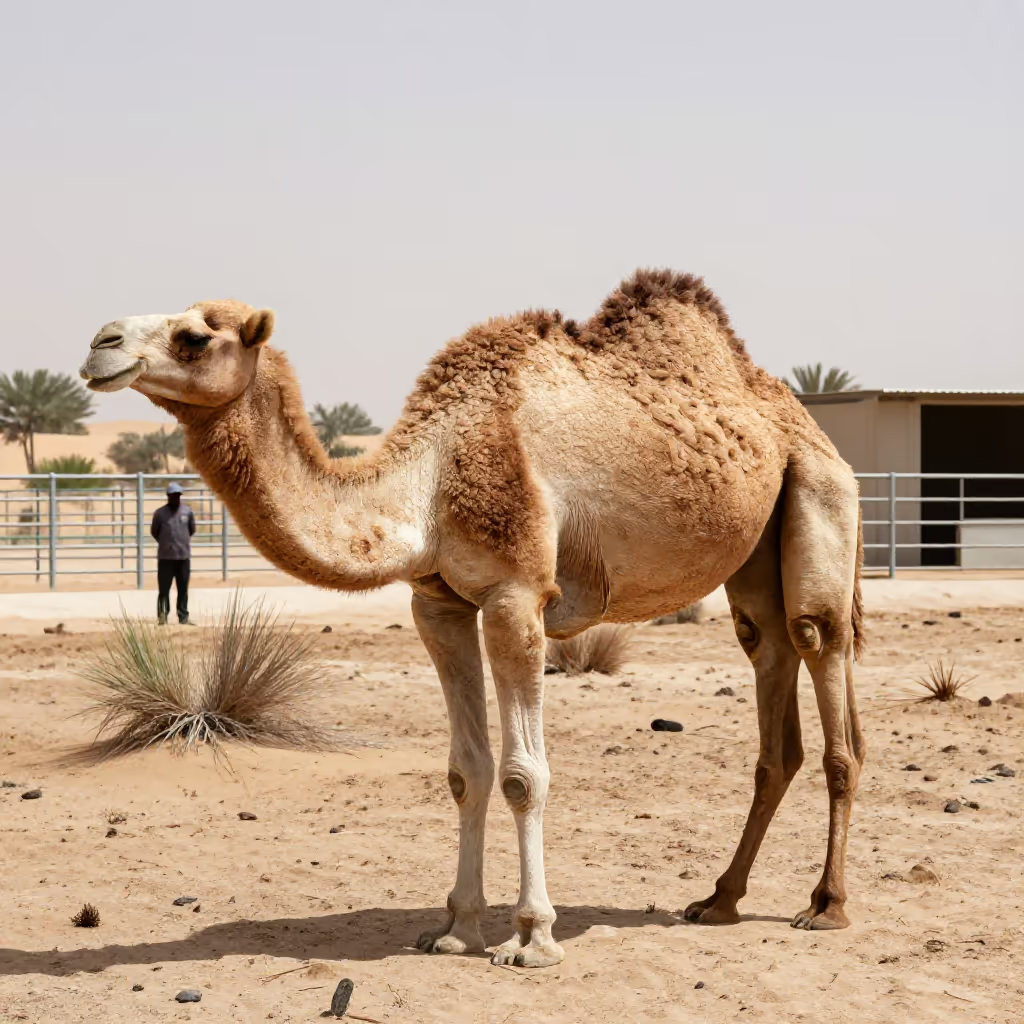
hump
The natural, fleshy raised part on the back of certain animals, for example camels or bison.
Entgegen dem Volksglauben speichert ein Kamel in seinem Buckel Fett, nicht Wasser.
Contrary to popular belief, a camel stores fat in its hump, not water.
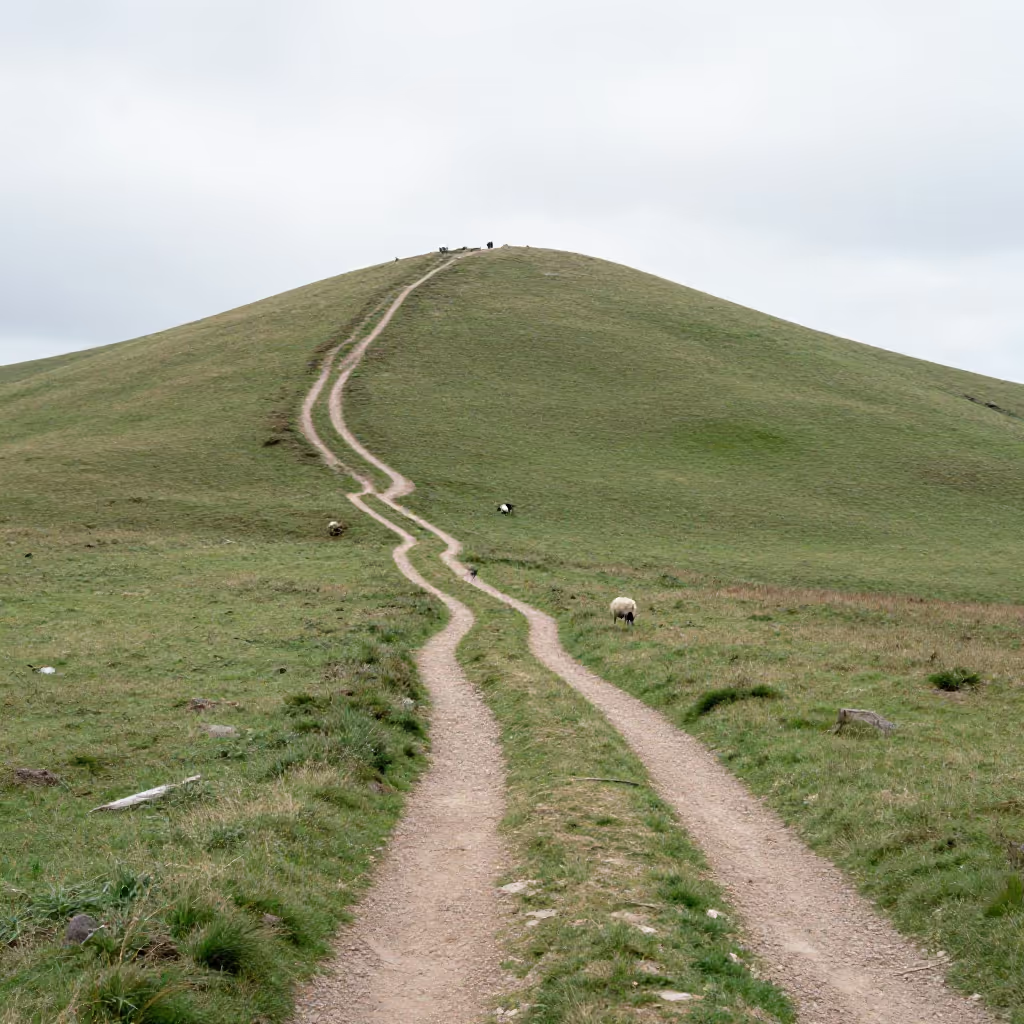
small hill
A small, gentle rise in the landscape; a small hill.
Wir machten auf einem kleinen Buckel Rast, um die Aussicht zu genießen.
We rested on a small hill to enjoy the view.

to not care at all
A crude colloquial idiom expressing that a person or thing is completely unimportant to someone.
Seine Meinung kann mir den Buckel runterrutschen, ich mache es trotzdem.
I couldn't care less about his opinion; I'm doing it anyway.
The word 'Buckel' can refer to a person's back, an animal's hump, or a small hill. The context makes the meaning clear.
Das Kamel speichert Fett in seinem Buckel.
The camel stores fat in its hump.
Colloquially, 'der Buckel' is often used as a synonym for 'der Rücken' (the back), usually in fixed expressions that convey effort or strain.
Für den Umzug meiner Schwester habe ich mir den ganzen Tag den Buckel krumm gemacht.
I broke my back all day helping my sister move.
The idiom 'jemandem den Buckel runterrutschen können' is a crude way of saying that someone does not care about something at all. The person who does not care is in the dative case.
Seine Kritik kann mir den Buckel runterrutschen.
I couldn't care less about his criticism.
When talking about a physical deformation of the back, the typical verbs are 'einen Buckel haben' (to have a hump) or 'einen Buckel bekommen' (to develop a hump).
Der alte Mann hat vom vielen Bücken einen Buckel.
The old man has a hump from bending over so much.
The use of 'Buckel' for 'Rücken' (back), as well as the idiom 'den Buckel runterrutschen' (to not care at all), belongs to informal colloquial language. You should use them only in casual conversations.
Hör auf zu jammern, das interessiert mich nicht. Rutsch mir den Buckel runter!
Stop whining, I don't care. You can get lost!
back
Rücken is the neutral term for the back part of the body. Buckel can also mean “back” in colloquial and somewhat rough language, especially in connection with work, exertion, or heavy loads. Rücken is therefore the better choice in neutral statements, while Buckel can be used for particularly strenuous work.

Beim Umzug habe ich den ganzen Tag schwere Kisten auf dem Buckel getragen.
While moving, I carried heavy boxes on my back all day.
Nach dem Umzug tut mir der Rücken weh.
After moving, my back hurts.