

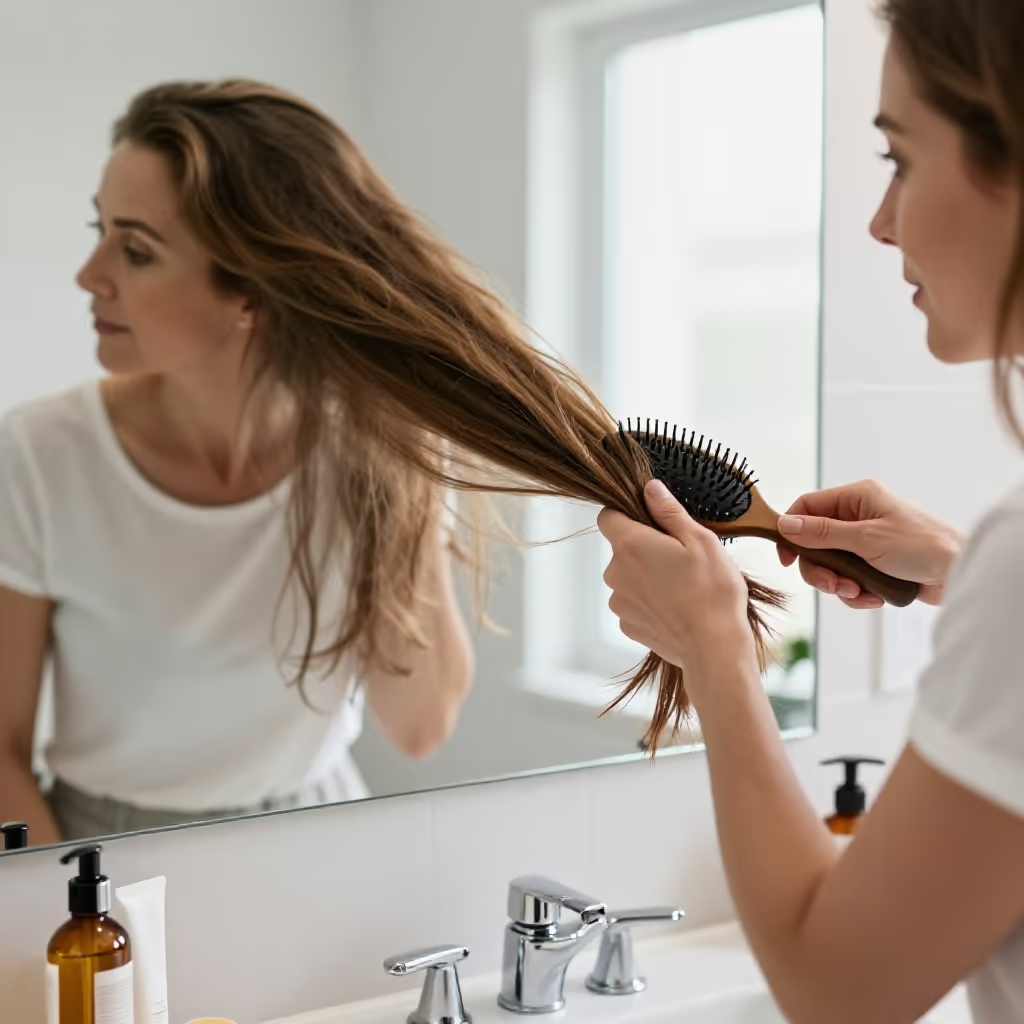
bürsten
to brush
To clean, smooth, or shape something with a brush. This often refers to hair, clothing, or the fur of animals.
Jeden Morgen muss ich meine langen Haare sorgfältig bürsten.
Every morning I have to brush my long hair carefully.

to brush
Loading your saved state.
to brush
To clean, smooth, or shape something with a brush. This often refers to hair, clothing, or the fur of animals.
Jeden Morgen muss ich meine langen Haare sorgfältig bürsten.
Every morning I have to brush my long hair carefully.

The verb 'bürsten' (to brush) is derived directly from the noun 'die Bürste' (the brush). So the action describes what you do with a brush.
Kannst du mir bitte die Bürste geben? Ich muss meine Jacke bürsten.
Can you please give me the brush? I need to brush my jacket.
The meaning depends on the object. If the object is a thing (hair, clothing, animal fur), the literal meaning is intended. If the object is a person ('jemanden bürsten'), it is one of the colloquial meanings.
Er bürstet jeden Abend seinen Hund.
He brushes his dog every evening.
In its literal meaning, 'bürsten' (to brush) is usually used with an accusative object. Typical objects are 'die Haare' (hair), 'das Fell' (fur), 'die Kleidung' (clothing), or 'die Schuhe' (shoes). It can also be used reflexively: 'sich die Haare bürsten' (to brush one's hair).
Nach dem Spaziergang im Wald musste ich meine Hose kräftig bürsten.
After the walk in the forest, I had to brush my pants thoroughly.
The meanings 'to ignore someone' and 'to defeat someone' are strongly colloquial. Use these expressions only in informal conversations with friends.
Er war so wütend, dass er mich den ganzen Abend gebürstet hat.
He was so angry that he brushed me off the whole evening.
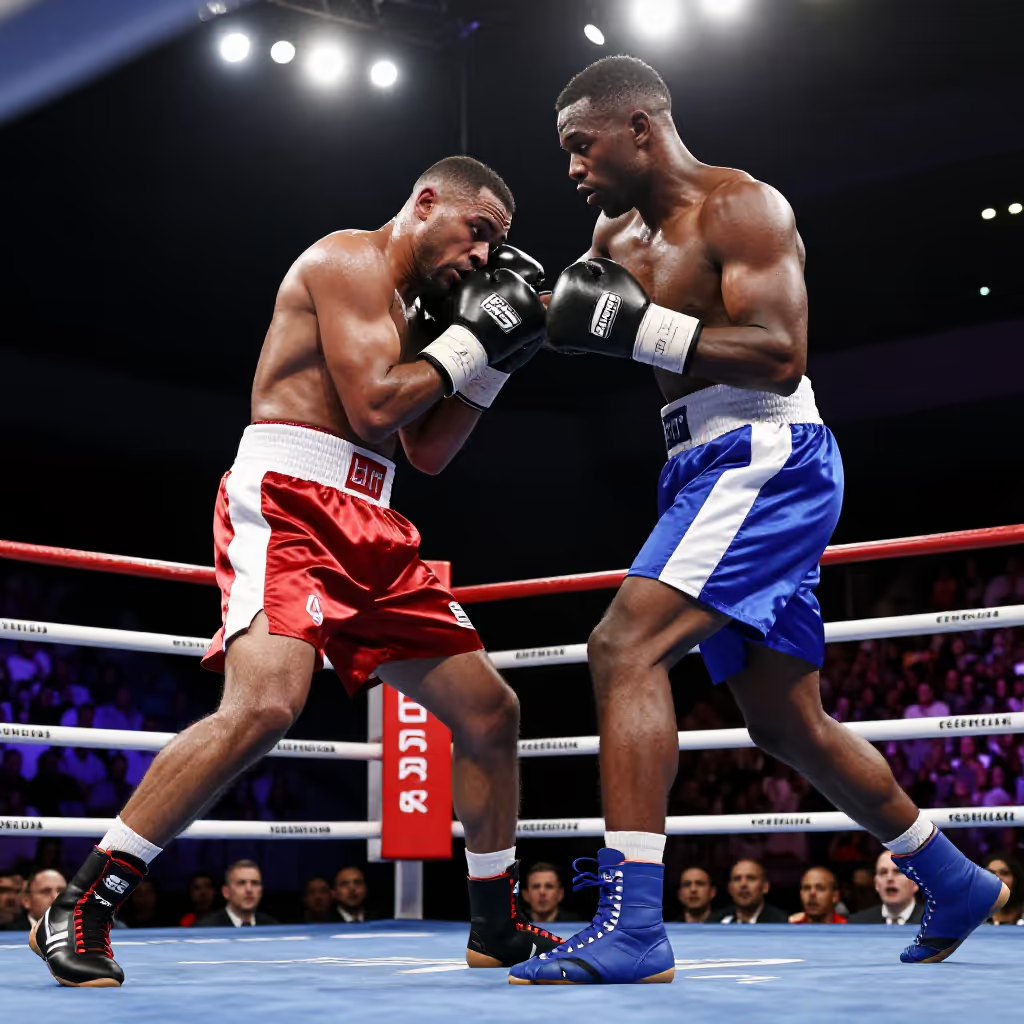
to hit / beat
'schlagen' and 'bürsten' can both mean that someone wins in a game, competition, or argument. 'schlagen' is the normal word for this and fits in almost any context: sports, games, elections, or discussions. 'bürsten' is colloquial in this meaning and usually means that someone is defeated very clearly. Learners may confuse the words because both have to do with winning. The important point is: 'bürsten' sounds casual and strong, while 'schlagen' sounds more neutral and is appropriate much more often.

Beim Tischtennis hat Omar seinen Freund klar gebürstet.
Omar clearly thrashed his friend at table tennis.
Unsere Mannschaft hat den starken Gegner im letzten Spiel geschlagen.
Our team beat the strong opponent in the last game.