A short guiding principle, motto, or slogan that summarizes a personal attitude, a goal, or the principle of action of a group.
example
„Weniger ist mehr“ ist meine Devise beim Packen für den Urlaub.
'Less is more' is my motto when packing for vacation.

Usage tips
Sentence structure
A guiding principle is often introduced directly after 'die Devise lautet' (the motto is) or 'die Devise ist' (the motto is) with a colon and sometimes in quotation marks.
EXAMPLE
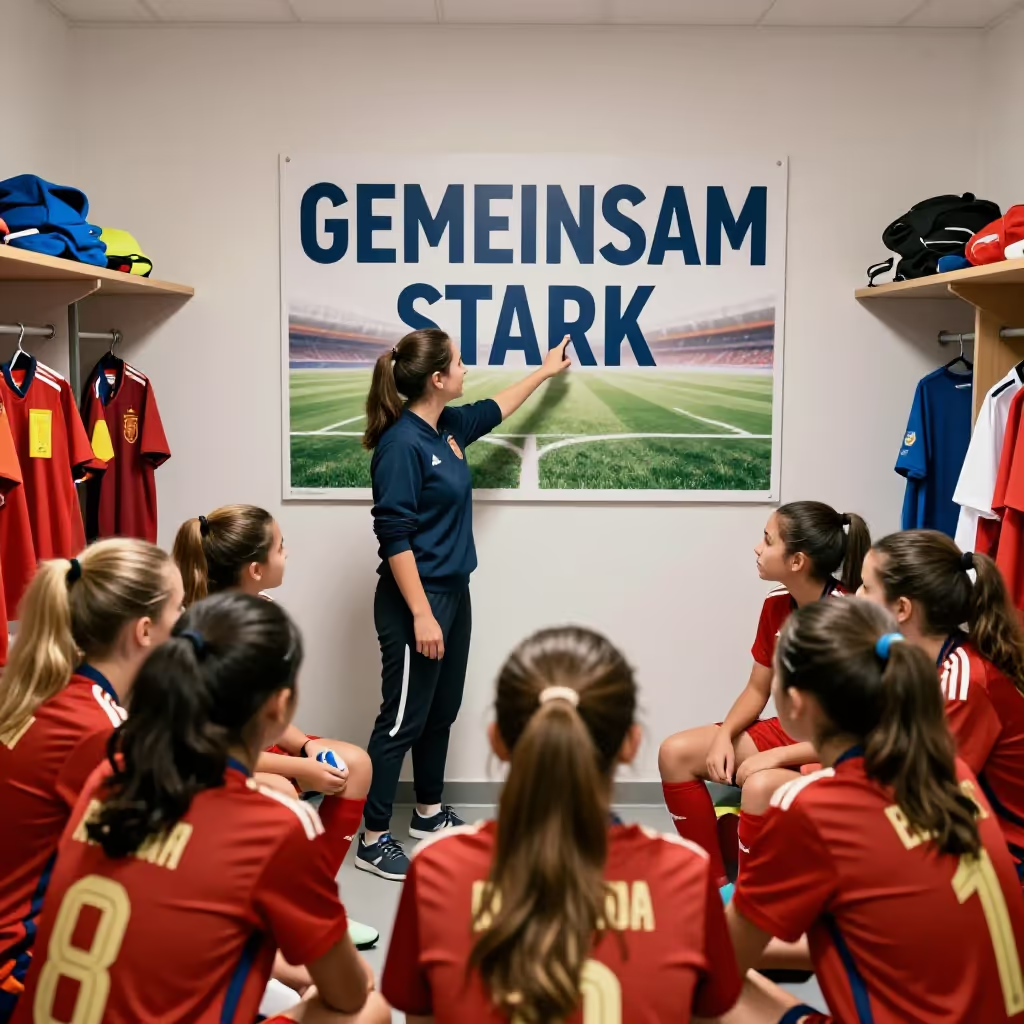
Für unser Team gilt die Devise: Gemeinsam sind wir stark.
For our team, the motto is: Together we are strong.
Typical collocations
When 'Devise' means a motto, it is often used with verbs such as 'haben' (to have) or 'folgen' (to follow). For example, you can say 'eine Devise haben' (to have a motto) or 'einer Devise folgen' (to follow a motto).
EXAMPLE
Er hat die Devise, jeden Tag etwas Gutes zu tun.
His motto is to do something good every day.
Context clue: plural
The meaning 'foreign currency' is used almost exclusively in the plural 'die Devisen' (foreign exchange/foreign currency). So if you see the plural, it is about money and finance, not a motto.
EXAMPLE
Das Land hat nicht genügend Devisen, um die Importe zu bezahlen.
The country does not have enough foreign exchange to pay for the imports.
Compare with
near_synonym · confusable
Devise vs Prinzip
principle
'das Prinzip' and 'die Devise' can both describe what someone is guided by when acting. 'das Prinzip' is a fundamental rule or belief. 'die Devise' is more like a short guiding phrase or a motto that summarizes this attitude in a simple way. They can be confused because a motto is often based on a principle. If you mean the fixed rule itself, 'Prinzip' is more natural. If you mean a short phrase like a motto, 'Devise' fits better.
Devise
Im Team lautet die Devise: ruhig bleiben und gemeinsam eine Lösung finden.
The team's motto is: stay calm and find a solution together.
Prinzip
Bei der Planung gilt das Prinzip, zuerst die wichtigsten Aufgaben zu erledigen.
In planning, the principle is to do the most important tasks first.