


dick
thick
Having a large distance from one side to the other; not thin.
EXAMPLE
Für den Winter brauche ich eine dicke Jacke.
I need a thick jacket for winter.
thick / fat
dick – dicker – am dicksten
Loading your saved state.
thick
Having a large distance from one side to the other; not thin.
Für den Winter brauche ich eine dicke Jacke.
I need a thick jacket for winter.

fat
Having a stout body or a larger-than-average girth.
Der Mann war früher sehr dick, hat aber inzwischen viel abgenommen.
The man used to be very fat, but he has since lost a lot of weight.

thick
Consisting of many closely packed parts or having a high density.
Im dicken Nebel konnte man die Straße kaum erkennen.
You could barely make out the road in the thick fog.
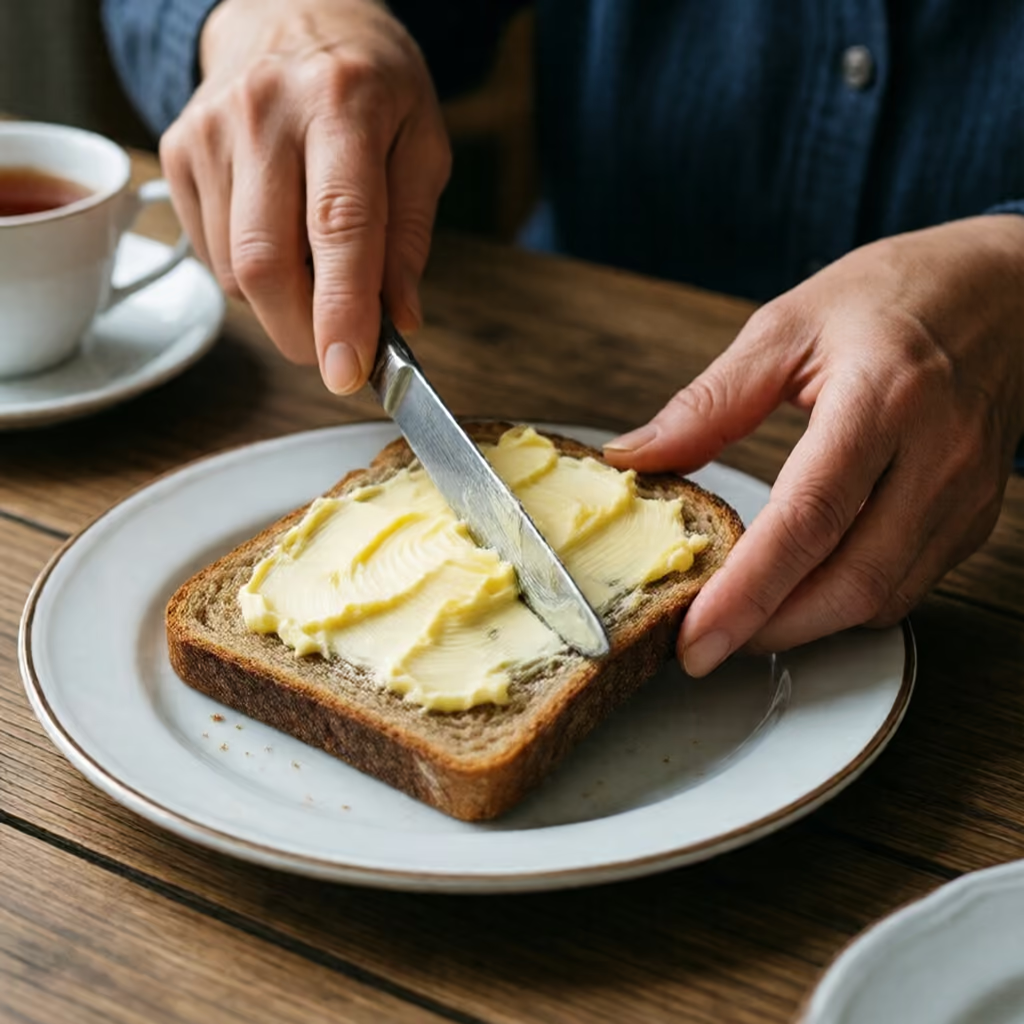
thick
Forming a large amount or a substantial layer; present in abundance.
Sie strich eine dicke Schicht Butter auf das Brot.
She spread a thick layer of butter on the bread.

close friends
Very close friends who share a particularly strong bond.
Die beiden sind seit der Schulzeit dicke Freunde.
The two have been close friends since their school days.

big
Informal: large or substantial, especially when referring to sums of money, winnings, or rewards.
Für den Auftrag bekam sie eine dicke Prämie.
She received a big bonus for the job.

to exaggerate
To present or describe something in an exaggerated way, making it seem bigger or more impressive than it really is.
Er trägt bei seinen Geschichten immer ziemlich dick auf.
He always exaggerates quite a bit when telling his stories.
| basic form | dick |
|---|---|
| comparative | dicker |
| superlative | am dicksten |
| masc. | fem. | neut. | plural | |
|---|---|---|---|---|
| nom. | -e | -e | -e | -en |
| acc. | -en | -e | -e | -en |
| dat. | -en | -en | -en | -en |
| gen. | -en | -en | -en | -en |
Add the ending to dick.
| masc. | fem. | neut. | plural | |
|---|---|---|---|---|
| nom. | -er | -e | -es | -en |
| acc. | -en | -e | -es | -en |
| dat. | -en | -en | -en | -en |
| gen. | -en | -en | -en | -en |
Add the ending to dick.
| masc. | fem. | neut. | plural | |
|---|---|---|---|---|
| nom. | -er | -e | -es | -e |
| acc. | -en | -e | -es | -e |
| dat. | -em | -er | -em | -en |
| gen. | -en | -er | -en | -er |
Add the ending to dick.
When describing objects, 'dick' (thick) is often used with a measurement. The measurement usually comes before 'dick' and specifies the thickness or width precisely.
Die Holzplatte ist drei Zentimeter dick.
The wooden board is three centimeters thick.
When referring to people, 'dick' (fat) can sound very blunt and may therefore be hurtful, depending on the situation. In personal conversations, consider the context and the effect on the person concerned.
Sie findet es unhöflich, andere Menschen als dick zu bezeichnen.
She thinks it is rude to call other people fat.
In this sense, 'dick' (thick) is often used with words such as 'Nebel' (fog), 'Rauch' (smoke), 'Haar' (hair), or 'Schnee' (snow). It describes a high density or an amount that is difficult to see or move through.
Wegen des dicken Rauchs mussten alle das Gebäude verlassen.
Everyone had to leave the building because of the thick smoke.
The phrase 'eine dicke Schicht' (a thick layer) is often used for a substantial layer. It is typically followed by the name of the material being applied or spread.
Auf den alten Büchern lag eine dicke Schicht Staub.
There was a thick layer of dust on the old books.
'Dicke Freunde' (close friends) is usually used as a fixed phrase with the verb 'sein' (to be). The expression often appears with a time reference that emphasizes how long or how close the friendship is.
Schon nach wenigen Wochen waren Paul und sein neuer Nachbar dicke Freunde.
After just a few weeks, Paul and his new neighbor were close friends.
In this informal sense, 'dick' (big) often comes before words referring to money, winnings, or rewards. It emphasizes that the amount is particularly large.
Mit seiner Firma hat er das dicke Geld gemacht.
He made big money with his company.
In 'dick auftragen' (to exaggerate), 'dick' is used with the separable verb 'auftragen'. In a main clause, the verb separates ('trägt … dick auf'); with 'zu', the form is 'dick aufzutragen'.
Die Werbung trägt mal wieder ganz schön dick auf.
The advertisement is really exaggerating again.
Sie versucht, bei ihrer Bewerbung nicht zu dick aufzutragen.
She is trying not to exaggerate too much in her job application.