


der Druck
pressure
A physical force that acts evenly on a surface, for example air pressure or water pressure.
EXAMPLE
Der Druck in den Autoreifen ist zu niedrig.
The pressure in the car tires is too low.
pressure / printing
Loading your saved state.
pressure
A physical force that acts evenly on a surface, for example air pressure or water pressure.
Der Druck in den Autoreifen ist zu niedrig.
The pressure in the car tires is too low.

pressure
A mental or social burden caused by expectations, lack of time, or difficult circumstances.
Viele Schüler leiden unter dem hohen Leistungsdruck in der Schule.
Many students suffer from the high pressure to perform at school.
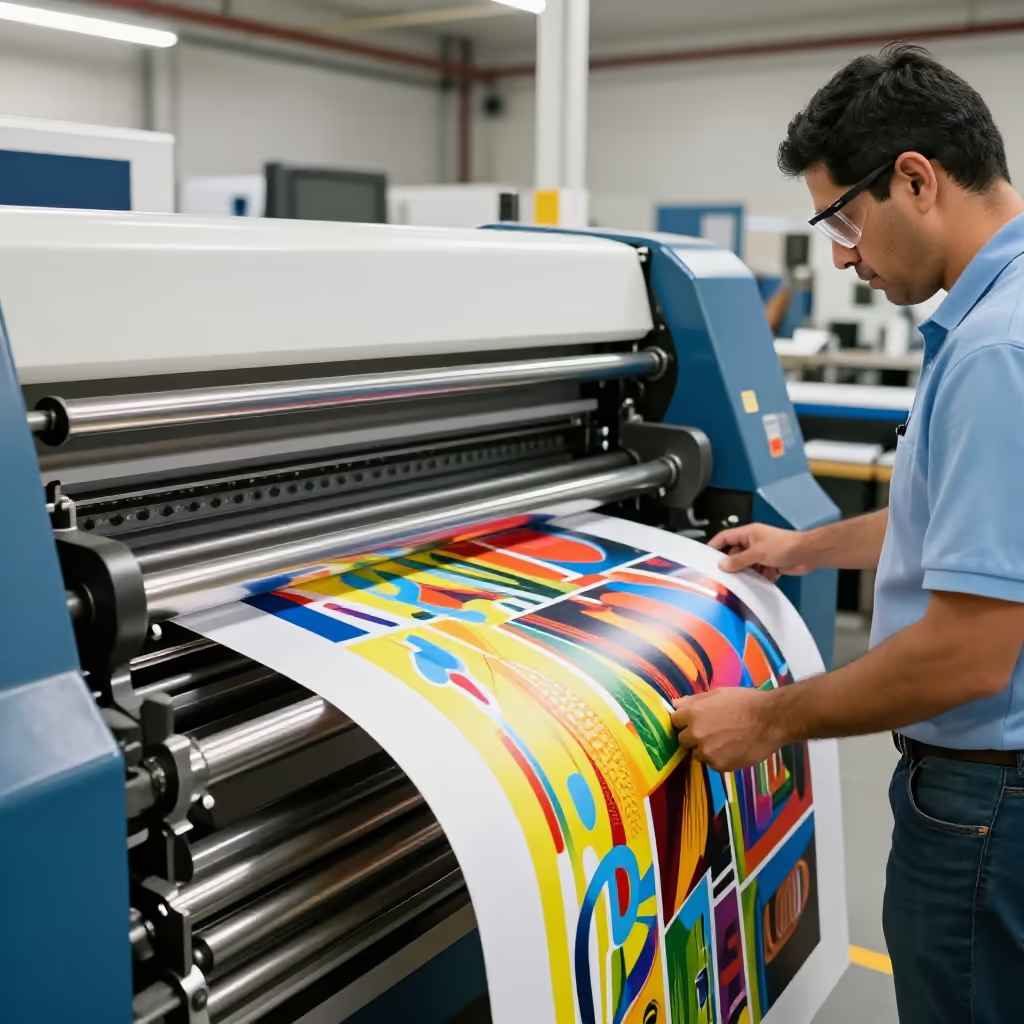
printing
The process of printing texts or images, especially books, newspapers, or posters.
Das Manuskript ist fertig und geht nächste Woche in den Druck.
The manuscript is finished and goes to print next week.

to put pressure on
To force or strongly influence someone to do something, often against their will.
Lass dich von ihm nicht unter Druck setzen, deine Entscheidung zu ändern.
Don't let him put pressure on you to change your decision.
'Der Druck' (pressure / printing) is the noun related to the verb 'drücken' (to press). All meanings of 'Druck' can be traced back to the basic idea of pushing or pressing, whether physically, psychologically, or when printing paper.
Drück bitte den Knopf, um die Tür zu öffnen.
Please press the button to open the door.
In a physical context, 'Druck' (pressure) is often combined with the adjectives 'hoch' (high) or 'niedrig' (low). Typical verbs are 'Druck ausüben' (to exert pressure), 'den Druck erhöhen' (to increase the pressure), or 'unter Druck stehen' (to be under pressure; e.g. a container).
Der Wasserdruck in dieser Leitung ist zu niedrig.
The water pressure in this pipe is too low.
To express mental stress, the preposition 'unter' (under) is almost always used. Typical phrases are 'unter Druck stehen' (to be under pressure), 'unter Druck arbeiten' (to work under pressure), or 'unter Leistungsdruck leiden' (to suffer from pressure to perform).
Ich kann nicht gut arbeiten, wenn ich unter Zeitdruck stehe.
I can't work well when I'm under time pressure.
In publishing, the expression 'in den Druck gehen' (to go to print) or 'in Druck geben' (to send to print) is very common. It means that the process of printing a book or newspaper begins.
Die neue Ausgabe der Zeitschrift geht morgen in den Druck.
The new issue of the magazine goes to print tomorrow.
In the fixed expression 'jemanden unter Druck setzen' (to put pressure on someone), the person being influenced is always the accusative object of the sentence.
Mein Chef versucht, mich mit einer kurzen Frist unter Druck zu setzen.
My boss is trying to put pressure on me with a short deadline.
expression / printout
Druck and Ausdruck can both refer to a printed document, but they emphasize different aspects. Druck refers more to the process of printing, while Ausdruck refers to the finished piece of paper. Use Druck for the production process and Ausdruck for the specific copy.
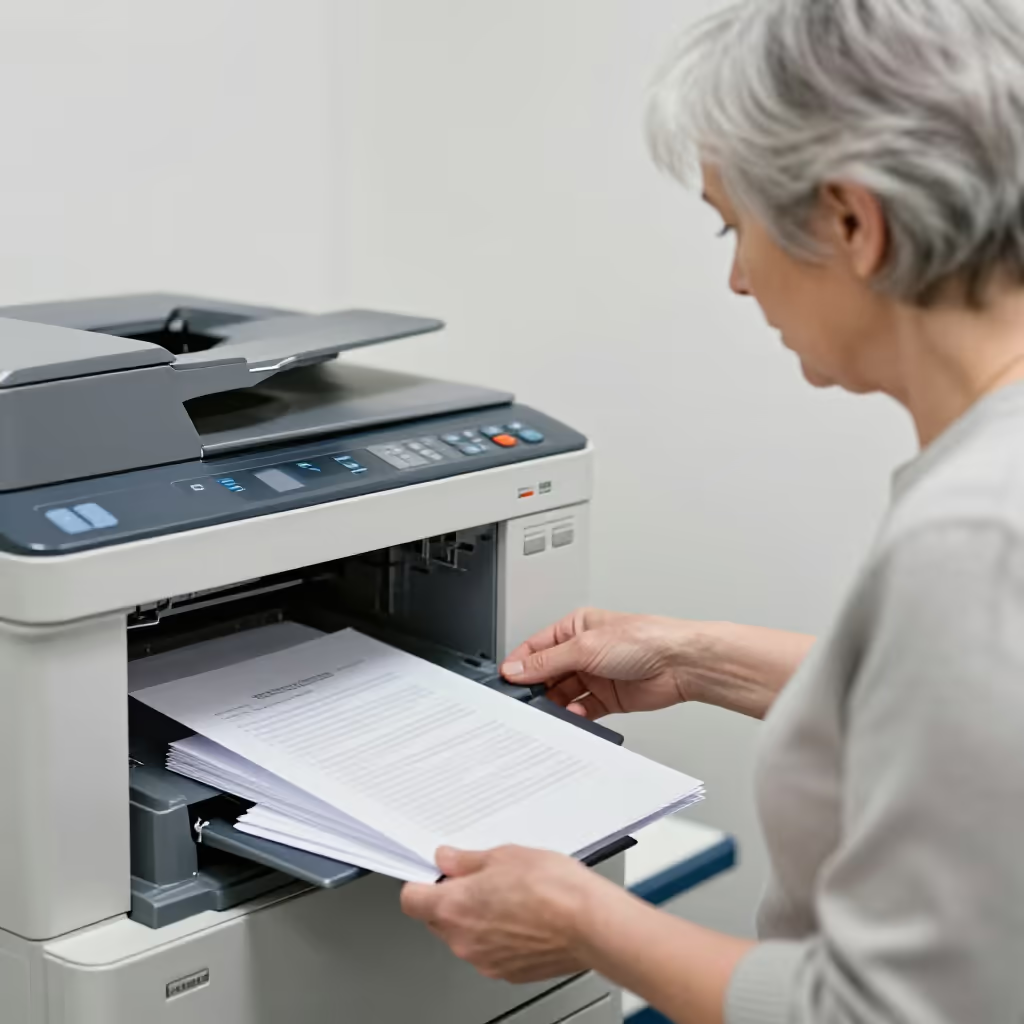
Der Druck der Broschüre beginnt morgen in der neuen Druckerei.
Printing the brochure begins tomorrow at the new print shop.
Der Ausdruck der Broschüre liegt schon auf meinem Schreibtisch.
The printout of the brochure is already on my desk.