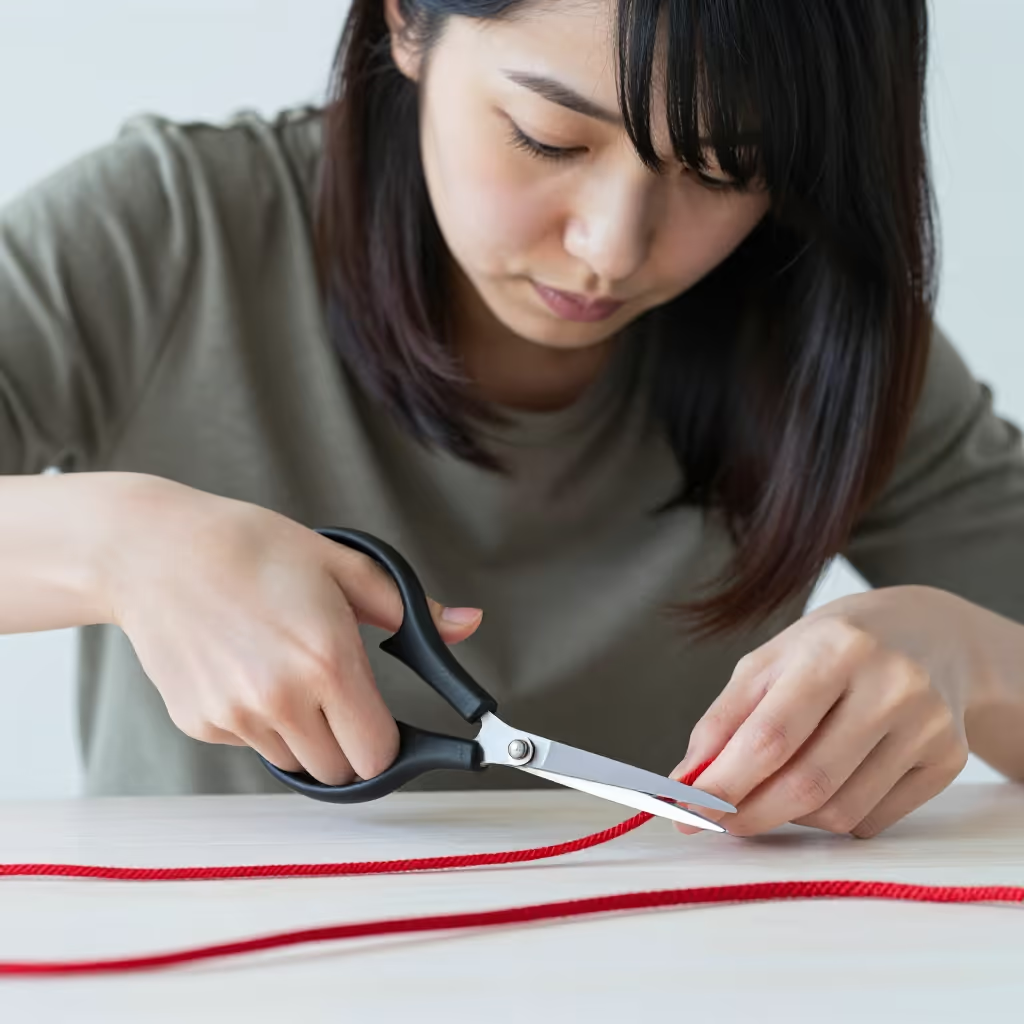
To completely separate something into two or more parts with a sharp object such as a knife or scissors.
example
Zum Öffnen des Pakets müssen Sie das Klebeband durchschneiden.
To open the package, you need to cut through the tape.

Usage tips
Separable or inseparable?
This verb has a dual nature. It is separable when it literally means 'in zwei Teile schneiden' (to cut into two parts). It is inseparable when it means 'ein Gebiet durchqueren' (to cross an area).
EXAMPLE
Er schneidet das rote Band mit einer Schere durch.
He cuts through the red ribbon with scissors.
Sentence structure of the separable form
When the verb is separable (literal meaning), the prefix 'durch' comes at the end in a main clause. In the infinitive with 'zu', it becomes 'durchzuschneiden'.
EXAMPLE
Schneidest du den Kuchen bitte für die Gäste durch?
Could you cut through the cake for the guests, please?
Context of the inseparable form
The inseparable form is often used in geographical or planning contexts. A linear object (river, road, border) crosses a surface or area (valley, city, country).
EXAMPLE
Ein kleiner Bach durchschneidet die Wiese.
A small stream cuts across the meadow.
Compare with
near_synonym · confusable
durchschneiden vs trennen
to separate
'trennen' and 'durchschneiden' can both mean that one piece becomes two parts. 'trennen' is more general: you can divide something by cutting, tearing, or in another way. 'durchschneiden' is more specific and means cutting all the way through with a sharp object. The words can be confused because the result can be similar. If the tool or the cut is important, 'durchschneiden' fits better. If the only important point is that two parts are separated, 'trennen' is often enough.
durchschneiden
Mit der Schere schneide ich das Band in der Mitte durch.
I cut the ribbon through the middle with the scissors.
trennen
Wir haben den Stoff in zwei gleich große Stücke getrennt.
We separated the fabric into two equal-sized pieces.