


durchqueren
to cross
To move from one side to the other through an area, room, or surface. The verb is inseparable.
EXAMPLE
Um nach Italien zu gelangen, müssen wir die Schweiz durchqueren.
To get to Italy, we have to cross Switzerland.
to cross
Loading your saved state.
to cross
To move from one side to the other through an area, room, or surface. The verb is inseparable.
Um nach Italien zu gelangen, müssen wir die Schweiz durchqueren.
To get to Italy, we have to cross Switzerland.
'Durchqueren' (to cross) is an inseparable verb. The prefix 'durch-' always stays at the beginning of the verb, even in a main clause. The past participle is formed without 'ge-': 'hat durchquert' (has crossed).
Er hat den gesamten Kontinent mit dem Fahrrad durchquert.
He crossed the entire continent by bicycle.
The verb is made up of 'durch' (through) and 'queren' (to cross). Its meaning is therefore very literal: to move across and through something.
Die Wandergruppe will den Fluss an einer flachen Stelle durchqueren.
The hiking group wants to cross the river at a shallow spot.
The verb 'durchqueren' (to cross) always requires a direct object in the accusative that indicates what is being crossed. The question is: 'Wen oder was durchqueren?' (whom or what to cross?).
Die Touristen durchqueren die Altstadt zu Fuß.
The tourists cross the old town on foot.
to happen / pass
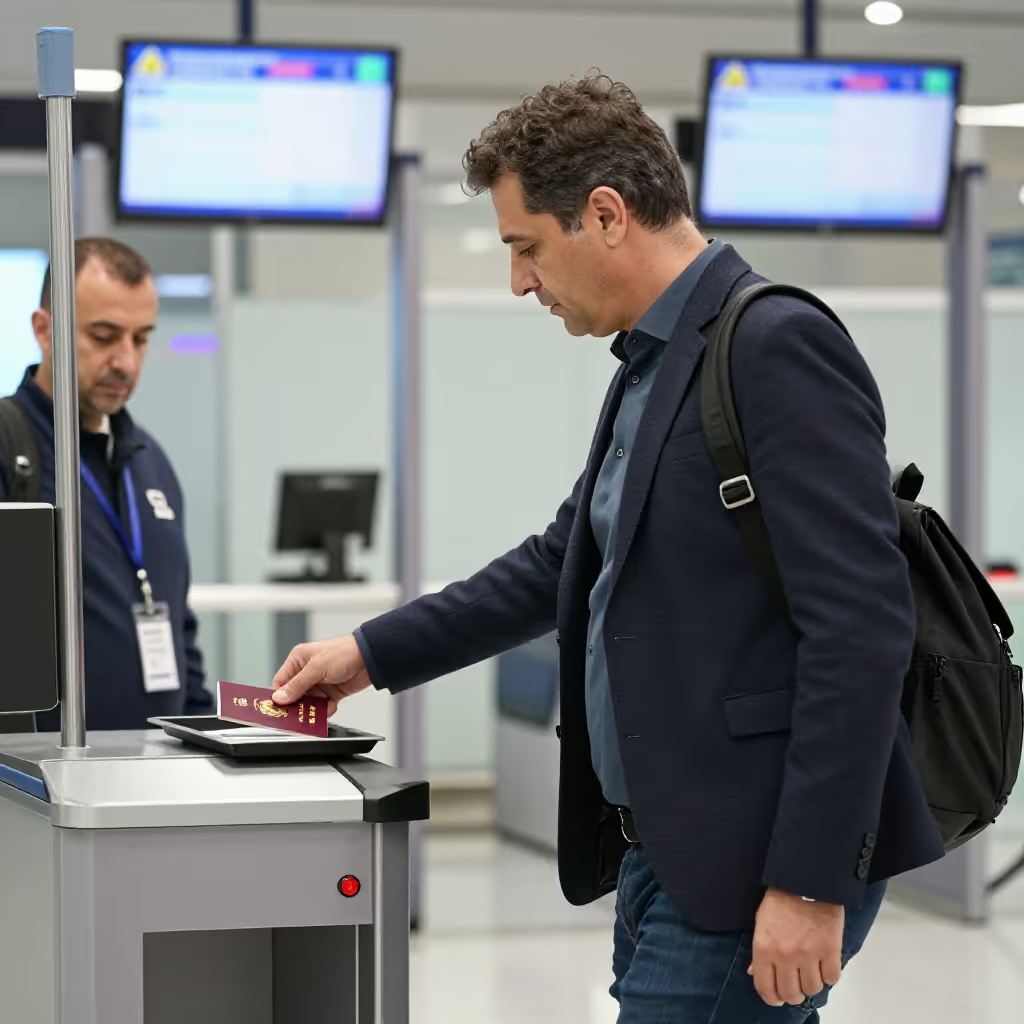
Both verbs can describe movement through an area. „Passieren“ can simply mean passing an important point or getting through. „Durchqueren“, on the other hand, emphasizes moving or traveling through the entire area from one side to the other.
Auf dem Weg zum See durchqueren wir den ganzen Park.
On our way to the lake, we cross the entire park.
Auf dem Weg zum See passieren wir den Eingang des Parks.
On our way to the lake, we pass the park entrance.