


einbrechen
to break in
To enter a building forcibly and without permission, usually with the intention of stealing.
EXAMPLE
Letzte Nacht wurde bei unseren Nachbarn eingebrochen.
Last night, our neighbors' house was broken into.
to break in / collapse
Loading your saved state.
to break in
To enter a building forcibly and without permission, usually with the intention of stealing.
Letzte Nacht wurde bei unseren Nachbarn eingebrochen.
Last night, our neighbors' house was broken into.

to break through
To break through a surface such as ice, a floor, or a roof and fall in.
Sei vorsichtig, das Eis auf dem See ist dünn, du könntest einbrechen.
Be careful, the ice on the lake is thin; you could break through.
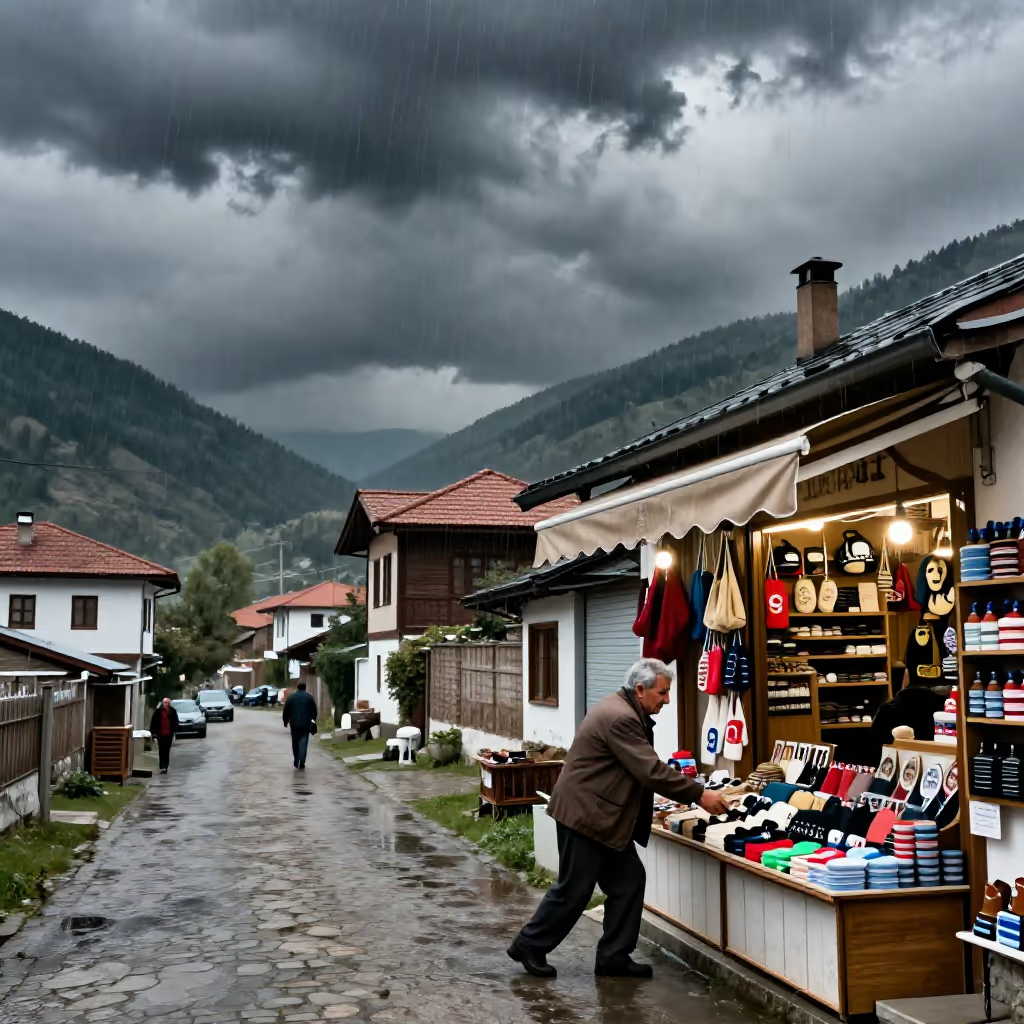
to set in
To begin suddenly or descend. Often used for natural phenomena such as night, darkness, or a change in the weather.
Als die Dunkelheit einbrach, machten sie ein Lagerfeuer.
When darkness set in, they made a campfire.

to collapse
To decrease sharply and suddenly in value, performance, or number; to collapse.
Nach der schlechten Nachricht sind die Aktienkurse des Unternehmens stark eingebrochen.
After the bad news, the company's share prices collapsed sharply.
'Einbrechen' (to break in / collapse) is a separable verb. The prefix 'ein-' goes to the end in a main clause. In subordinate clauses or in the infinitive with 'zu', the verb stays together.
Der Täter brach in der Nacht ein.
The perpetrator broke in during the night.
The perfect tense of 'einbrechen' (to break in / collapse) is always formed with the auxiliary verb 'sein'. This is because the verb describes a sudden change of state or place.
Die Diebe sind durch ein Fenster eingebrochen.
The thieves broke in through a window.
To name the target of the break-in, use 'in' with the accusative. To name the affected place or person, use 'bei' with the dative.
Jemand ist in den Supermarkt eingebrochen.
Someone broke into the supermarket.
In relation to times of day or seasons, 'einbrechen' (to set in) is often used figuratively to describe a sudden beginning. Typical combinations are 'die Nacht bricht ein' (night falls) or 'der Winter bricht ein' (winter sets in).
Als der Winter einbrach, fiel der erste Schnee.
When winter set in, the first snow fell.
This meaning is very common in business and finance news. It describes a sudden, sharp decline. Typical subjects are 'die Kurse' (prices/rates), 'der Markt' (the market), or 'der Gewinn' (profit).
Nach der Ankündigung sind die Aktien der Firma eingebrochen.
After the announcement, the company's shares collapsed.
to get in / join
When someone gets in through a window, the focus is on the way they enter; the word alone does not clearly indicate anything about their intentions. „Einbrechen“, by contrast, refers to entering forcibly and without permission, usually in order to steal. For a criminal break-in, „einbrechen“ is therefore more precise.

Der Mann brach gewaltsam durch das Kellerfenster in das Gebäude ein.
The man forcibly broke into the building through the basement window.
Der Mann stieg durch das offene Kellerfenster in das Gebäude ein.
The man got into the building through the open basement window.