

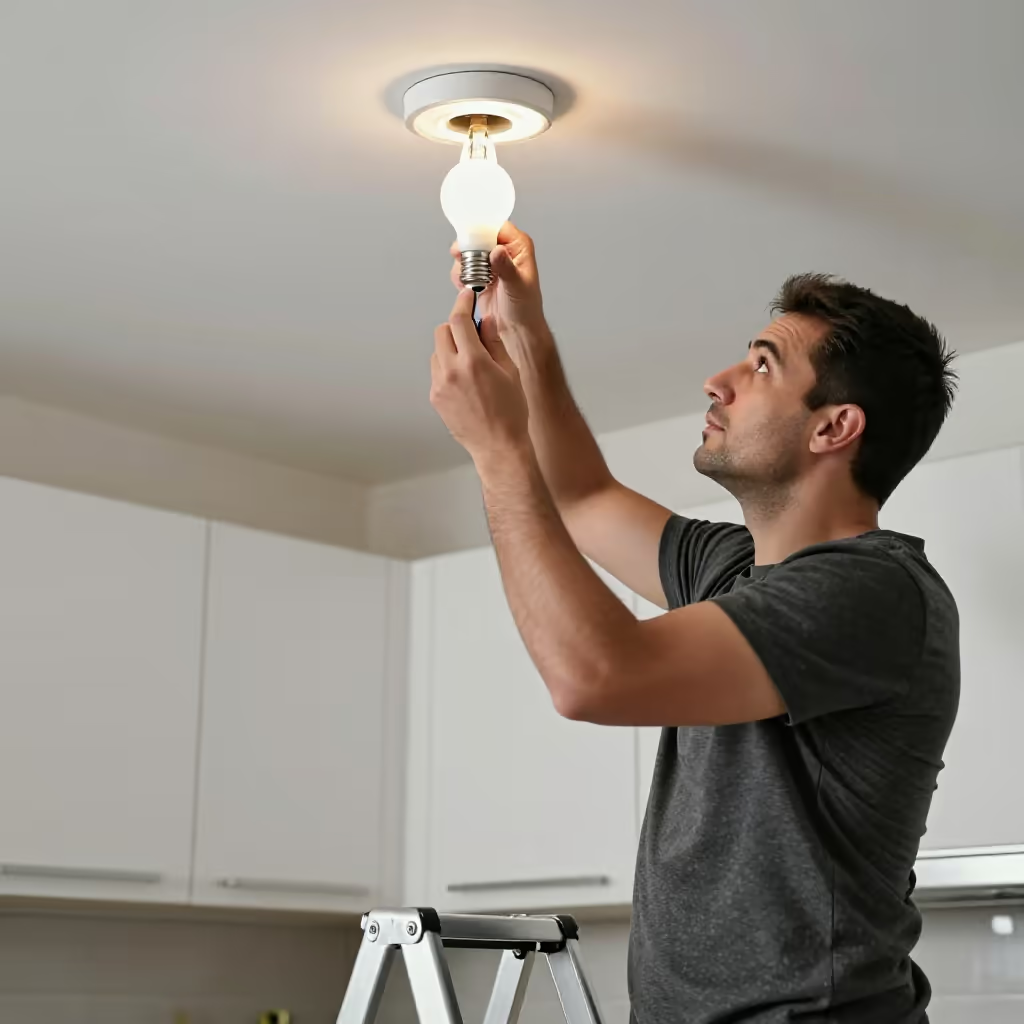
wechseln
to change
To replace something with another thing of the same kind; to exchange it.
EXAMPLE
Ich muss dringend die Glühbirne im Wohnzimmer wechseln.
I urgently need to change the light bulb in the living room.
to change / switch
Loading your saved state.
to change
To replace something with another thing of the same kind; to exchange it.
Ich muss dringend die Glühbirne im Wohnzimmer wechseln.
I urgently need to change the light bulb in the living room.

to switch
To move from one place, state, topic, or activity to another.
Nach vielen Jahren in Berlin ist sie in eine andere Stadt gewechselt.
After many years in Berlin, she switched to another city.
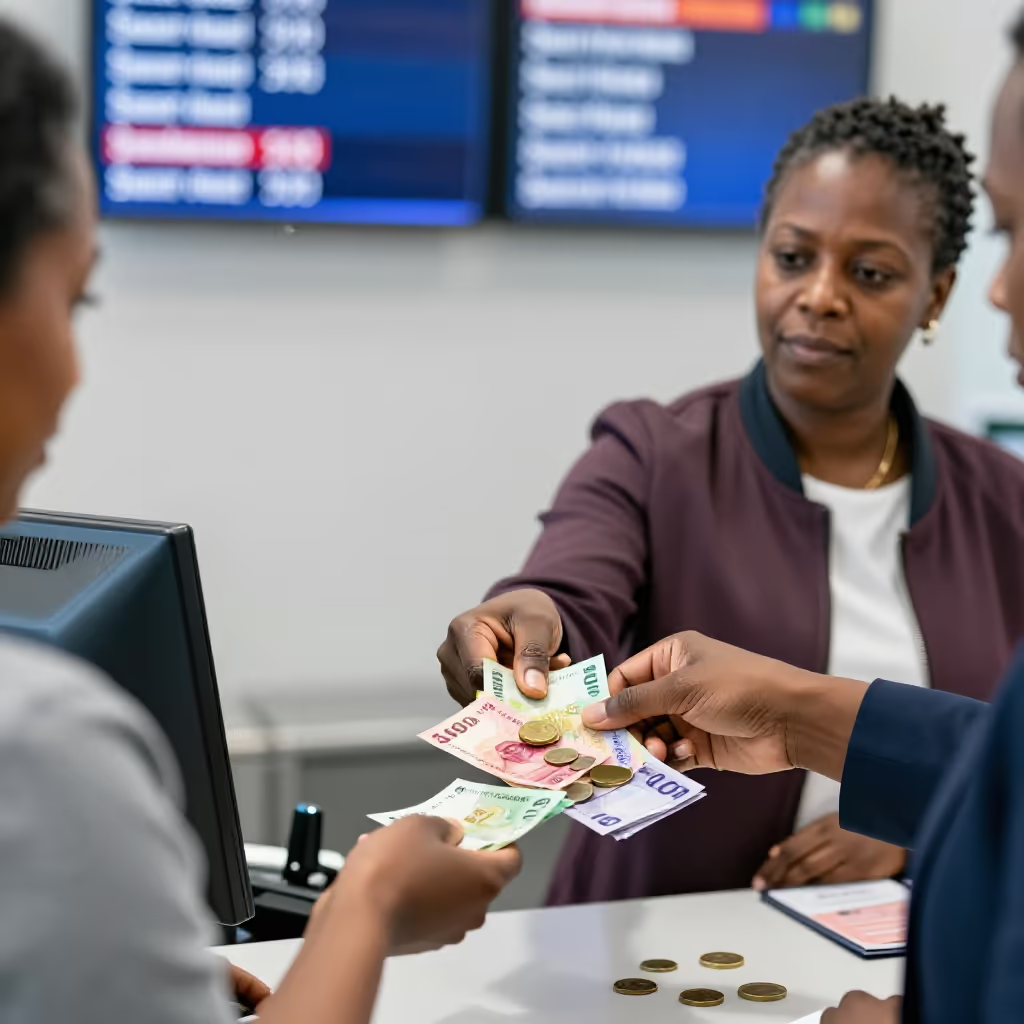
to change money
To exchange money into another currency or into smaller or larger banknotes or coins.
Können Sie mir bitte einen 50-Euro-Schein in zwei Zwanziger und einen Zehner wechseln?
Could you please change a 50-euro note for me into two twenties and a ten?

to exchange a few words
To have a short conversation with someone.
Wir haben uns auf der Konferenz getroffen und ein paar Worte gewechselt.
We met at the conference and exchanged a few words.

to substitute
In sports, to replace one player with another.
Der Trainer hat in der Halbzeitpause zweimal gewechselt.
The coach made two substitutions during halftime.
The verb 'wechseln' (to change/switch) belongs to the word family around 'der Wechsel' (change/switch). All meanings have to do with an exchange, a change, or a transition from one state or place to another.
Ein Jobwechsel ist oft eine große Herausforderung.
A job change is often a big challenge.
'Wechseln' (to change/switch) can be used with an accusative object to say WHAT you are exchanging. But it can also stand without an object to describe a transition, often together with prepositions.
Ich muss die Reifen am Auto wechseln.
I need to change the tires on the car.
In the meaning 'austauschen' (to exchange/replace), 'wechseln' (to change) is often combined with everyday things that need to be replaced regularly. Typical are: 'die Reifen wechseln' (to change the tires), 'die Bettwäsche wechseln' (to change the bed linen), or 'die Windeln wechseln' (to change diapers).
Es ist Zeit, die Winterreifen zu wechseln.
It's time to change the winter tires.
When 'wechseln' (to switch) describes a transition, prepositions like 'zu' (to), 'in' (into, with accusative), or 'nach' (to) are often used to indicate the new direction, the new place, or the new topic.
Lass uns das Thema wechseln.
Let's switch topics.
When you exchange money, use the structure 'etwas in etwas wechseln' (to change something into something). The preposition 'in' is used with the accusative here.
Ich möchte 100 Euro in Schweizer Franken wechseln.
I would like to change 100 euros into Swiss francs.
The idiom 'ein paar Worte wechseln' (to exchange a few words) means to have a short conversation. It is often combined with the preposition 'mit' (with) and a person in the dative.
Ich habe auf der Feier nur mit wenigen Leuten ein paar Worte gewechselt.
At the party, I exchanged only a few words with a few people.
to change
Ändern means designing something differently or modifying its content. Wechseln emphasizes moving to another option or replacing something with something of the same kind. The appropriate form therefore depends on the object: you change a plan, for example, but switch to a different provider.

Wegen der höheren Kosten wechsle ich zu einem anderen Tarif.
Because of the higher costs, I am switching to a different plan.
Wegen der höheren Kosten ändere ich meinen bisherigen Tarif.
Because of the higher costs, I am changing my current plan.