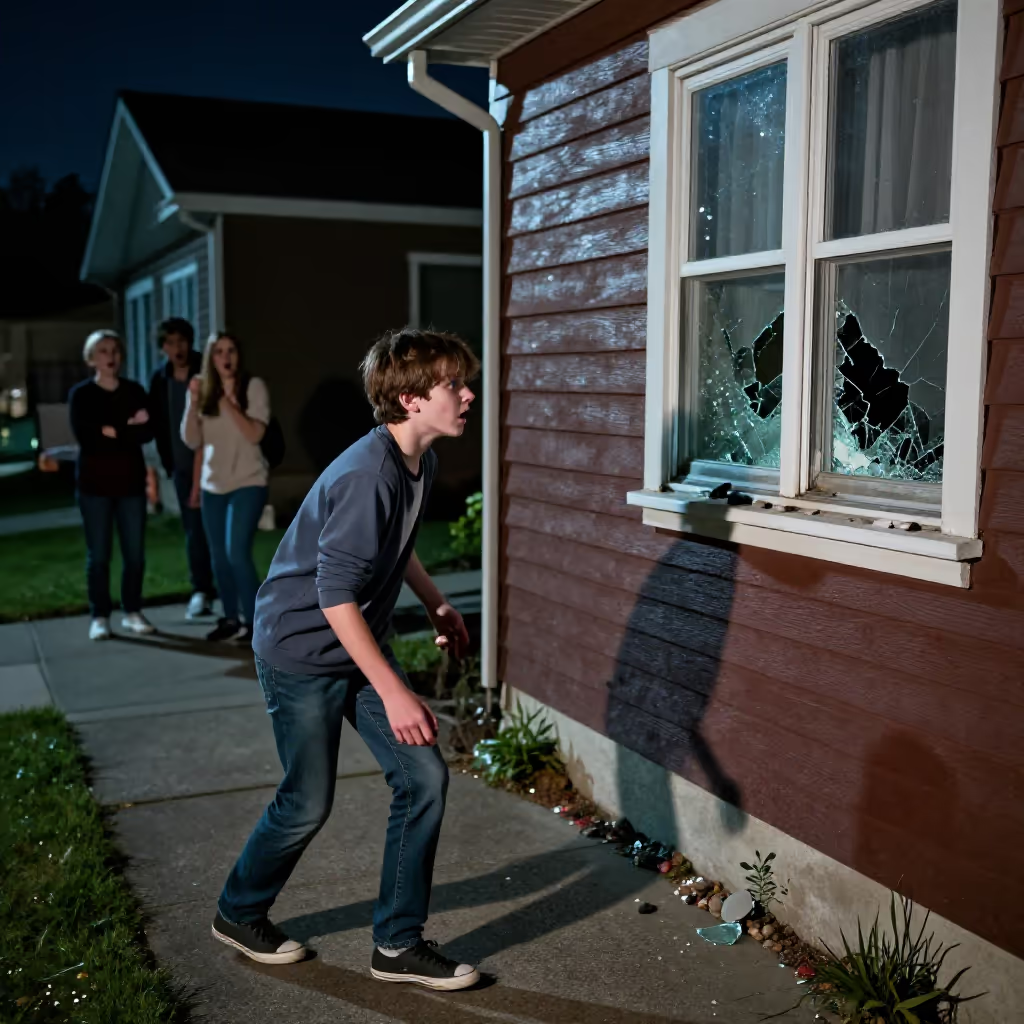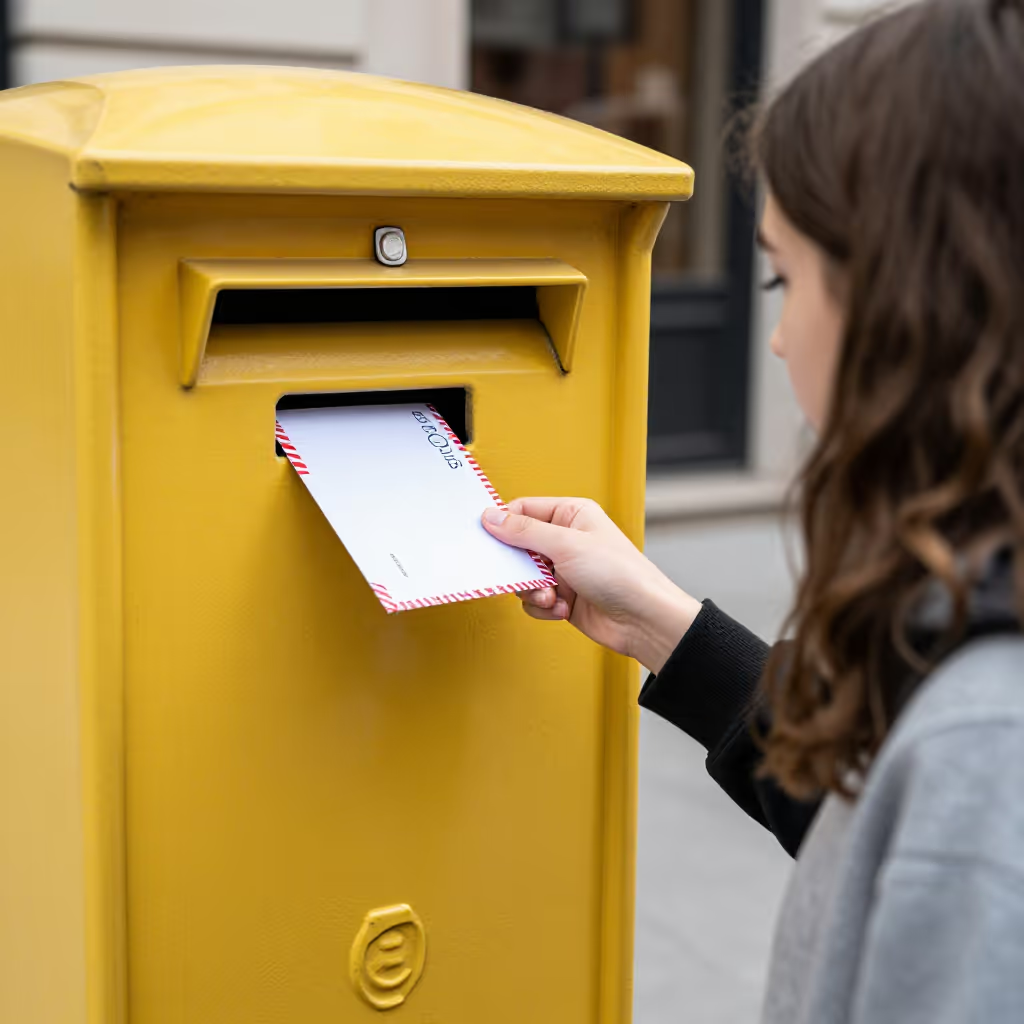
To throw something through an opening into a container or device, for example a letter into a mailbox or a coin into a machine.
example
Vergiss nicht, den Brief in den Briefkasten einzuwerfen.
Don't forget to drop the letter into the mailbox.

Usage tips
Separable verb
'Einwerfen' is a separable verb. In a main clause, the prefix 'ein' goes at the end of the sentence. In subordinate clauses and in the infinitive with 'zu', the verb stays together.
EXAMPLE
Er wirft eine Münze in den Automaten ein.
He drops a coin into the machine.
Word structure
The verb consists of the prefix 'ein-' (in, into) and the base verb 'werfen' (to throw). Most meanings can be derived from this literal idea of 'throwing something into something', including the metaphorical ones.
EXAMPLE
Bitte wirf den Schlüssel durch das offene Fenster ein.
Please throw the key in through the open window.
Typical objects
In its literal meaning, 'einwerfen' (to drop in) is often used with small objects that fit through an opening. Typical examples are: 'einen Brief einwerfen' (to drop in a letter), 'eine Münze einwerfen' (to insert a coin), or 'eine Postkarte einwerfen' (to drop in a postcard).
EXAMPLE
Um ein Getränk zu bekommen, musst du zuerst eine Münze einwerfen.
To get a drink, you first have to insert a coin.
Metaphorical meaning
In the figurative sense, you 'throw' a remark, question, or thought into a conversation. In German, this action is often described with 'kurz' (briefly) or 'schnell' (quickly).
EXAMPLE
Er warf in die Diskussion ein, dass das Budget nicht ausreichen würde.
He interjected in the discussion that the budget would not be enough.
Colloquial use
The use of 'einwerfen' (to pop) for taking tablets is colloquial. It conveys the idea of a quick, almost casual action.
EXAMPLE
Er hat sich vor der Prüfung schnell noch eine Kopfschmerztablette eingeworfen.
Before the exam, he quickly popped another headache tablet.
Destructive meaning
In combination with 'Scheibe' (pane) or 'Fenster' (window), 'einwerfen' always means to destroy something. The object that is thrown, e.g. a stone, does not have to be mentioned.
EXAMPLE
Die Vandalen haben mehrere Fensterscheiben am Bahnhof eingeworfen.
The vandals smashed several windowpanes at the train station.
Compare with
near_synonym
einwerfen vs hinzufügen
to add
'hinzufügen' and 'einwerfen' can both mean that someone says something additional in a conversation. 'hinzufügen' is neutral and can also refer to longer or planned additions, spoken or written. 'einwerfen' is more suitable for a short comment, question, or idea that someone brings into an ongoing conversation. It can sound spontaneous and sometimes like a small interruption. If you calmly add another point, you are more likely to say 'hinzufügen'. If someone briefly says something in between, 'einwerfen' fits better.
einwerfen
Während der Diskussion warf Lena ein, dass die Kosten noch nicht geklärt sind.
During the discussion, Lena interjected that the costs had not yet been clarified.
hinzufügen
Im Bericht fügt er am Ende noch eine kurze Erklärung hinzu.
In the report, he adds a brief explanation at the end.