


schlucken
to swallow
To move food, liquid, or saliva from the mouth into the esophagus through a movement of the throat muscles.
EXAMPLE
Man sollte Tabletten immer mit viel Wasser schlucken.
You should always swallow tablets with plenty of water.
to swallow
Loading your saved state.
to swallow
To move food, liquid, or saliva from the mouth into the esophagus through a movement of the throat muscles.
Man sollte Tabletten immer mit viel Wasser schlucken.
You should always swallow tablets with plenty of water.
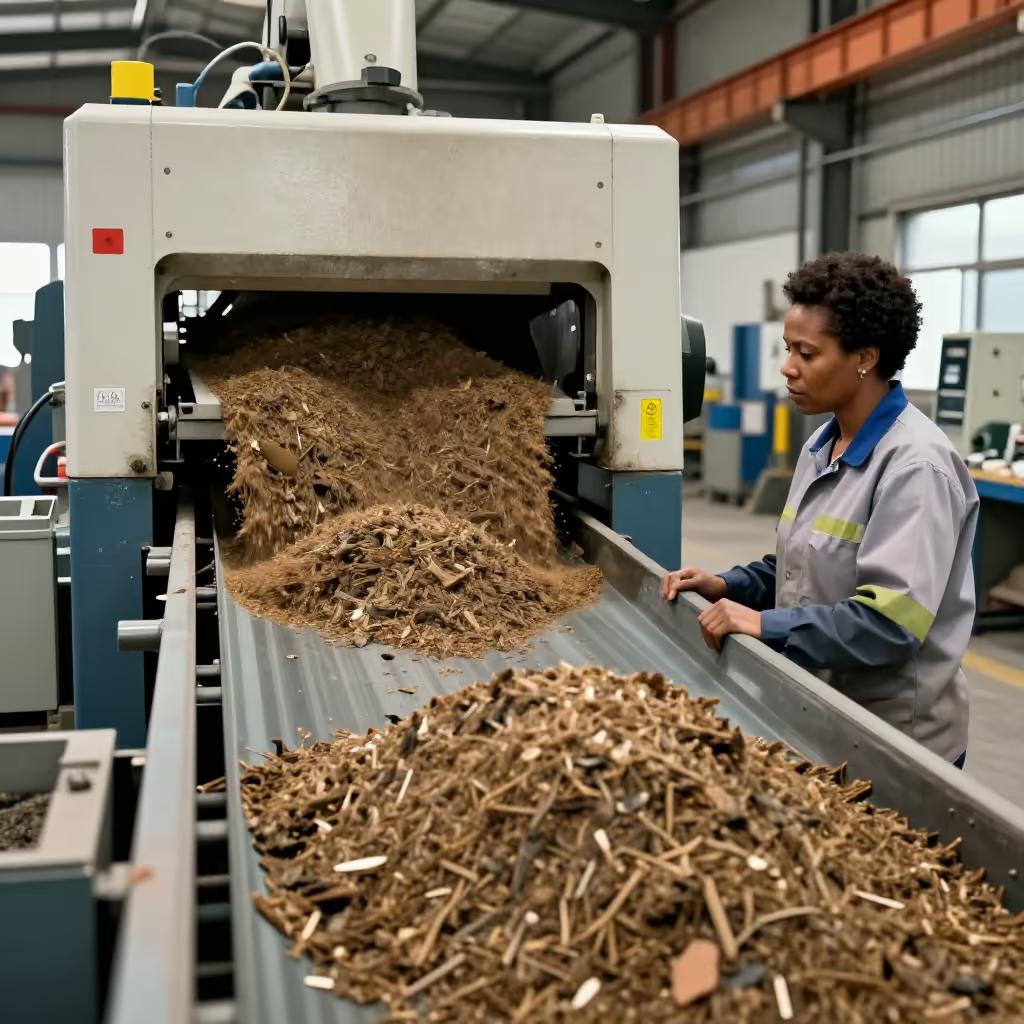
to consume / absorb
In a figurative sense, to consume, take in, or absorb something, often in large amounts. This often refers to money, resources, or also light and sound.
Der Bau des neuen Flughafens hat Milliarden an Steuergeldern geschluckt.
The construction of the new airport consumed billions in taxpayers' money.

to swallow
To accept or endure something unpleasant, such as an insult or a defeat, without defending oneself or saying anything in response.
Er musste die Kritik schlucken, obwohl sie unfair war.
He had to swallow the criticism, even though it was unfair.

to guzzle
Informal term for high consumption, especially with vehicles in relation to fuel.
Mein altes Auto schluckt auf der Autobahn fast 12 Liter Benzin.
My old car guzzles almost 12 liters of gas on the highway.
'Schlucken' (to swallow) is a transitive verb and almost always needs an accusative object. You always swallow 'etwas' (something).
Das Kind weigerte sich, die bittere Medizin zu schlucken.
The child refused to swallow the bitter medicine.
The different meanings of 'schlucken' (to swallow) are easy to recognize from the object. If it is food or drink (tablet, water), the literal meaning is intended. With abstract things (money, criticism, anger), it has a figurative meaning.
Er musste seinen Stolz schlucken und um Hilfe bitten.
He had to swallow his pride and ask for help.
In the figurative meaning 'verbrauchen' (to consume), 'schlucken' (to consume) is often used for projects or devices that require many resources. Typical objects are 'Geld' (money), 'Zeit' (time), or 'Energie' (energy).
Die Renovierung des alten Hauses schluckt unglaublich viel Zeit und Geld.
The renovation of the old house is consuming an incredible amount of time and money.
When you accept something unpleasant without protesting, 'schlucken' (to swallow) is combined with negative words or feelings. Common phrases are to swallow 'die Wut' (anger), 'den Ärger' (annoyance), 'die Kritik' (criticism), or 'eine Beleidigung' (an insult).
Statt zu antworten, hat sie die Bemerkung einfach geschluckt.
Instead of replying, she simply swallowed the comment.
The use of 'schlucken' (to guzzle) for the high fuel consumption of a vehicle is colloquial. In a more formal context, you would say 'verbrauchen' (to consume).
Dieses große, alte Auto schluckt leider sehr viel Benzin.
Unfortunately, this big old car guzzles a lot of gas.
to accept
In the case of a defeat, both words can express that one no longer rejects it. „Akzeptieren“ refers more to consciously acknowledging the fact, while „schlucken“ is colloquial and figurative, emphasizing reluctant endurance without putting up a fight. „Akzeptieren“ fits a neutral statement, while „schlucken“ is often used for the personal hurt involved.

Nach dem verlorenen Spiel musste die Mannschaft die Niederlage erst einmal schlucken.
After the lost game, the team had to swallow the defeat for the time being.
Nach dem verlorenen Spiel musste die Mannschaft die Niederlage akzeptieren.
After the lost game, the team had to accept the defeat.