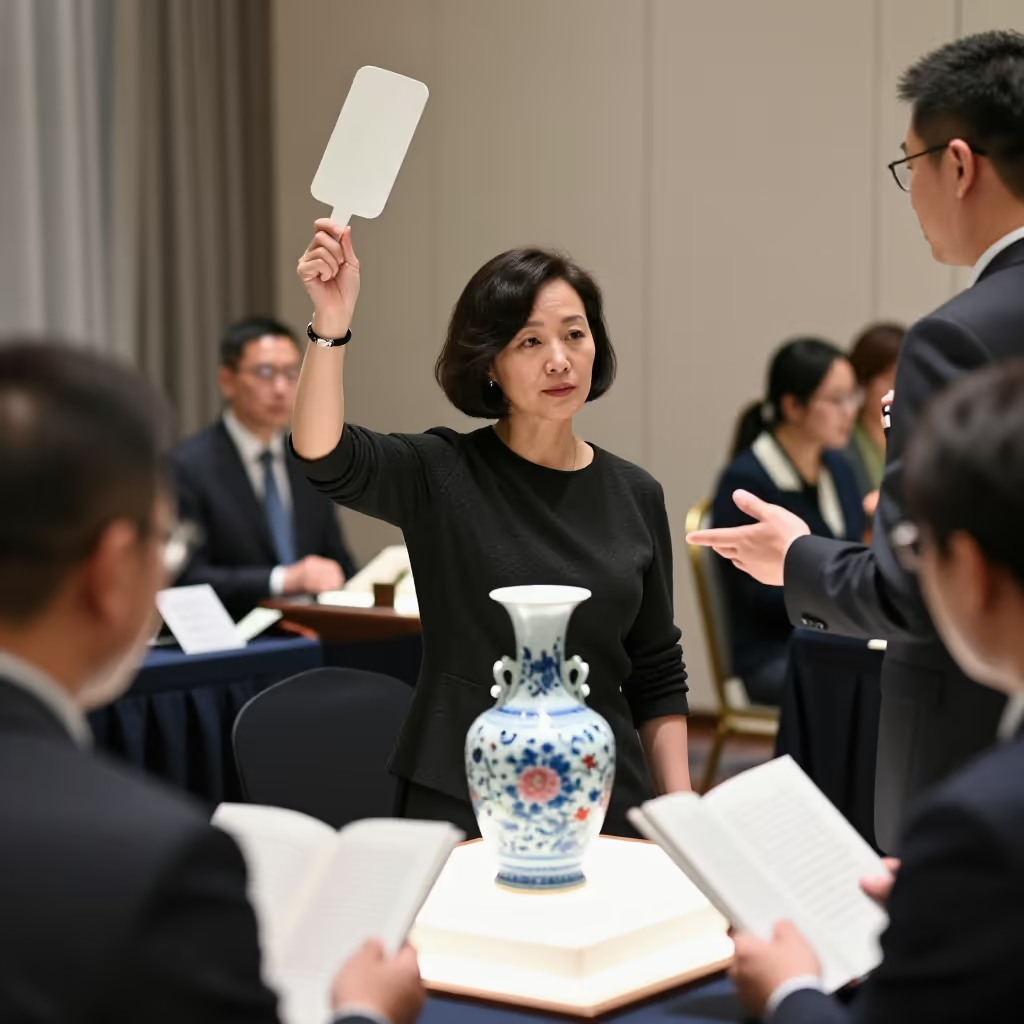
To buy or acquire something. The term is often used in an elevated or formal context, for example when buying art, antiques, or at auctions.
example
Auf der Auktion konnte er ein wertvolles Gemälde für einen guten Preis erstehen.
At the auction, he was able to acquire a valuable painting for a good price.

Usage tips
Inseparable verb
'Erstehen' (to acquire/to arise) is an inseparable verb. The prefix 'er-' remains firmly attached to the verb stem 'stehen' in all tenses and sentence constructions.
EXAMPLE
Er hat das seltene Buch auf einem Flohmarkt erstanden.
He acquired the rare book at a flea market.
Register and style
In the meaning 'kaufen' (to buy), 'erstehen' (to acquire) is an elevated or formal word. It is typically used for special purchases such as art, antiques, or collectibles, not for everyday shopping.
EXAMPLE
Auf dem Kunstmarkt kann man einzigartige Skulpturen erstehen.
At the art market, you can acquire unique sculptures.
Poetic language
The meaning 'auferstehen' (to rise again) or 'neu entstehen' (to come into being anew) is archaic or poetic. Today it is used almost only in literature or in fixed expressions such as 'wie Phönix aus der Asche erstehen' (to arise like a phoenix from the ashes).
EXAMPLE
In dem Gedicht lässt der Autor die antike Stadt neu erstehen.
In the poem, the author makes the ancient city arise anew.
Typical collocations
Common contexts for 'erstehen' (to acquire) are auctions, markets, or galleries. It is often combined with adverbs such as 'günstig' (at a good price), 'preiswert' (inexpensively), or 'teuer' (expensively).
EXAMPLE
Sie konnte das antike Möbelstück sehr günstig erstehen.
She was able to acquire the antique piece of furniture at a very good price.
Compare with
near_synonym
erstehen vs kaufen
to buy
'kaufen' and 'erstehen' can both mean that you receive something in exchange for money. 'kaufen' is the normal word for everyday situations, for example in the supermarket or online. 'erstehen' sounds more elevated or formal and is more suitable when something special is bought, for example art, an antique, or an item at an auction. In normal conversations, 'kaufen' is usually more natural. 'erstehen' can give the sentence a slightly ceremonial or special tone.
erstehen
Auf dem Markt ersteht Sofia eine alte Lampe für ihr Wohnzimmer.
At the market, Sofia acquires an old lamp for her living room.
kaufen
Wegen des Besuchs kaufen wir morgen mehr Gemüse und Getränke.
Because we have visitors coming, we'll buy more vegetables and drinks tomorrow.