

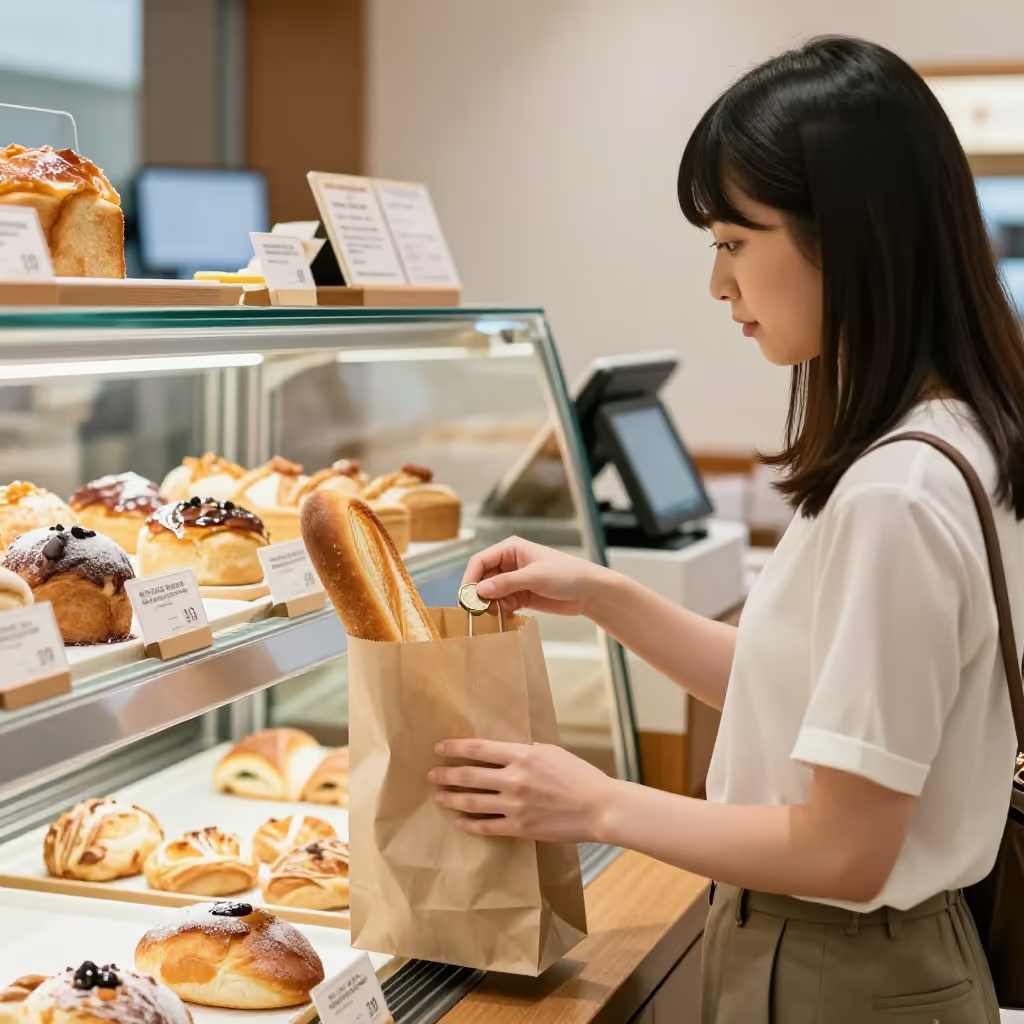
kaufen
to buy
To acquire something in exchange for payment of money.
EXAMPLE
Morgen gehe ich ein neues Fahrrad kaufen.
Tomorrow I'm going to buy a new bicycle.
to buy
Loading your saved state.
to buy
To acquire something in exchange for payment of money.
Morgen gehe ich ein neues Fahrrad kaufen.
Tomorrow I'm going to buy a new bicycle.
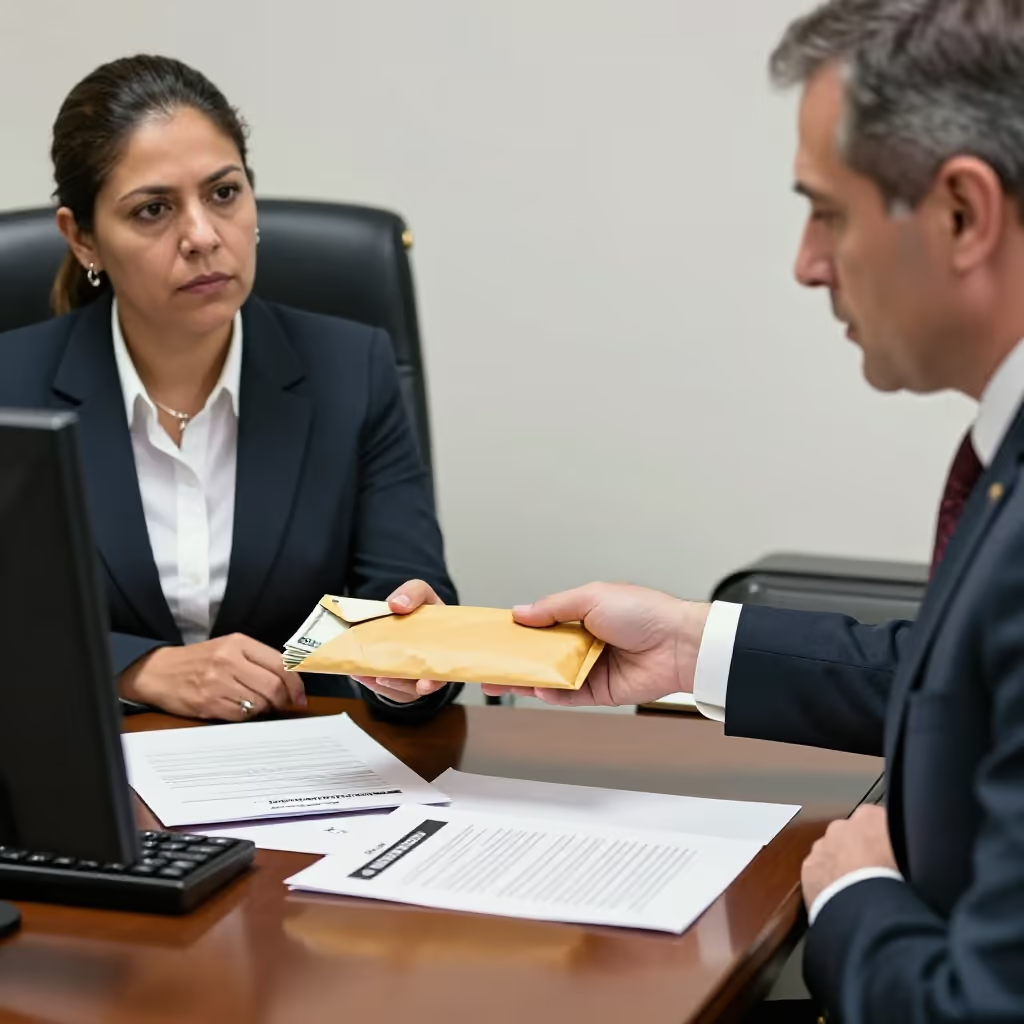
to buy / bribe
To bribe someone with money or other benefits in order to get them to do something dishonest or illegal.
Der Angeklagte versuchte, den Richter zu kaufen.
The defendant tried to bribe the judge.
'Kaufen' (to buy) is often used with two objects: the person for whom something is bought is in the dative, and the thing bought is in the accusative.
Er kauft seiner Freundin einen Ring.
He buys his girlfriend a ring.
The reflexive form 'sich (dative) etwas kaufen' (to buy oneself something) is very common and means that you buy something for yourself. It often emphasizes treating yourself or doing something nice for yourself.
Nach der harten Woche habe ich mir ein gutes Buch gekauft.
After the hard week, I bought myself a good book.
You can recognize the figurative meaning 'bestechen' (to bribe) from the context. The object is then not a product, but a person in a position of power, e.g. a witness, an official, or a referee.
Man warf ihm vor, den Schiedsrichter gekauft zu haben.
He was accused of having bribed the referee.
to solve / loosen
Kaufen generally refers to acquiring something in exchange for money and can also be used for tickets. With tickets and admission tickets, lösen has the same basic meaning, but it is a special, fixed expression in this context. Both work, but „lösen“ is restricted to this kind of ticket.
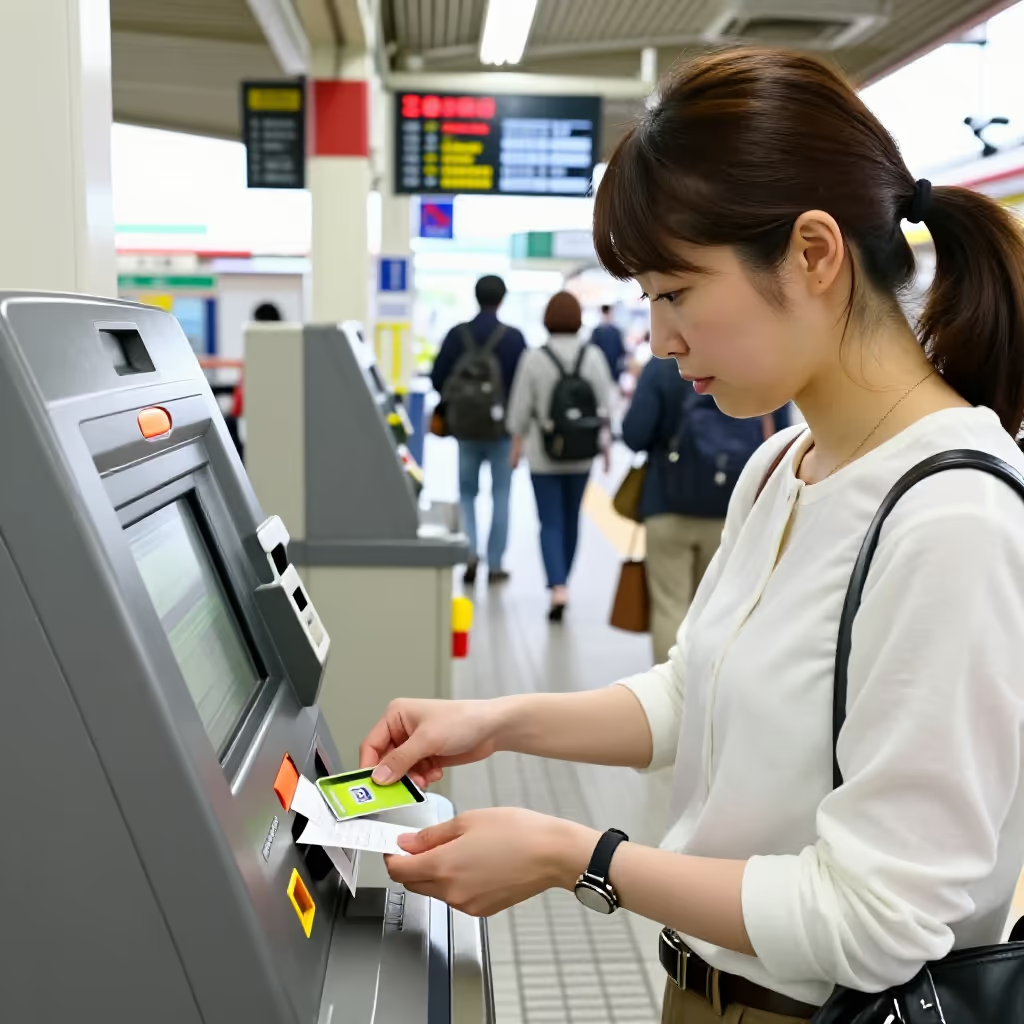
Lea kauft am Automaten eine Fahrkarte nach Bonn.
Lea buys a ticket to Bonn at the vending machine.
Lea löst am Automaten eine Fahrkarte nach Bonn.
Lea buys a ticket to Bonn at the vending machine.