

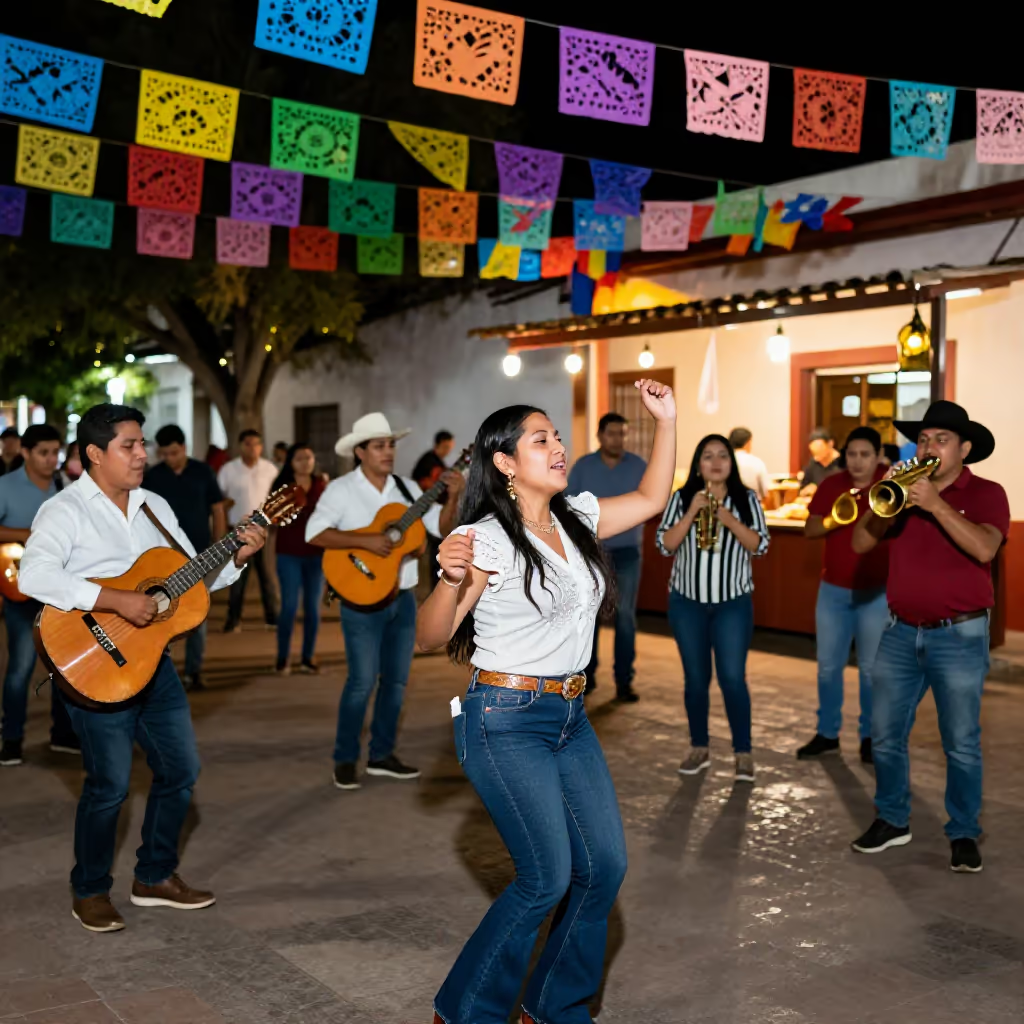
die Fiesta
fiesta
A lively celebration or party, often with a connection to Spanish or Latin American culture.
Zum Abschluss des Spanischkurses veranstalten wir eine große Fiesta.
To mark the end of the Spanish course, we're organizing a big fiesta.
fiesta
Loading your saved state.

fiesta
A lively celebration or party, often with a connection to Spanish or Latin American culture.
Zum Abschluss des Spanischkurses veranstalten wir eine große Fiesta.
To mark the end of the Spanish course, we're organizing a big fiesta.
'Fiesta' is a loanword from Spanish and means 'Fest' (celebration/festival) there. In German, it is often used for parties that have a connection to Spanish or Latin American culture, for example through music, food, or dance.
Für ihren Geburtstag plant sie eine Fiesta mit Tapas und Salsa-Musik.
For her birthday, she's planning a fiesta with tapas and salsa music.
You can say 'eine Fiesta machen' (to have a fiesta), 'eine Fiesta veranstalten' (to organize a fiesta), or 'eine Fiesta feiern' (to celebrate a fiesta). If you participate as a guest, you say 'auf eine Fiesta gehen' (to go to a fiesta).
Am Samstagabend gehen wir auf eine große Fiesta bei Freunden.
On Saturday evening, we're going to a big fiesta at friends' place.
The word 'Fiesta' (fiesta) is colloquial and sounds lively and cheerful. It evokes the idea of an exuberant celebration with lots of energy, music, and good vibes.
Das war eine tolle Fiesta gestern, wir haben bis zum Morgen getanzt!
That was a great fiesta yesterday; we danced until morning!
firm / fixed
In this entry, fest is an adjective and does not refer to an event; the intended noun meaning of “Fest” is missing. A Fiesta is a lively celebration or party with a connection to Spanish or Latin American culture.

Die Fiesta wird mit spanischer Musik und ausgelassener Stimmung gefeiert.
The fiesta is celebrated with Spanish music and a lively atmosphere.
Der Termin für die große Party steht bereits fest.
The date for the big party has already been set.