

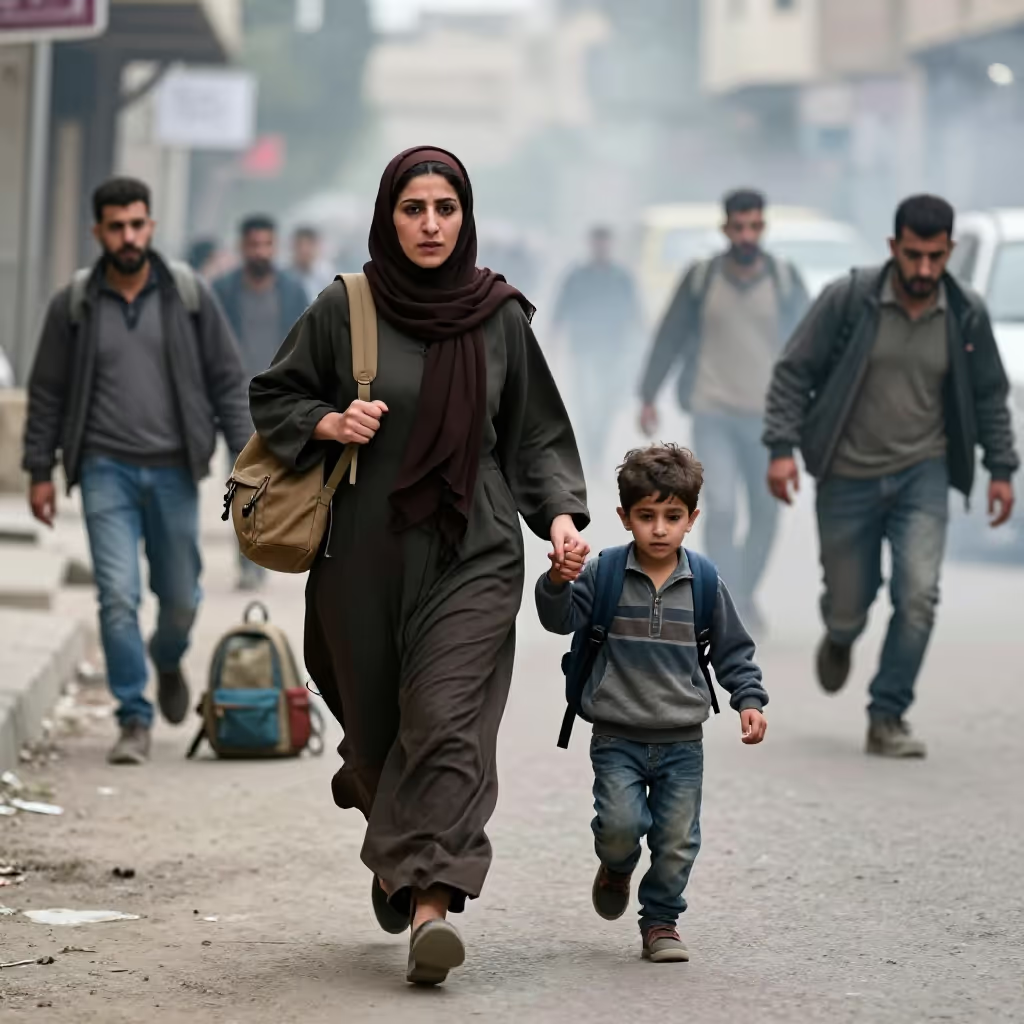
flüchten
to flee
To move quickly away from a place in order to escape danger, pursuit, or an unpleasant situation.
EXAMPLE
Die Bewohner mussten vor dem Hochwasser flüchten.
The residents had to flee from the flood.
to flee
Loading your saved state.
to flee
To move quickly away from a place in order to escape danger, pursuit, or an unpleasant situation.
Die Bewohner mussten vor dem Hochwasser flüchten.
The residents had to flee from the flood.

to escape into
To seek refuge or distraction from problems or reality in a particular activity, state, or fantasy world.
Nach der Trennung flüchtete er sich in die Arbeit.
After the breakup, he escaped into work.
The verb 'flüchten' (to flee) belongs to a word family with 'die Flucht' (the escape/flight) and 'der Flüchtling' (the refugee, the person who flees). These words share the basic meaning of quickly leaving a dangerous place.
Die Familie war auf der Flucht und musste aus ihrer Heimat flüchten.
The family was on the run and had to flee their homeland.
'Flüchten' (to flee) describes movement away from a place. Therefore, the perfect tense is always formed with the auxiliary verb 'sein' (to be), not with 'haben' (to have).
Der Dieb ist über das Dach geflüchtet.
The thief fled over the roof.
Pay attention to the prepositions: you flee 'vor' (from) a danger (dative), 'aus' (out of/from) a place (dative), and 'in' (into) or 'nach' (to) another country (accusative).
Viele Menschen mussten aus ihrer Stadt vor dem Krieg flüchten.
Many people had to flee their city because of the war.
In this meaning, the verb is always reflexive: 'sich flüchten' (to escape). It is used with the preposition 'in' and the accusative and describes a psychological escape into an activity or state.
Er flüchtet sich oft in seine Fantasiewelt, um dem Stress zu entkommen.
He often escapes into his fantasy world to get away from the stress.
to flee
Fliehen and flüchten can both describe leaving quickly in order to escape danger. Fliehen usually focuses on fleeing from something, while flüchten often additionally emphasizes searching for a safe destination or shelter. Both words are possible, but specifying a destination makes flüchten especially appropriate.

Die Familie flüchtete vor dem Krieg in ein sicheres Dorf.
The family fled to a safe village because of the war.
Die Familie floh vor dem Krieg aus ihrer Heimat.
The family fled their homeland because of the war.