

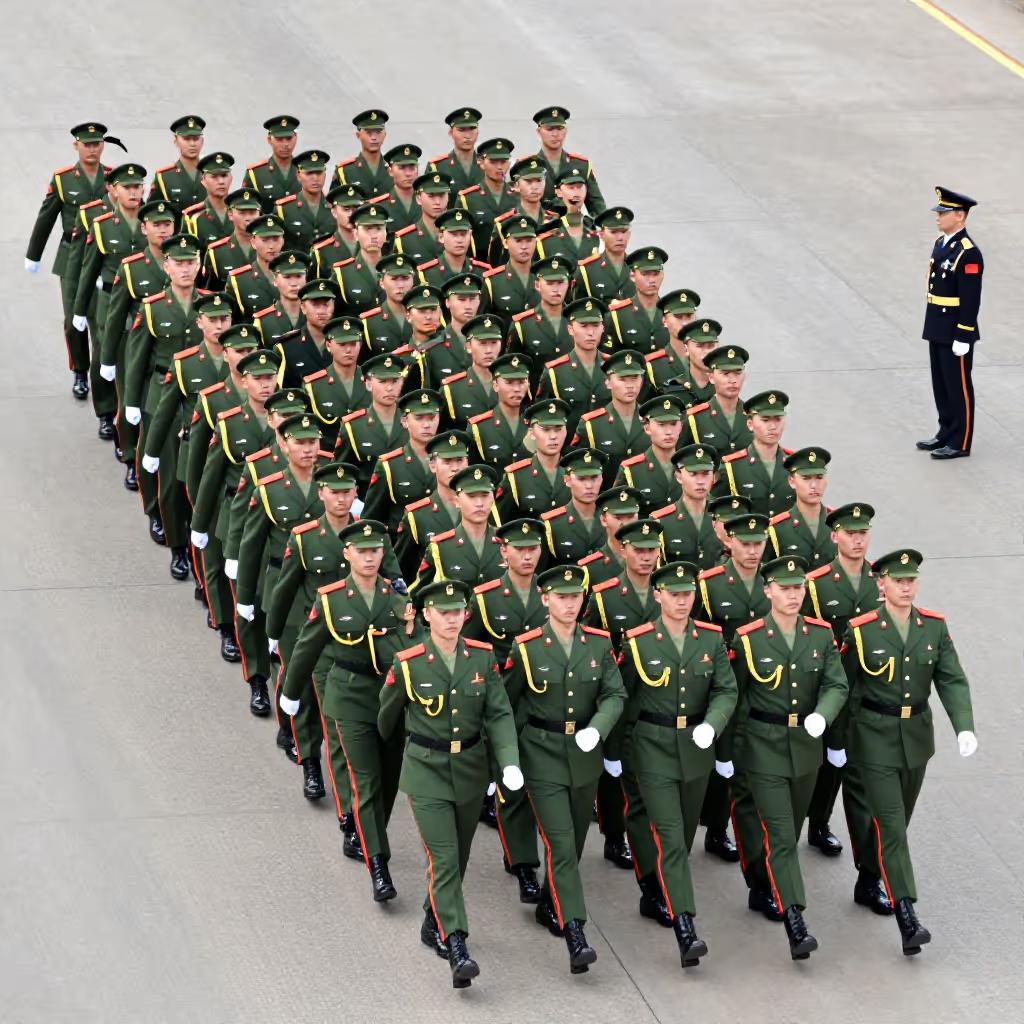
die Formation
formation
A specific, ordered arrangement or positioning of people or objects, for example soldiers, airplanes, or dancers.
EXAMPLE
Die Flugzeuge flogen in einer perfekten V-Formation.
The airplanes flew in a perfect V formation.
formation
Loading your saved state.
formation
A specific, ordered arrangement or positioning of people or objects, for example soldiers, airplanes, or dancers.
Die Flugzeuge flogen in einer perfekten V-Formation.
The airplanes flew in a perfect V formation.
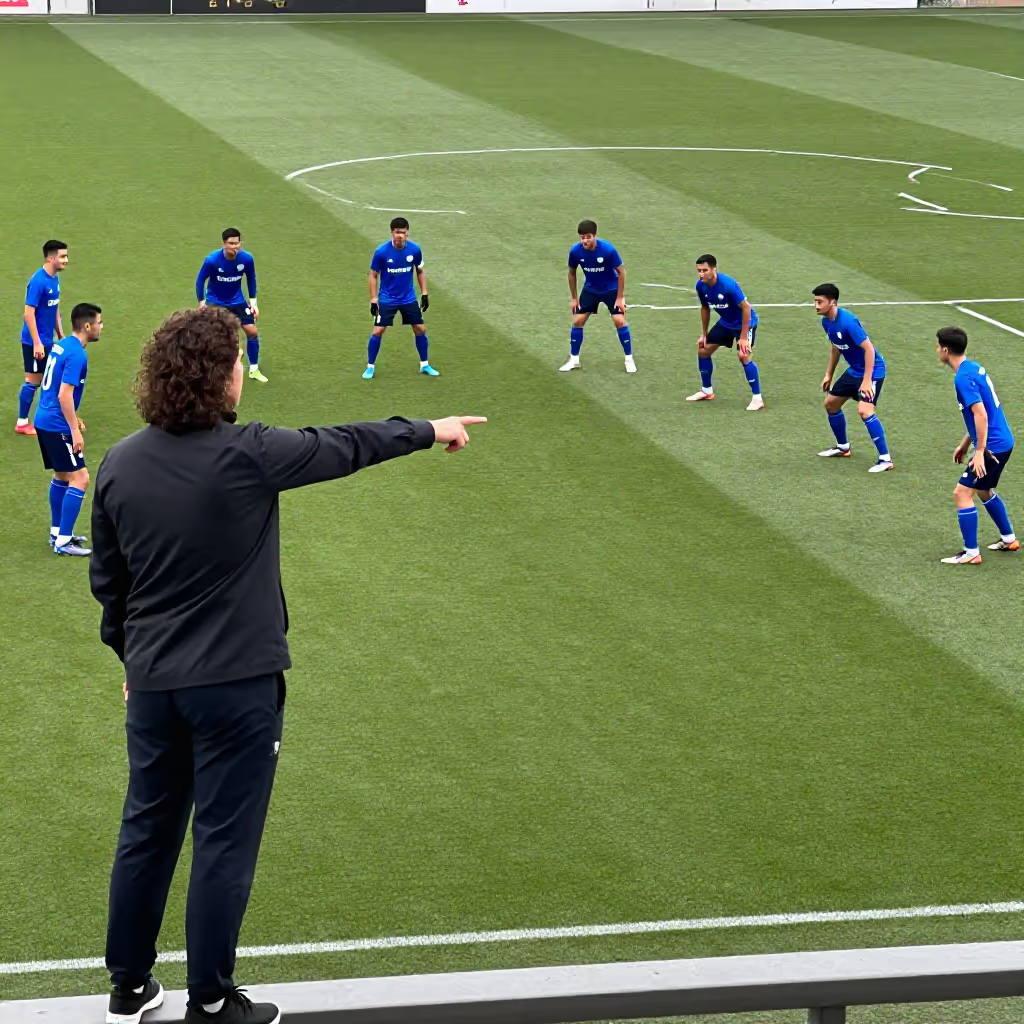
formation
In sports, especially soccer, the team's lineup or tactical system.
Der Trainer änderte die Formation für die zweite Halbzeit.
The coach changed the formation for the second half.

formation
In geology, a rock unit that differs from other layers through certain characteristics and was formed under similar conditions.
Diese beeindruckende Fels-Formation ist durch Erosion entstanden.
This impressive rock formation was created by erosion.

formation
The process of forming or developing something.
Die Formation von Sternen ist ein komplexer astrophysikalischer Vorgang.
The formation of stars is a complex astrophysical process.
The ending '-ation' indicates an international word that often describes a process or the result of a process. 'Formation' is the noun corresponding to the verb 'formieren' (to arrange oneself, to form).
Die Soldaten mussten sich für die Parade formieren.
The soldiers had to form up for the parade.
In the general meaning, 'Formation' (formation) is often used with the preposition 'in' to describe an ordered group. For example, you say that birds fly 'in Formation' (in formation).
Die Motorradfahrer fuhren in einer engen Formation über die Brücke.
The motorcyclists rode across the bridge in a tight formation.
When you hear 'Formation' (formation) in the context of sports, it almost always means the tactical lineup of a team. Typical combinations are 'die Formation ändern' (to change the formation) or 'eine defensive Formation wählen' (to choose a defensive formation).
Der Trainer entschied sich für eine 4-4-2-Formation.
The coach decided on a 4-4-2 formation.
In texts about nature, geography, or geology, 'Formation' (formation) refers to a large natural structure made of rock. Words like 'Fels' (rock), 'Gestein' (rock/stone), or 'Erosion' (erosion) are clear clues to this meaning.
Die riesige Felsformation zieht jedes Jahr viele Touristen an.
The huge rock formation attracts many tourists every year.
education / formation
When referring to geological structures, both words can concern the process by which they come into existence. Bildung refers mainly to the forming process, while Formation can additionally mean the resulting, technically defined rock unit. Use Bildung for the process; for the distinct, organized rock unit, Formation is the better choice.

Diese Formation besteht aus mehreren deutlich erkennbaren Gesteinsschichten.
This formation consists of several clearly recognizable layers of rock.
Die Bildung dieser Gesteinsstruktur wurde durch hohen Druck beeinflusst.
The formation of this rock structure was influenced by high pressure.