


freundlich
friendly
Showing pleasant, courteous, and kind behavior toward other people.
EXAMPLE
Der neue Kollege ist sehr freundlich und hilfsbereit.
The new colleague is very friendly and helpful.
friendly
Loading your saved state.
friendly
Showing pleasant, courteous, and kind behavior toward other people.
Der neue Kollege ist sehr freundlich und hilfsbereit.
The new colleague is very friendly and helpful.

bright / inviting
Having a pleasant, bright, and inviting atmosphere or appearance.
Die Wohnung ist mit ihren großen Fenstern sehr hell und freundlich.
With its large windows, the apartment is very bright and inviting.
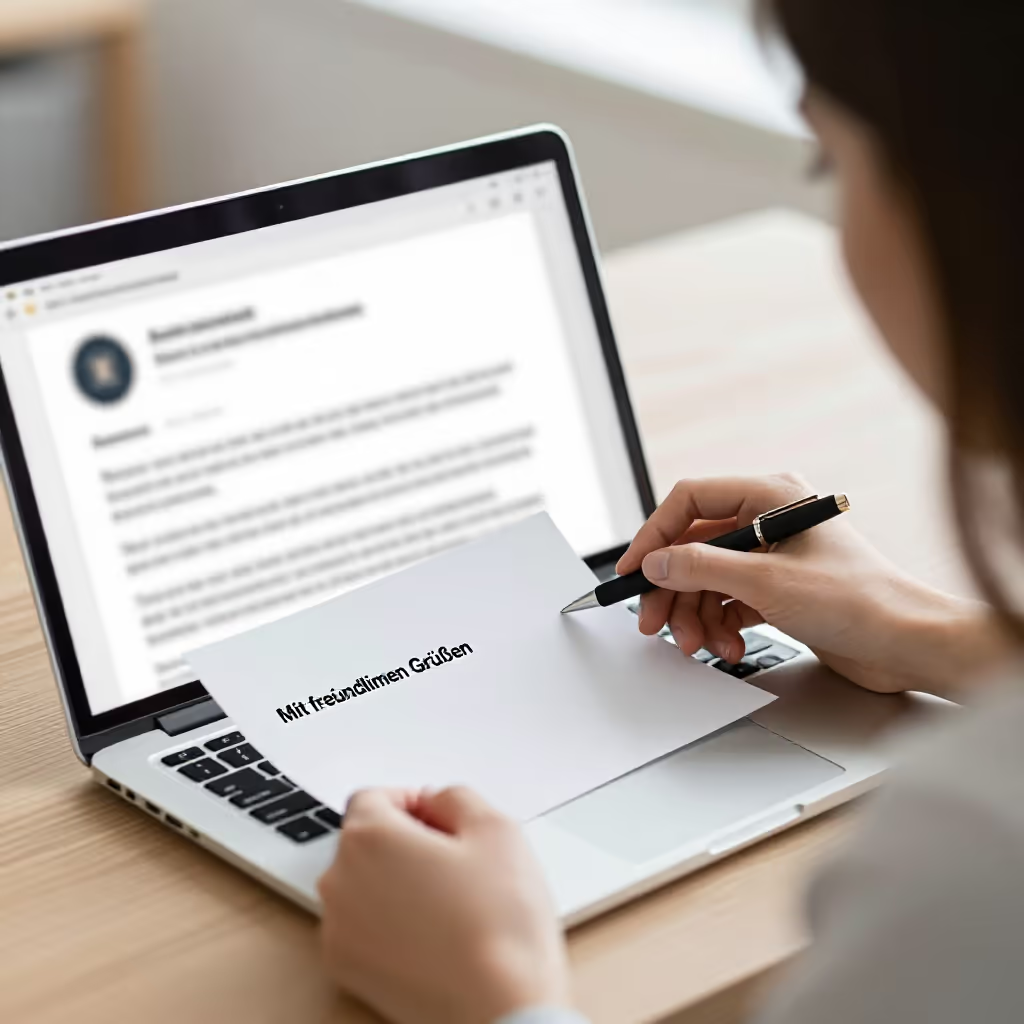
kind regards
A common, formal closing phrase at the end of letters or emails.
Wir freuen uns auf Ihre Antwort. Mit freundlichen Grüßen, die Geschäftsleitung.
We look forward to your reply. Kind regards, the management.
The adjective 'freundlich' (friendly) is made up of the noun 'Freund' (friend) and the ending '-lich' (-ly/-like). So it literally means 'like a friend' or 'in the manner of a friend'.
Er hat eine sehr freundliche Art, mit Menschen zu sprechen.
He has a very friendly way of speaking with people.
To express who the friendly behavior is directed toward, the preposition 'zu' with the dative is often used. The structure is: 'freundlich zu jemandem sein' (to be friendly to someone).
Die Lehrerin ist immer freundlich zu den Schülern.
The teacher is always friendly to the students.
When 'freundlich' (friendly) describes a person, it refers to their character. If it describes a place, objects, or the weather, however, it means 'pleasant', 'bright', or 'inviting'.
Das Zimmer wirkt durch die hellen Farben sehr freundlich.
The room feels very bright and inviting because of the light colors.
The phrase 'Mit freundlichen Grüßen' (Kind regards) is the standard closing phrase at the end of formal letters and emails. In quick digital communication, it is sometimes abbreviated as 'MfG'.
Vielen Dank für Ihre schnelle Antwort. Mit freundlichen Grüßen, Anna Schmidt.
Thank you for your quick reply. Kind regards, Anna Schmidt.
nice / dear
Lieb and freundlich can both describe a kind and considerate way of treating others. Freundlich focuses more on visible, pleasant, and courteous behavior. Lieb also conveys personal warmth or kindness and therefore often sounds more emotional.

Die Pflegerin begrüßt den ängstlichen Patienten freundlich und bietet ihm einen Sitzplatz an.
The nurse warmly greets the frightened patient and offers him a seat.
Die Pflegerin ist sehr lieb und tröstet den ängstlichen Patienten.
The nurse is very kind and comforts the frightened patient.