

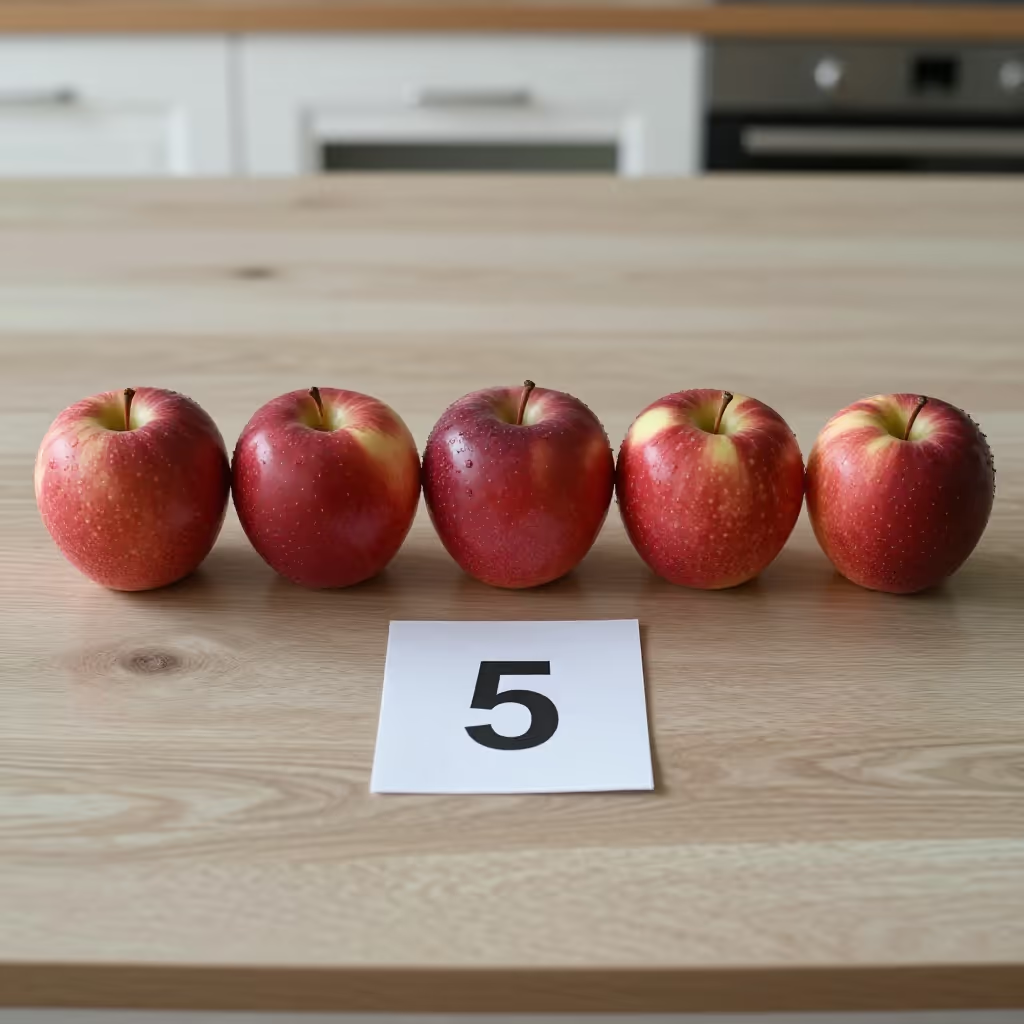
fünf
five
The cardinal number that follows four; the numeral 5.
EXAMPLE
Ich habe fünf Äpfel gekauft.
I bought five apples.
five
Loading your saved state.
five
The cardinal number that follows four; the numeral 5.
Ich habe fünf Äpfel gekauft.
I bought five apples.
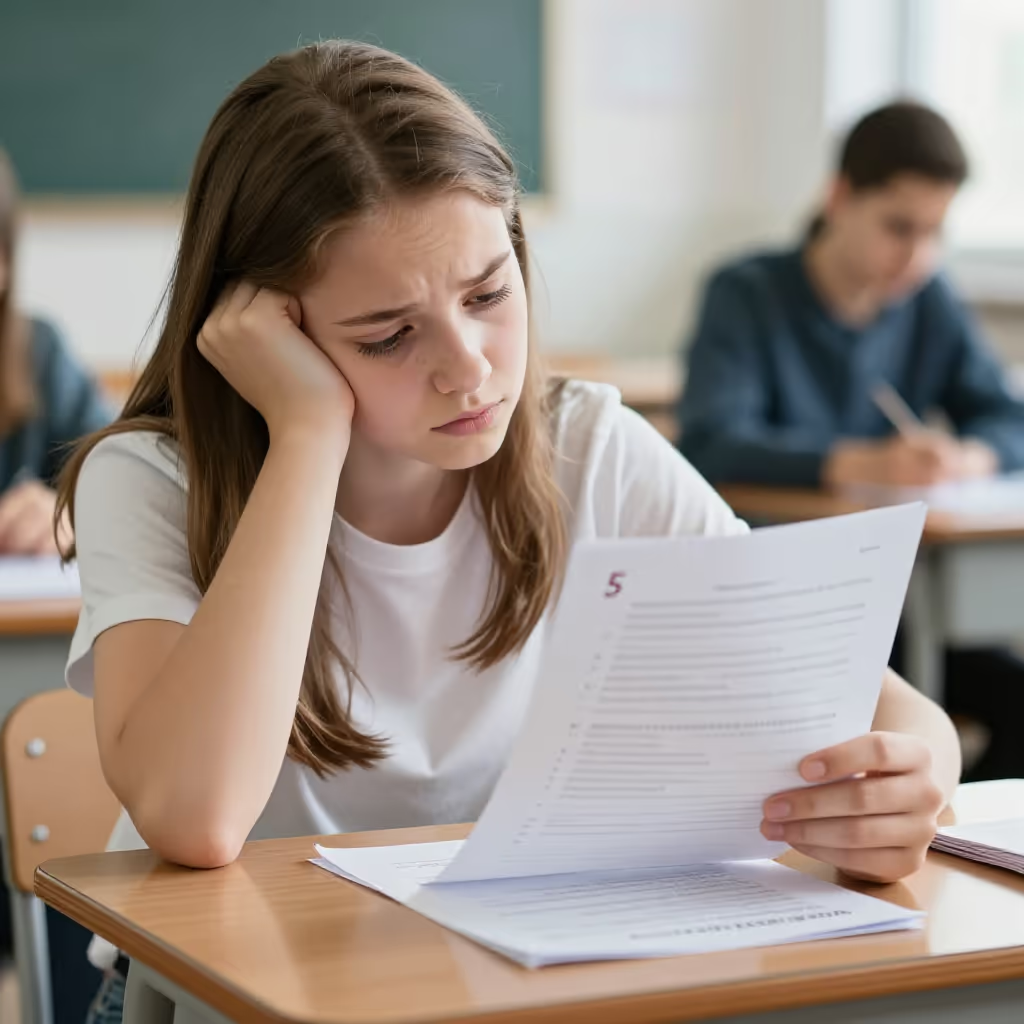
grade five
In Germany, refers to the school grade 'mangelhaft' (poor), which corresponds to failing an exam or assignment.
Leider hat er in der Mathearbeit eine Fünf geschrieben.
Unfortunately, he got a five on the math test.

to be lenient
A colloquial expression meaning not to be so exact or strict, and to make an exception or overlook something.
Ach komm, für heute lassen wir mal fünf gerade sein und machen früher Feierabend.
Oh come on, for today let's be lenient and call it a day early.
In the German school system, 'eine Fünf' (a five) is a bad grade. The grading scale ranges from 1 ('sehr gut' — very good) to 6 ('ungenügend' — insufficient), and a 5 means 'mangelhaft' (poor), i.e. failed.
Ich habe Angst, dass ich in der Prüfung eine Fünf bekomme.
I'm afraid I'll get a five on the exam.
The idiom 'fünf gerade sein lassen' means to be lenient or not apply a rule quite so strictly. It is commonly used in colloquial language.
Normalerweise dürfen wir das nicht, aber der Chef hat heute mal fünf gerade sein lassen.
Normally we're not allowed to do that, but the boss was lenient today.
Another common idiom is 'fünf vor zwölf' (five to twelve). It means that it is almost too late and one must act immediately.
Wir müssen die Tickets jetzt buchen, es ist fünf vor zwölf!
We have to book the tickets now; it's five to twelve!
fifth
Both words refer to the same position in a sequence. “Fünf” is the cardinal number and often comes after a noun, for example in a chapter number. “Fünft-” is the ordinal number and comes before the noun; its ending depends on gender and case. Choose the form that fits the sentence structure.
Für morgen sollen wir Kapitel fünf lesen.
We are supposed to read chapter five for tomorrow.
Für morgen sollen wir das fünfte Kapitel lesen.
We are supposed to read the fifth chapter for tomorrow.