

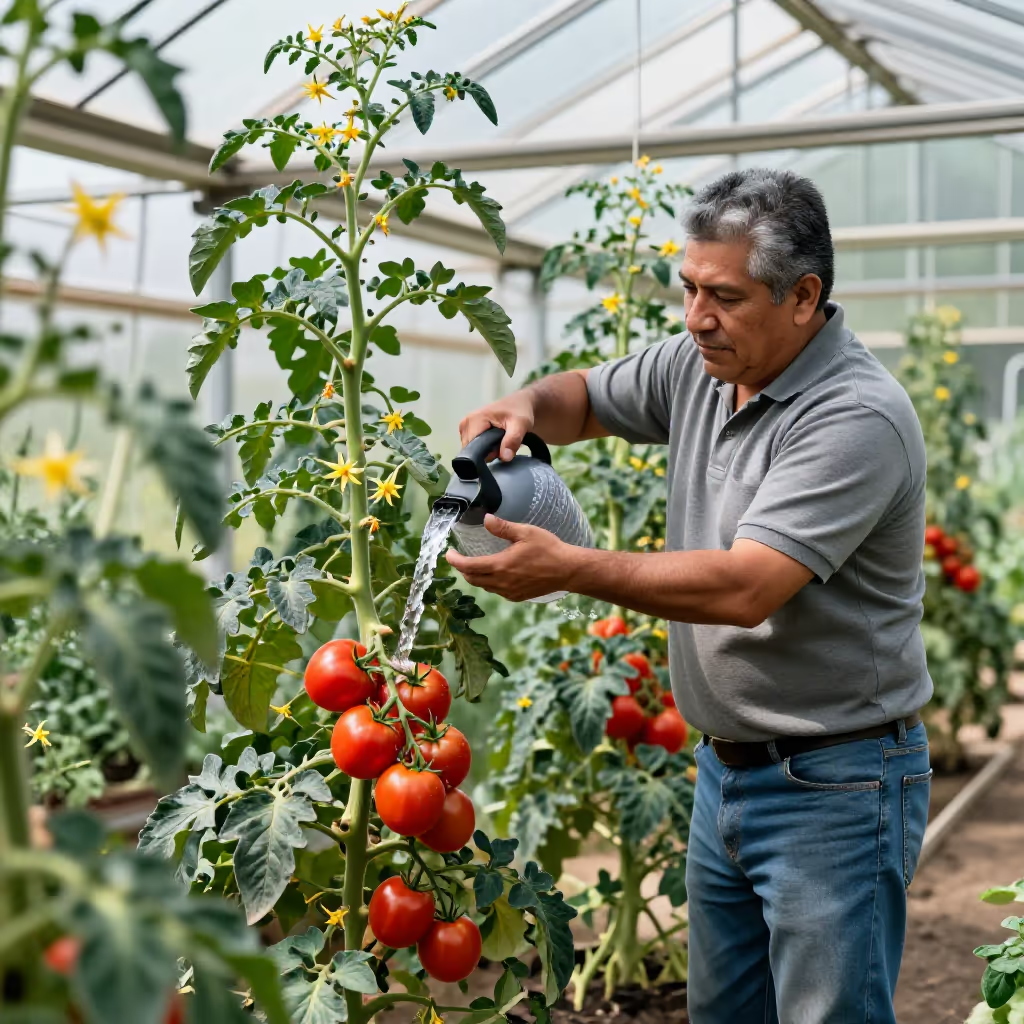
gedeihen
to thrive
To develop well and vigorously; to grow and bloom. Used mainly for plants.
EXAMPLE
Die Tomaten gedeihen in diesem sonnigen Sommer prächtig.
The tomatoes are thriving beautifully in this sunny summer.
to thrive
Loading your saved state.
to thrive
To develop well and vigorously; to grow and bloom. Used mainly for plants.
Die Tomaten gedeihen in diesem sonnigen Sommer prächtig.
The tomatoes are thriving beautifully in this sunny summer.

to thrive
In a figurative sense: to develop successfully, prosper, or flourish. Refers to people, companies, projects, or conditions.
In einem kreativen Umfeld gedeihen die besten Ideen.
The best ideas thrive in a creative environment.
'Gedeihen' (to thrive) is an inseparable verb. The prefix 'ge-' remains firmly attached to the verb stem in all sentence forms and tenses.
Ich hoffe, dass die neuen Pflanzen gut gedeihen.
I hope that the new plants thrive well.
The perfect tense of 'gedeihen' (to thrive) is always formed with the auxiliary verb 'sein' (to be), because it describes a change of state (growth). The form is 'ist gediehen' (has thrived).
Die Kräuter auf dem Balkon sind dieses Jahr prächtig gediehen.
The herbs on the balcony have thrived beautifully this year.
The verb 'gedeihen' (to thrive) belongs to elevated language. It sounds more formal and poetic than the everyday word 'wachsen' (to grow).
In dieser friedlichen Umgebung konnte die Kunst richtig gedeihen.
In this peaceful environment, art was able to truly thrive.
In connection with plants, 'gedeihen' (to thrive) is often combined with adverbs such as 'prächtig' (beautifully), 'gut' (well), or 'hervorragend' (excellently) to emphasize strong growth.
Meine Rosen gedeihen an diesem sonnigen Platz besonders gut.
My roses thrive especially well in this sunny spot.
The figurative meaning can be recognized from the context. When it is about abstract things like 'Ideen' (ideas), 'Unternehmen' (companies), 'Kultur' (culture), or 'Geschäfte' (business), literal growth is not meant.
Das kleine Unternehmen ist in den letzten Jahren gut gediehen.
The small company has thrived in recent years.
to arise
Both words can describe the development of a project. „Entstehen“ remains neutral and means that the project is formed or develops, whereas „gedeihen“ explicitly suggests good and successful development. Use „gedeihen“ when the positive course is important, and otherwise use „entstehen“.
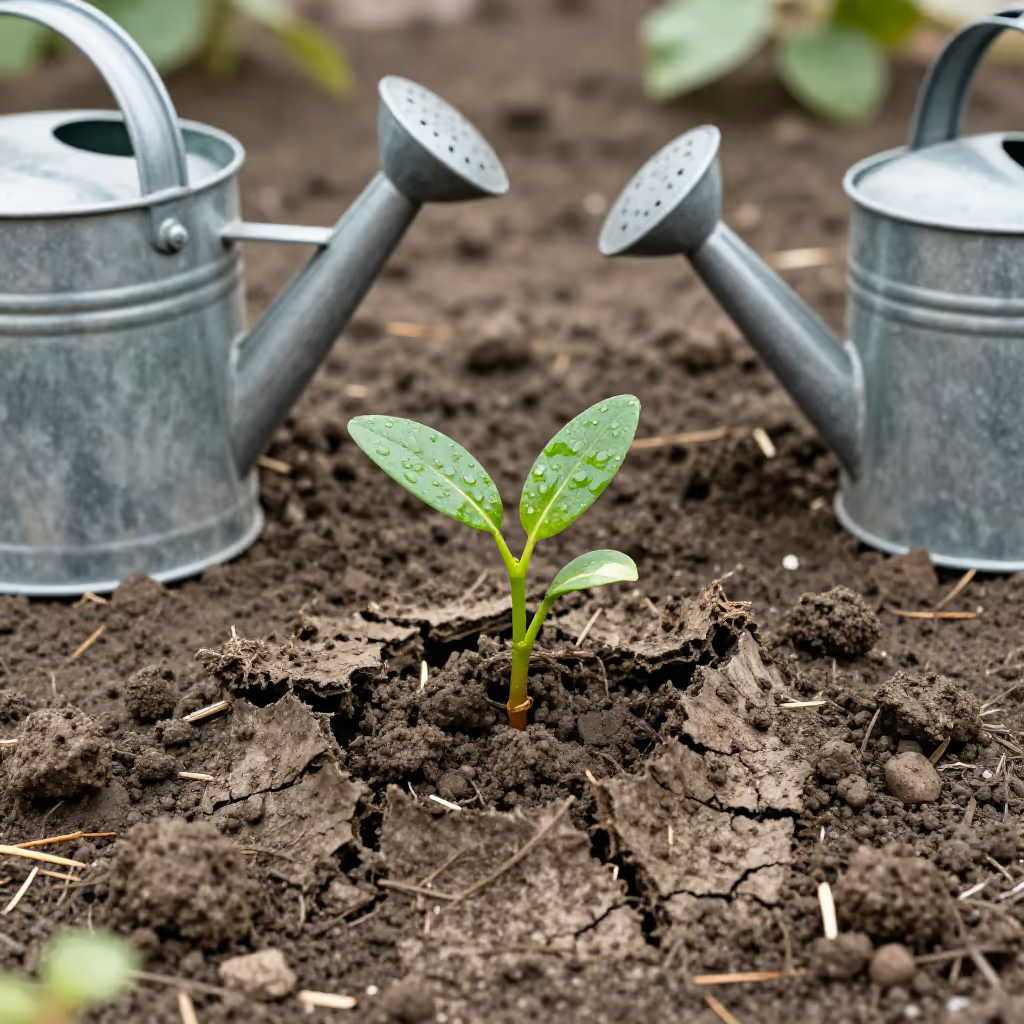
Dank der guten Zusammenarbeit gedieh das gemeinsame Projekt schnell.
Thanks to the good cooperation, the joint project flourished quickly.
Aus den ersten Gesprächen entstand ein gemeinsames Projekt.
A joint project grew out of the initial discussions.