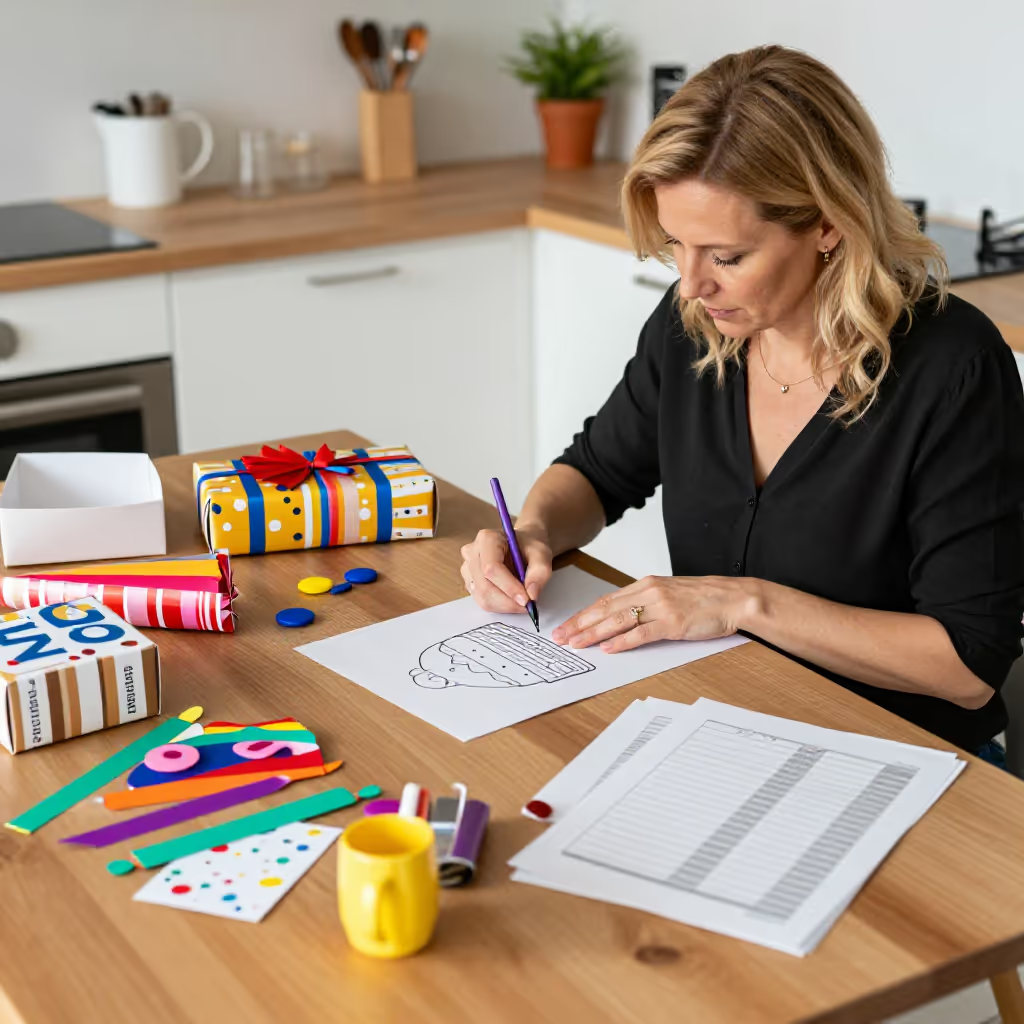
Something that was thought out, prepared, and intended in advance; not accidental or spontaneous.
example
Unsere geplante Reise mussten wir wegen des schlechten Wetters verschieben.
We had to postpone our planned trip because of the bad weather.

Usage tips
Participle as adjective
'Geplant' (planned) is the past participle of the verb 'planen' (to plan). It is very often used as an adjective to describe things that were deliberately prepared and are not accidental.
EXAMPLE
Unser geplanter Urlaub in den Bergen war wunderschön.
Our planned vacation in the mountains was wonderful.
Adjective vs. adverb
'Geplant' (planned) can describe a noun, e.g. 'der geplante Umzug' (the planned move), or the manner of an action, e.g. 'geplant vorgehen' (to proceed in a planned way). When it describes an action, it remains unchanged.
EXAMPLE
Die geplante Eröffnung des Museums verzögert sich.
The planned opening of the museum is being delayed.
Typical collocations
As an adjective, 'geplant' (planned) is often combined with dates, events, or projects. Typical combinations are: 'eine geplante Reise' (a planned trip), 'ein geplantes Treffen' (a planned meeting), or 'eine geplante Änderung' (a planned change).
EXAMPLE
Das geplante Treffen muss leider verschoben werden.
Unfortunately, the planned meeting has to be postponed.
Compare with
antonym
geplant vs zufällig
random / by chance
'zufällig' and 'geplant' are opposites. 'zufällig' says that something happens without preparation or intention. 'geplant' says that someone thought about something beforehand and prepared it. Both words can talk about events or actions, but they show exactly different causes. If something simply happens, 'zufällig' fits. If it was decided and organized beforehand, 'geplant' fits.
geplant
Das Treffen mit dem Kunden war lange geplant.
The meeting with the client had been planned for a long time.
zufällig
Meine Mutter hat ihre frühere Kollegin zufällig in der Stadt getroffen.
My mother ran into her former colleague by chance in town.