

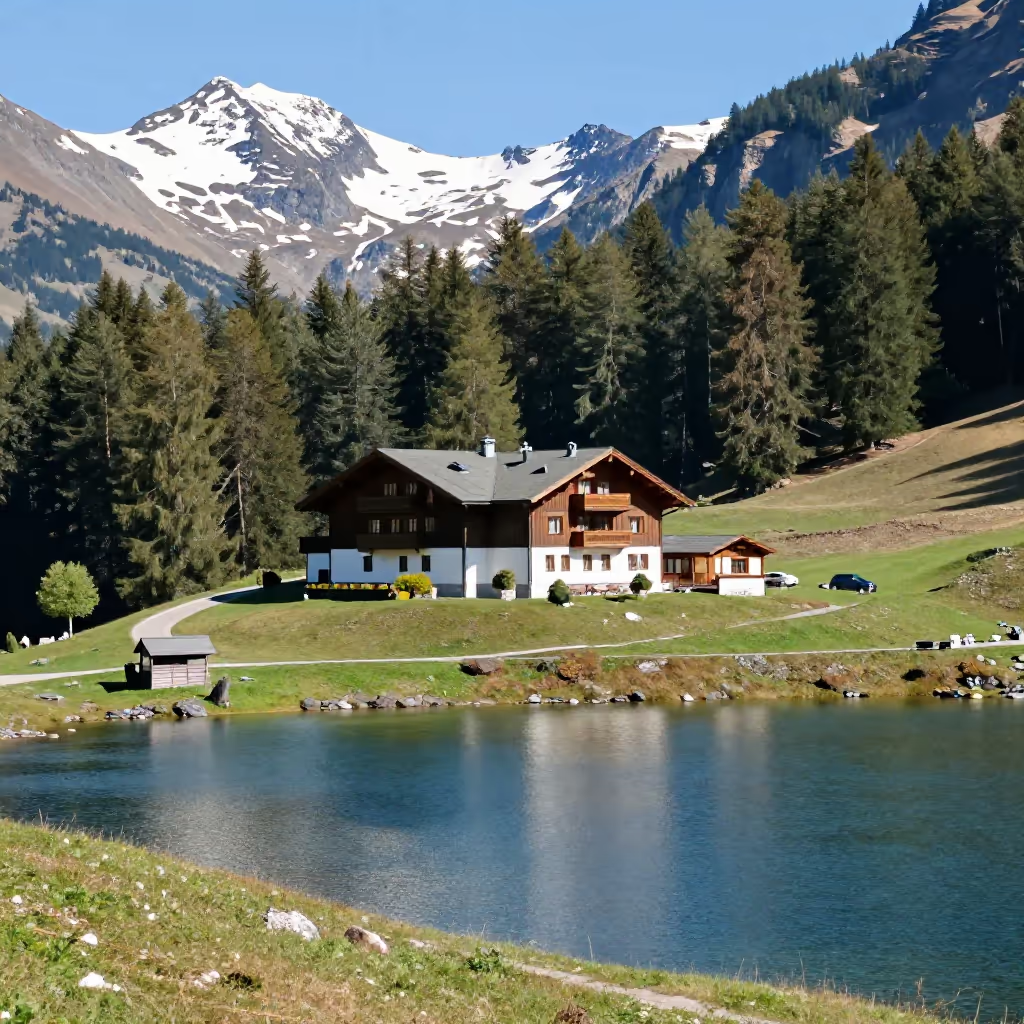
gelegen
located
Describes the position or location of something, often in relation to its surroundings.
EXAMPLE
Unsere Ferienwohnung ist wunderschön an einem See gelegen.
Our vacation apartment is beautifully located by a lake.
located / convenient
Loading your saved state.
located
Describes the position or location of something, often in relation to its surroundings.
Unsere Ferienwohnung ist wunderschön an einem See gelegen.
Our vacation apartment is beautifully located by a lake.

to suit someone
Expresses that an event or time is suitable, convenient, or welcome for someone.
Dein Angebot, mir beim Umzug zu helfen, kommt mir sehr gelegen.
Your offer to help me move suits me very well.
to matter to someone
Expresses that something is important to someone or that someone places great value on something.
Mir ist viel daran gelegen, dass wir eine friedliche Lösung finden.
It matters a lot to me that we find a peaceful solution.
'Gelegen' is the past participle of the verb 'liegen' (to lie). This origin directly explains the main meaning, which describes the place or position of something.
Das Dorf ist idyllisch in einem Tal gelegen.
The village is idyllically located in a valley.
In the meaning of 'sich befinden' (to be located), 'gelegen' is almost always used after the noun, predicatively. It is often combined with adverbs such as 'zentral' (central), 'ruhig' (quiet), or 'günstig' (convenient).
Das Hotel ist sehr verkehrsgünstig gelegen.
The hotel is very conveniently located for transport.
The expression 'jemandem gelegen kommen' (to suit someone / to come at a convenient time for someone) is fixed. The person for whom something is suitable is always in the dative. The thing that is suitable is the subject of the sentence.
Die Verschiebung des Termins kommt mir sehr gelegen.
The postponement of the appointment suits me very well.
The expression 'jemandem ist an etwas gelegen' (something matters to someone) is very often constructed with 'daran' and a 'dass' clause or an infinitive with 'zu'. It expresses that a specific outcome is important to someone.
Meinen Eltern ist viel daran gelegen, dass ich mein Studium abschließe.
It matters a lot to my parents that I finish my degree.
important
Wichtig can directly express that something is of great importance to someone. Gelegen conveys the same basic idea here, but appears in the fixed construction “jemandem ist an etwas gelegen” (something matters to someone). This form emphasizes that the person places great value on the matter.

An einem pünktlichen Abschluss des Projekts ist mir sehr gelegen.
It matters greatly to me that the project is completed on time.
Ein pünktlicher Abschluss des Projekts ist mir wichtig.
Completing the project on time is important to me.