


glatt
smooth / slippery
Describes a surface that is even, not rough, and often slippery.
EXAMPLE
Sei vorsichtig, die Straße ist nach dem Eisregen spiegelglatt.
Be careful, the road is like glass after the freezing rain.
smooth / slippery
Loading your saved state.
smooth / slippery
Describes a surface that is even, not rough, and often slippery.
Sei vorsichtig, die Straße ist nach dem Eisregen spiegelglatt.
Be careful, the road is like glass after the freezing rain.

smoothly
In a figurative sense: proceeding without problems, difficulties, or interruptions.
Die Operation verlief glatt und der Patient erholt sich gut.
The operation went smoothly, and the patient is recovering well.
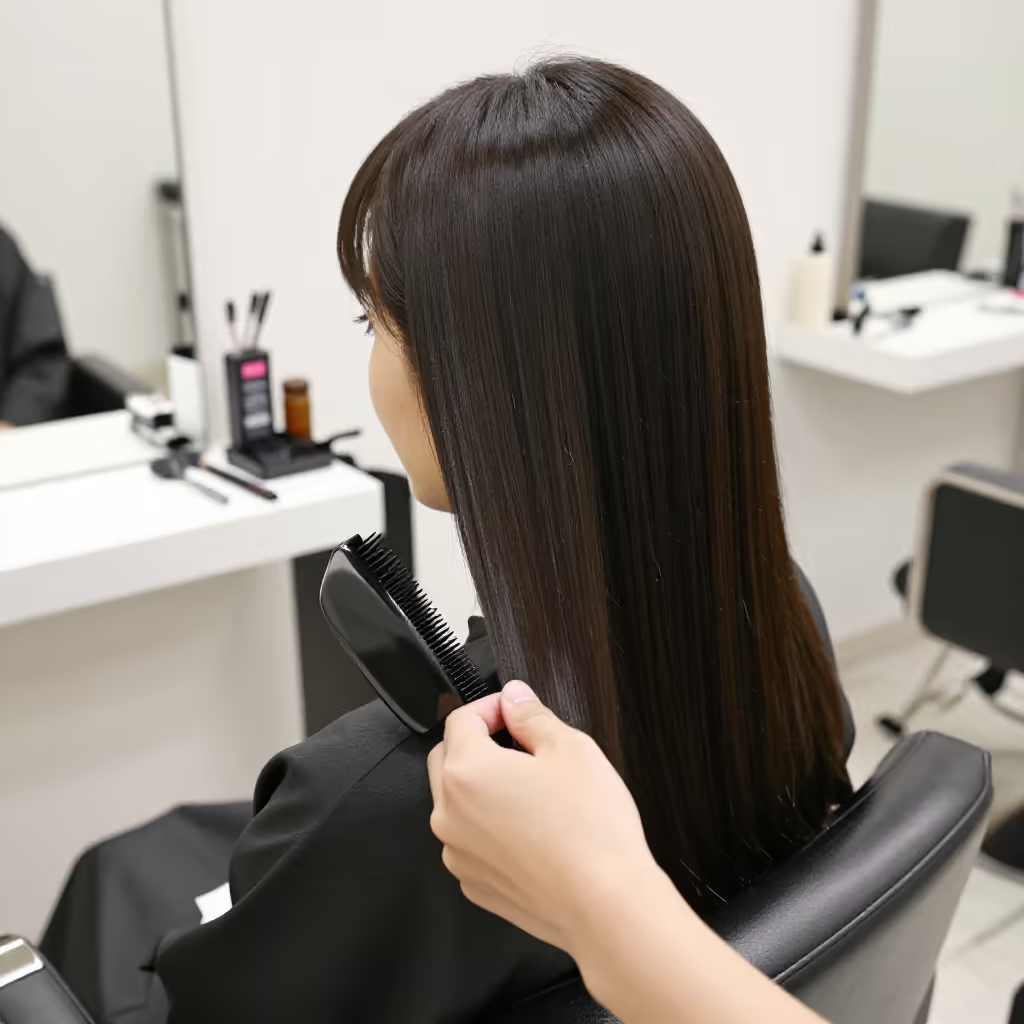
straight
Describes hair that has no curls or waves.
Sie hat von Natur aus lange, glatte Haare.
She has naturally long, straight hair.

downright
Used colloquially to intensify a statement, often in the sense of 'clearly' or 'simply'.
Dass er das nicht wusste, war eine glatte Lüge.
The fact that he didn’t know that was a downright lie.

flat
Refers to an amount of money that represents a round sum with no remaining amounts.
Das Fahrrad kostet glatt 500 Euro.
The bike costs a flat 500 euros.
'Glatt' sounds like the English word 'glad', but it has a completely different meaning. 'Glatt' means 'smooth' or 'slippery', while 'glad' in German is 'froh'.
Ich bin froh, dich zu sehen.
I’m glad to see you.
The word family of 'glatt' (smooth/slippery) includes the verb 'glätten' (to smooth something out) and the noun 'die Glätte' (smoothness/slipperiness, often in connection with ice on the road).
Sie muss ihr Hemd für die Arbeit noch glätten.
She still has to iron her shirt for work.
In its literal meaning, 'glatt' (smooth/slippery) always describes a physical surface. Typical combinations are 'glatte Haut' (smooth skin), 'glattes Holz' (smooth wood), or 'glattes Papier' (smooth paper).
Der Tisch hat eine sehr glatte Oberfläche.
The table has a very smooth surface.
In the figurative meaning 'without problems', 'glatt' (smoothly) is often combined with verbs that describe a process. Fixed expressions are 'glatt laufen' (to run smoothly), 'glatt gehen' (to go smoothly), or 'glatt verlaufen' (to proceed smoothly).
Ich hoffe, bei der Prüfung läuft alles glatt.
I hope everything goes smoothly in the exam.
Colloquially, 'glatt' (downright) is used as an adverb to intensify a statement, often with something surprising or negative. It then means something like 'simply', 'actually', or 'completely'.
Ich habe unseren Jahrestag glatt vergessen!
I completely forgot our anniversary!
When 'glatt' (flat) comes directly before an amount of money or a number, it means that it is an exact, round amount with no decimal places.
Das Auto hat glatt 10.000 Euro gekostet.
The car cost a flat 10,000 euros.
right now / straight
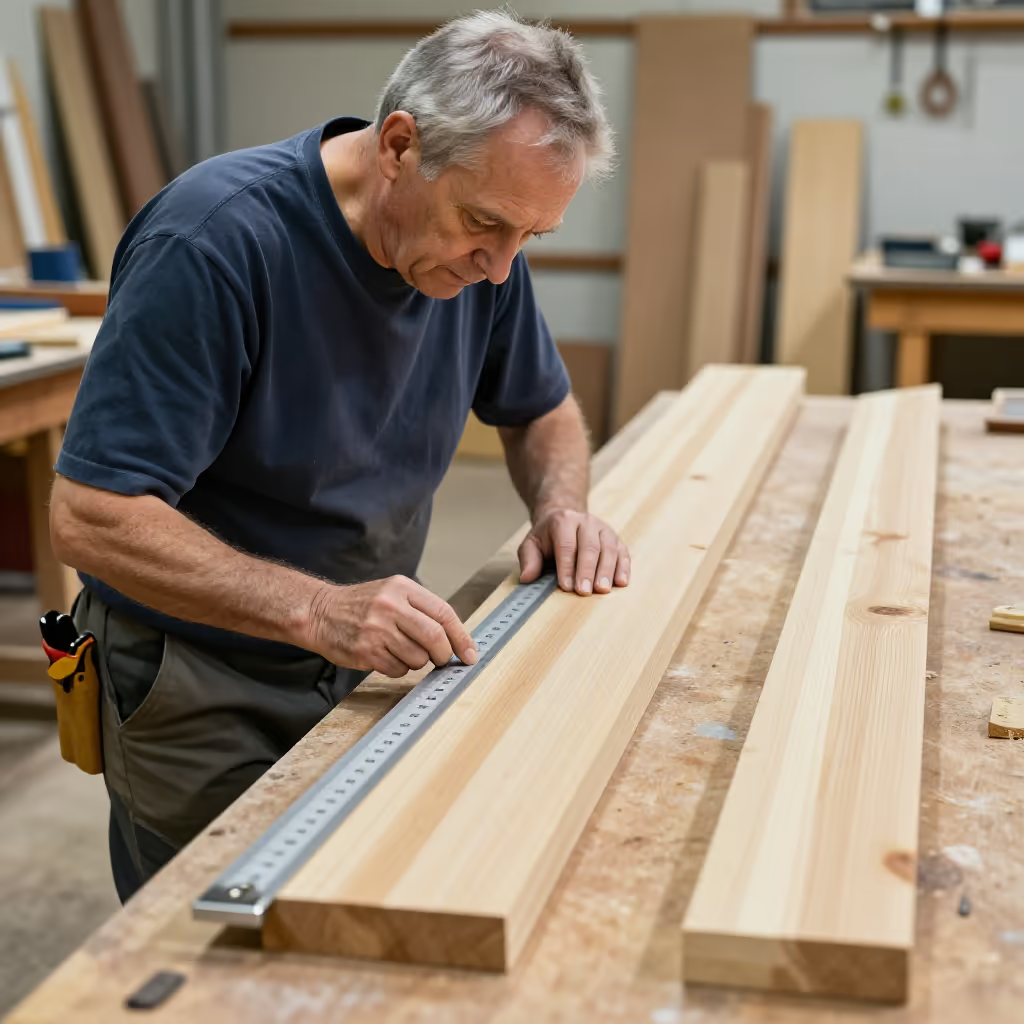
Gerade generally describes a shape or direction without any curve. When talking about hair, glatt, on the other hand, refers to the usual hair texture without curls or waves. Gerade can describe the direction in which hair falls, but glatt is more suitable for describing the hair type.
Von Natur aus hat sie glatte Haare ohne Locken.
Her hair is naturally straight, without curls.
Nach dem Kämmen fallen ihre Haare gerade nach unten.
After she combs it, her hair falls straight down.