


eben
just
As a temporal adverb: right now, a very short moment ago.
EXAMPLE
Er ist eben erst nach Hause gekommen.
He has only just come home.
just / exactly
Loading your saved state.
just
As a temporal adverb: right now, a very short moment ago.
Er ist eben erst nach Hause gekommen.
He has only just come home.

exactly
As a modal particle: used to confirm or emphasize something; means 'precisely' or 'exactly.'
Das ist eben der Punkt, den ich die ganze Zeit anspreche.
That is exactly the point I have been bringing up the whole time.
just
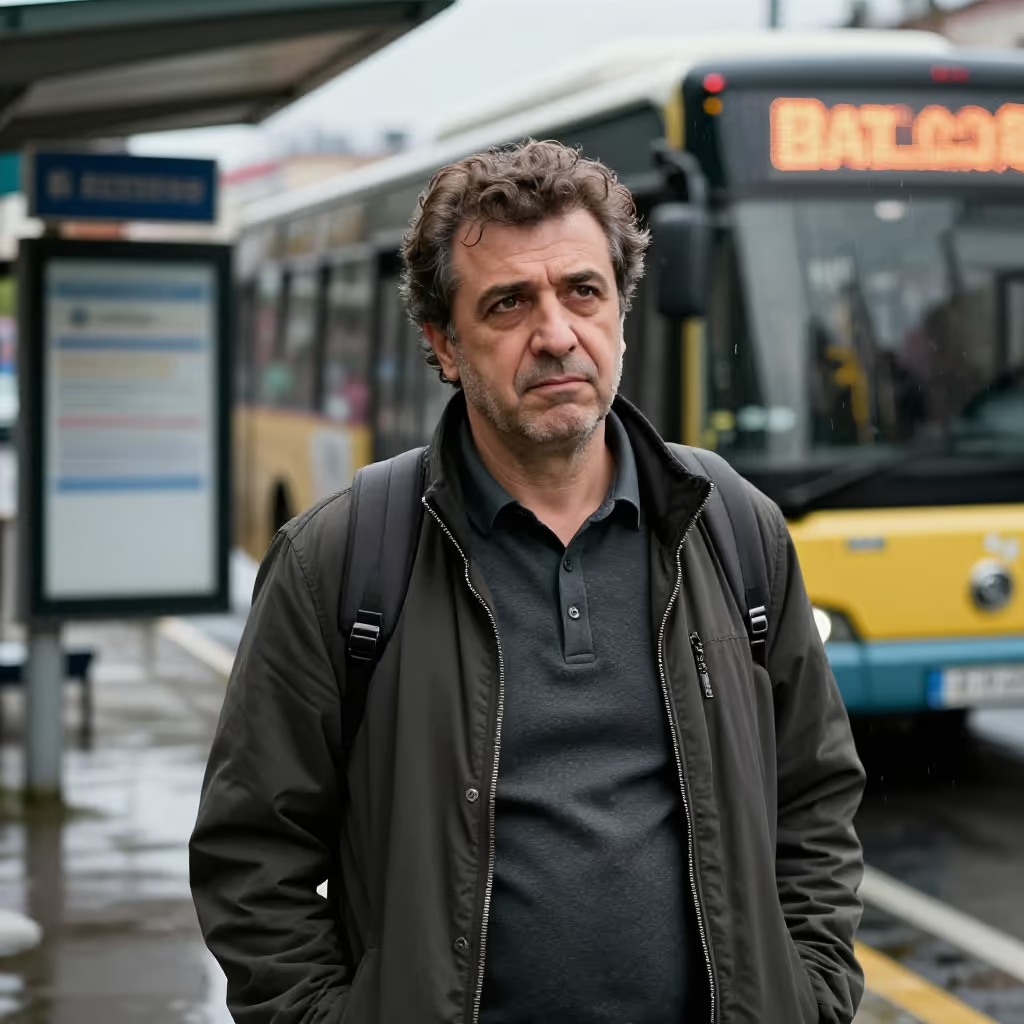
As a modal particle: expresses resignation or that a situation cannot be changed; similar to 'halt.'
Wenn du nicht mitkommen willst, dann bleibst du eben hier.
If you don't want to come along, then you'll just stay here.

real quick
Colloquial expression meaning to do something quickly, briefly, or in passing.
Ich gehe mal eben zum Supermarkt, um Milch zu holen.
I'm going to the supermarket real quick to get some milk.
The word 'eben' can also be an adjective meaning 'flach' (flat). You can recognize the difference because the adjective stands before a noun and is declined, while the adverb or particle remains unchanged.
Der Tischler prüft, ob die Oberfläche eben ist.
The carpenter checks whether the surface is flat.
To emphasize that something happened only a very short moment ago, 'eben' (just) is often combined with 'gerade' to form 'gerade eben' (just now). This expression is very common in spoken language.
Ich habe gerade eben eine E-Mail von ihr bekommen.
I just got an email from her.
In a conversation, 'eben!' is often used as a short, approving answer. It means 'Genau!' (Exactly!) or 'Das ist exakt der Punkt!' (That's exactly the point!) and confirms another person's statement.
A: „Ohne Teamwork schaffen wir das nicht.“ B: „Eben!“
A: "We won't manage it without teamwork." B: "Exactly!"
As a modal particle, 'eben' (just) often expresses that one accepts an unchangeable situation. It signals a kind of resignation and is typical of colloquial language.
Wenn du keine Zeit hast, dann treffen wir uns eben morgen.
If you don't have time, then we'll just meet tomorrow.
The combination 'mal eben' is typical of spoken language. It means that you do something quickly, briefly, or in passing, without it being much effort.
Ich fahre mal eben zum Bäcker, brauchst du etwas?
I'm driving to the bakery real quick; do you need anything?
simple / just
„Eben“ and „einfach“ can both present a decision as necessary. „Eben“ tends to emphasize accepting an unchangeable circumstance, while „einfach“ presents the decision as obvious or as having no real alternative. Choose „eben“ to express resignation and „einfach“ for an uncomplicated solution.
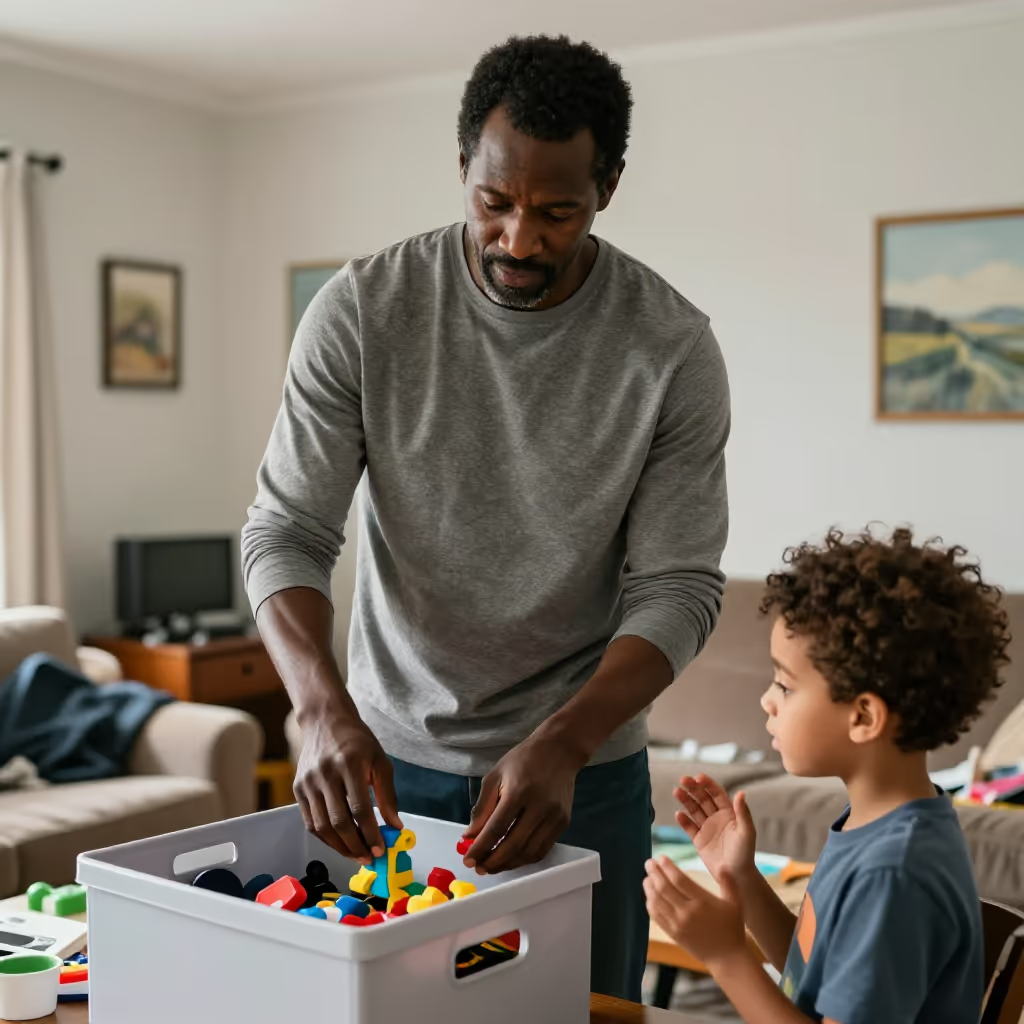
Der Bus ist weg, also nehmen wir eben den nächsten.
The bus is gone, so we’ll just take the next one.
Der Bus ist weg, also nehmen wir einfach den nächsten.
The bus is gone, so we’ll just take the next one.