

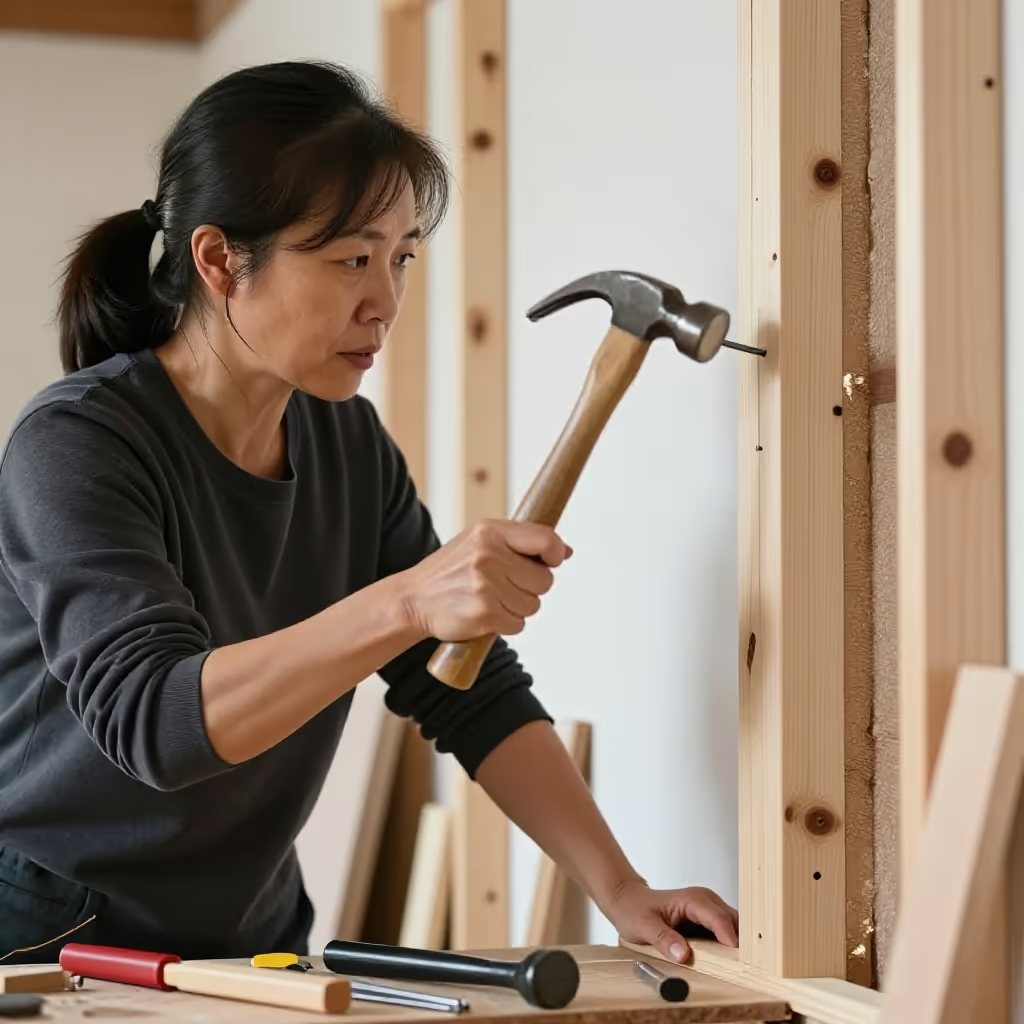
hämmern
to hammer
To hit something repeatedly and forcefully with a hammer, for example to drive a nail into the wall.
EXAMPLE
Der Zimmermann hämmert die Bretter für das Dach fest.
The carpenter is hammering the boards for the roof into place.
to hammer
Loading your saved state.
to hammer
To hit something repeatedly and forcefully with a hammer, for example to drive a nail into the wall.
Der Zimmermann hämmert die Bretter für das Dach fest.
The carpenter is hammering the boards for the roof into place.

to pound
To throb, pound, or knock strongly and rhythmically. This can refer to the heart, loud music, or heavy rain.
Vor der Prüfung hämmerte mein Herz vor Aufregung.
Before the exam, my heart was pounding with excitement.

to hammer
Colloquial for typing loudly and energetically on a keyboard.
Er hämmerte wütend eine E-Mail in seinen Laptop.
He angrily hammered an email into his laptop.
The verb 'hämmern' (to hammer) is derived directly from the noun 'der Hammer' (hammer). So the basic meaning is to do something as if you were using a hammer.
Ich brauche einen Hammer, um den Nagel in die Wand zu hämmern.
I need a hammer to hammer the nail into the wall.
Different prepositions are used depending on the context. You hammer a nail 'in' die Wand (into the wall), you hammer 'auf' einen Gegenstand (on an object), or the heart pounds 'gegen' die Rippen (against the ribs).
Der Schmied hämmert auf das heiße Eisen.
The blacksmith is hammering on the hot iron.
In the figurative meaning, 'hämmern' (to pound) describes a strong, rhythmic sound or feeling. It is often used without an object, for example when referring to the heart, loud music, or heavy rain.
Ich war so nervös, dass mein Herz wie wild hämmerte.
I was so nervous that my heart was pounding like crazy.
The use of 'hämmern' (to hammer) for loud typing on a keyboard is colloquial. It emphasizes the energy or anger involved in writing.
Er saß am Schreibtisch und hämmerte einen langen Bericht in den Computer.
He sat at the desk and hammered a long report into the computer.
to knock / beat / tap
Both words can express rhythmic striking against a surface. „Klopfen“ generally refers to normal or moderate knocking, while „hämmern“ conveys considerably more force and intensity. Choose „hämmern“ when the knocking seems very loud or violent.
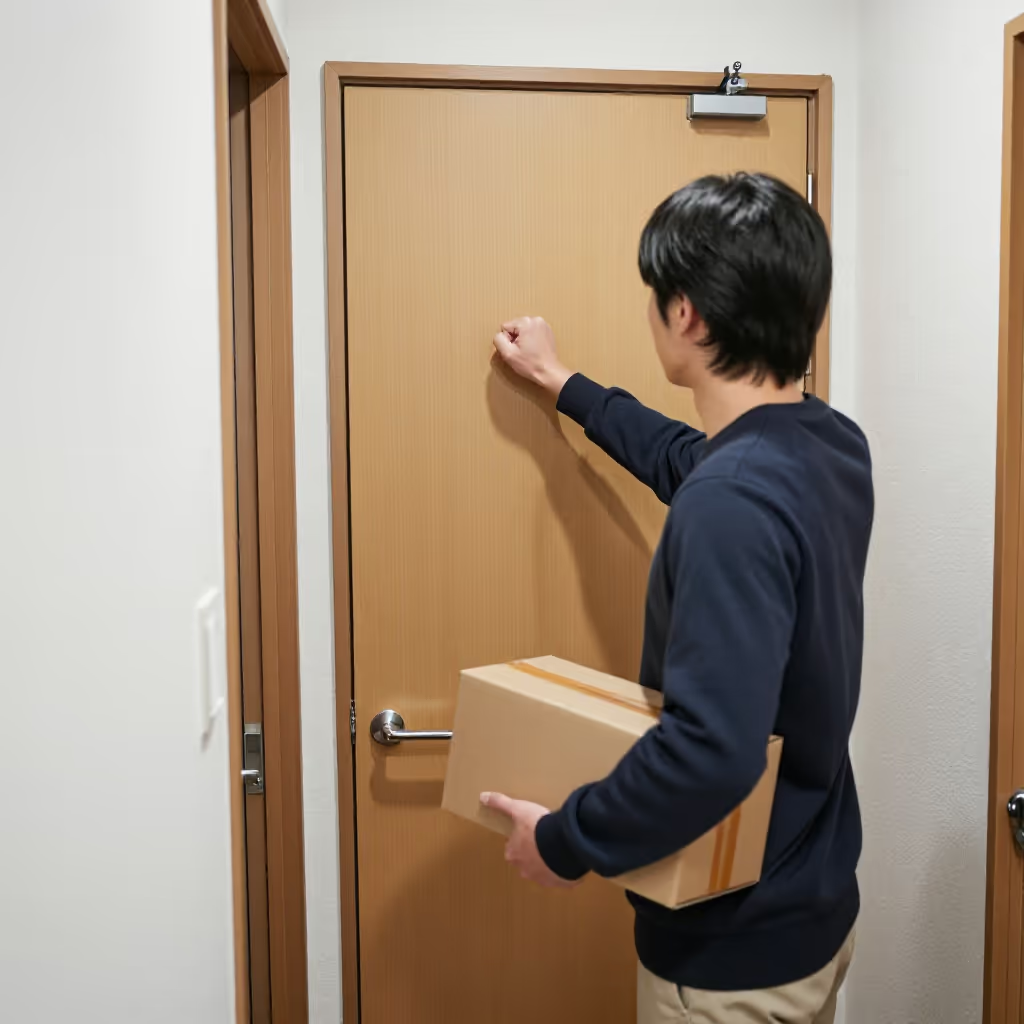
Er hämmerte so laut an die Tür, dass alle im Haus aufwachten.
He pounded on the door so loudly that everyone in the house woke up.
Sie klopfte vorsichtig an die Tür, damit sie die Kinder nicht weckte.
She knocked carefully on the door so she wouldn't wake the children.