einschlagen
to smash
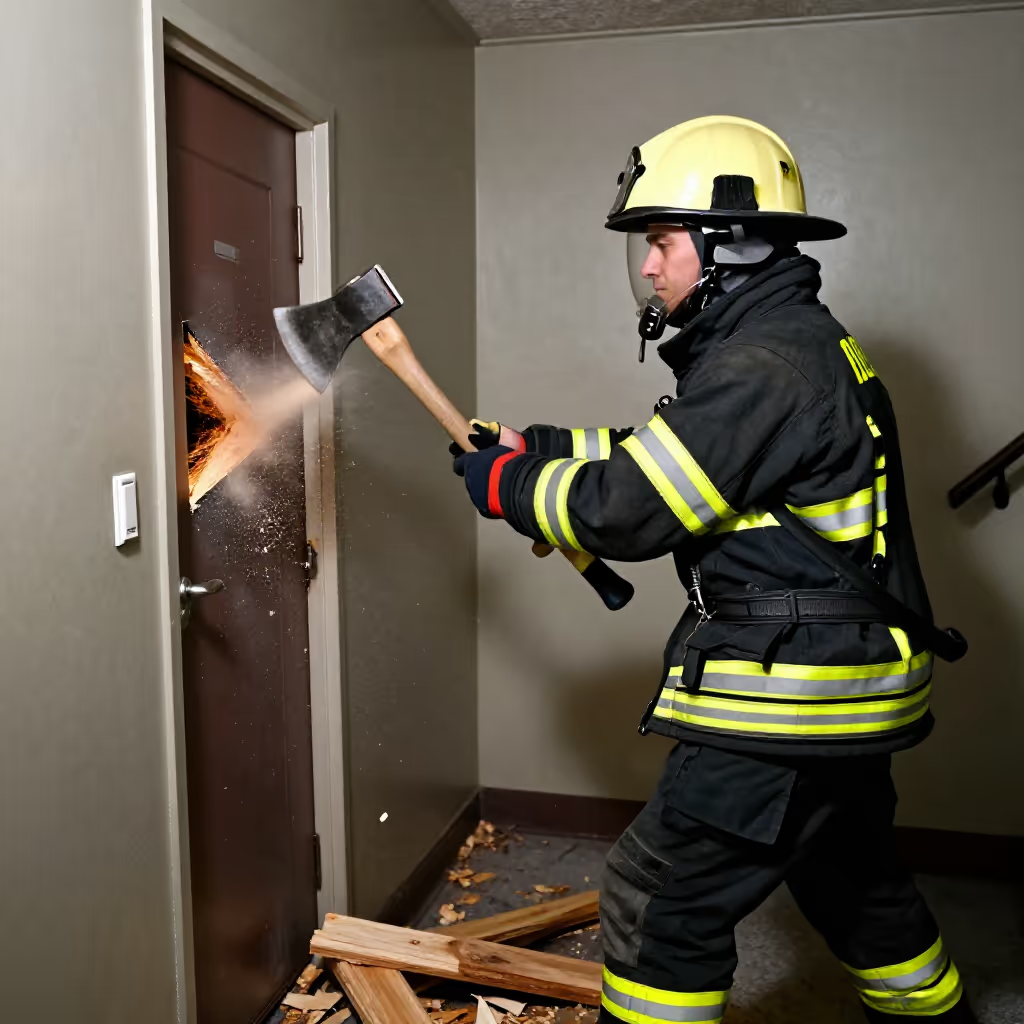
To shatter something with a forceful blow or open it by force.
Die Feuerwehr musste eine Scheibe einschlagen, um in das brennende Haus zu gelangen.
The fire department had to smash a window to get into the burning house.

to smash / take / strike
Loading your saved state.
to smash
To shatter something with a forceful blow or open it by force.
Die Feuerwehr musste eine Scheibe einschlagen, um in das brennende Haus zu gelangen.
The fire department had to smash a window to get into the burning house.

'Einschlagen' is a separable verb. In a main clause, the prefix 'ein' comes at the end. In subordinate clauses and in the infinitive with 'zu', the verb stays together.
Er schlug den Nagel mit einem Hammer ein.
He drove the nail in with a hammer.
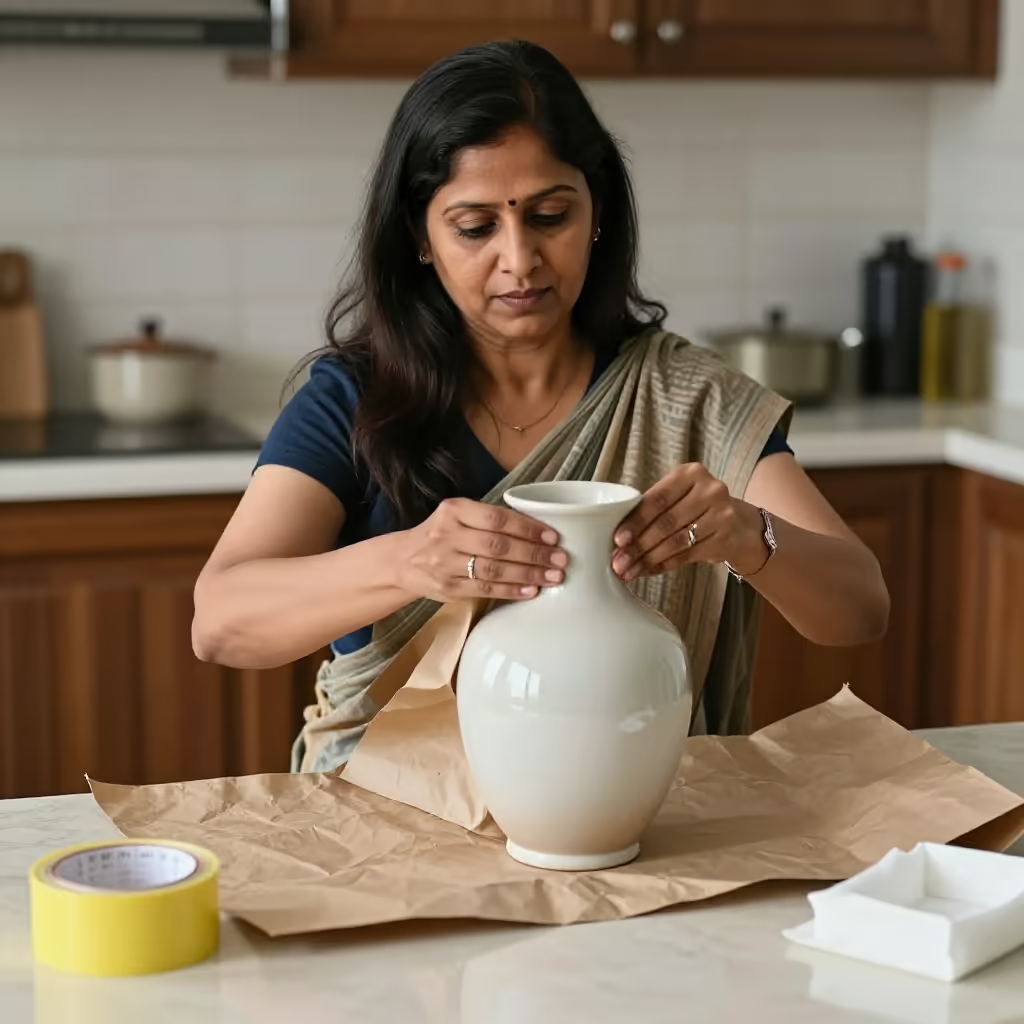
The verb is made up of 'ein' and 'schlagen' (to hit/strike). The prefix 'ein' often means 'into'. This logic is visible in meanings like 'eine Scheibe einschlagen' (to smash in a pane/window) or 'etwas in Papier einschlagen' (to wrap something in paper; literally, into the paper).
Er schlug das zerbrechliche Geschenk in Seidenpapier ein.
He wrapped the fragile gift in tissue paper.
Careful: the auxiliary verb in the perfect tense changes depending on the meaning! When 'einschlagen' describes movement or a sudden change (as with lightning or success), 'sein' is used. In most other cases (smashing something, wrapping something), 'haben' is used.
Der neue Roman ist bei den Lesern sofort eingeschlagen.
The new novel was an immediate hit with readers.
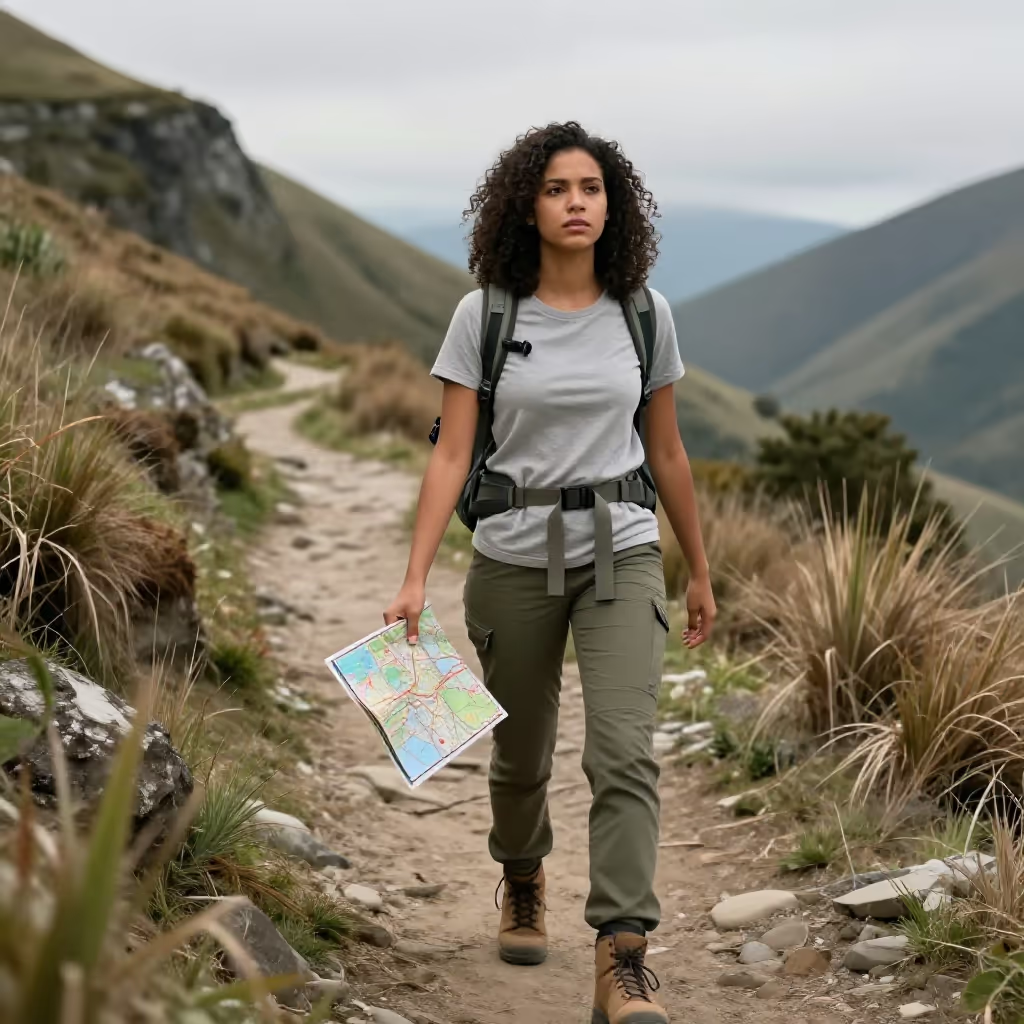
In the figurative meaning of choosing a path in life, 'einschlagen' is almost always combined with an abstract noun. Typical phrases are 'einen Weg einschlagen' (to take a path), 'eine Richtung einschlagen' (to take a direction), or 'eine Laufbahn einschlagen' (to pursue a career).
Nach der Schule möchte er eine akademische Laufbahn einschlagen.
After school, he would like to pursue an academic career.
When 'einschlagen' is used in the context of nature or weather, it almost always means 'auftreffen' (to hit/strike). The subject is then typically 'der Blitz' (lightning), 'ein Meteorit' (a meteorite), or 'eine Bombe' (a bomb).
Während des Gewitters ist ein Blitz in den Kirchturm eingeschlagen.
During the thunderstorm, lightning struck the church tower.
The meaning 'to be successful' is colloquial. It is often used with adverbs like 'voll' (completely/totally) or 'total' (totally) to emphasize the strength of the success.
Seine Idee ist bei den Investoren voll eingeschlagen.
His idea was a huge hit with the investors.
When used for wrapping, the verb follows the pattern: 'etwas (Akkusativ) in etwas (Akkusativ) einschlagen' (to wrap something in something). The first object is the item, the second is the packaging material.
Die Verkäuferin schlug die Blumen in Papier ein.
The saleswoman wrapped the flowers in paper.
to vote / choose / dial
'wählen' and 'einschlagen' can both mean that you decide on a direction or a path. 'wählen' is the more general word: you can choose something from many options. 'einschlagen' is used in this meaning mainly with 'Weg' (path), 'Richtung' (direction), 'Beruf' (profession), or 'Lebensweg' (path in life). It sounds as if you really begin this path and continue following it. For small everyday decisions, 'wählen' is usually a better fit. For a direction in life or on a route, 'einschlagen' sounds more natural.

Nach der Ausbildung schlägt Ali einen neuen beruflichen Weg ein.
After his training, Ali takes a new career path.
Für den Ausflug wählen wir die kürzere Route durch den Park.
For the outing, we choose the shorter route through the park.