klopfen
to knock
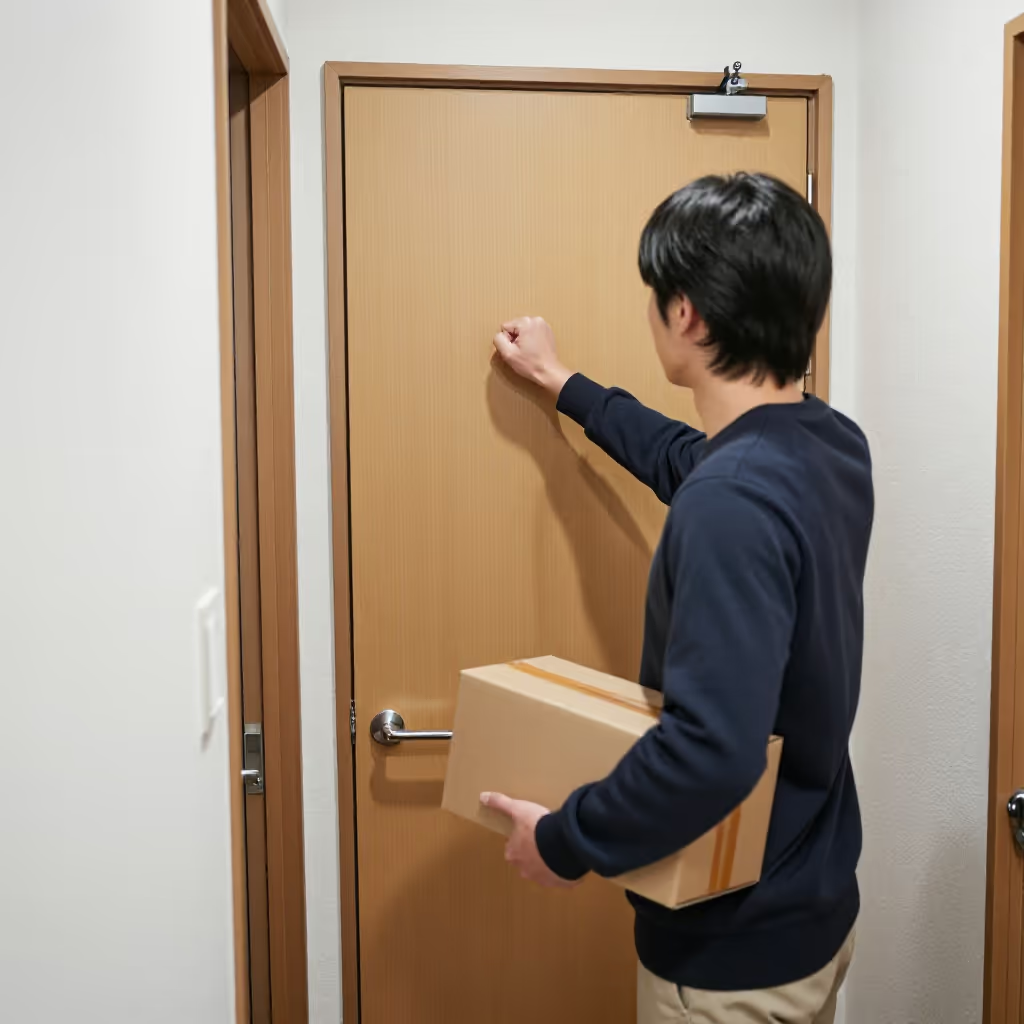
To strike audibly against something one or more times with the hand or an object in order to attract attention, for example at a door.
Es klopft an der Tür, machst du bitte auf?
There's a knock at the door; could you please open it?

to knock / beat / tap
Loading your saved state.
to knock
To strike audibly against something one or more times with the hand or an object in order to attract attention, for example at a door.
Es klopft an der Tür, machst du bitte auf?
There's a knock at the door; could you please open it?

The meaning of 'klopfen' (to knock/beat/tap) becomes clear through the grammatical construction. 'An die Tür klopfen' (to knock on the door) means to ask to be let in. If 'das Herz' (the heart) is the subject, it refers to a fast pulse. The fixed expression 'auf Holz klopfen' (to knock on wood) has a superstitious meaning.
Wer hat denn da so spät noch an die Scheibe geklopft?
Who was knocking on the window so late?
When you knock on a door or window to attract attention, you use the preposition 'an' followed by the accusative.
Der Postbote klopfte laut an die Haustür.
The mail carrier knocked loudly on the front door.
When the heart is beating quickly or strongly, 'das Herz' (the heart) is the subject of the verb 'klopfen' (to beat). This phrase describes a physical reaction to fear, exertion, or joy.
Als ich die gute Nachricht hörte, klopfte mein Herz wie verrückt.
When I heard the good news, my heart was beating like crazy.
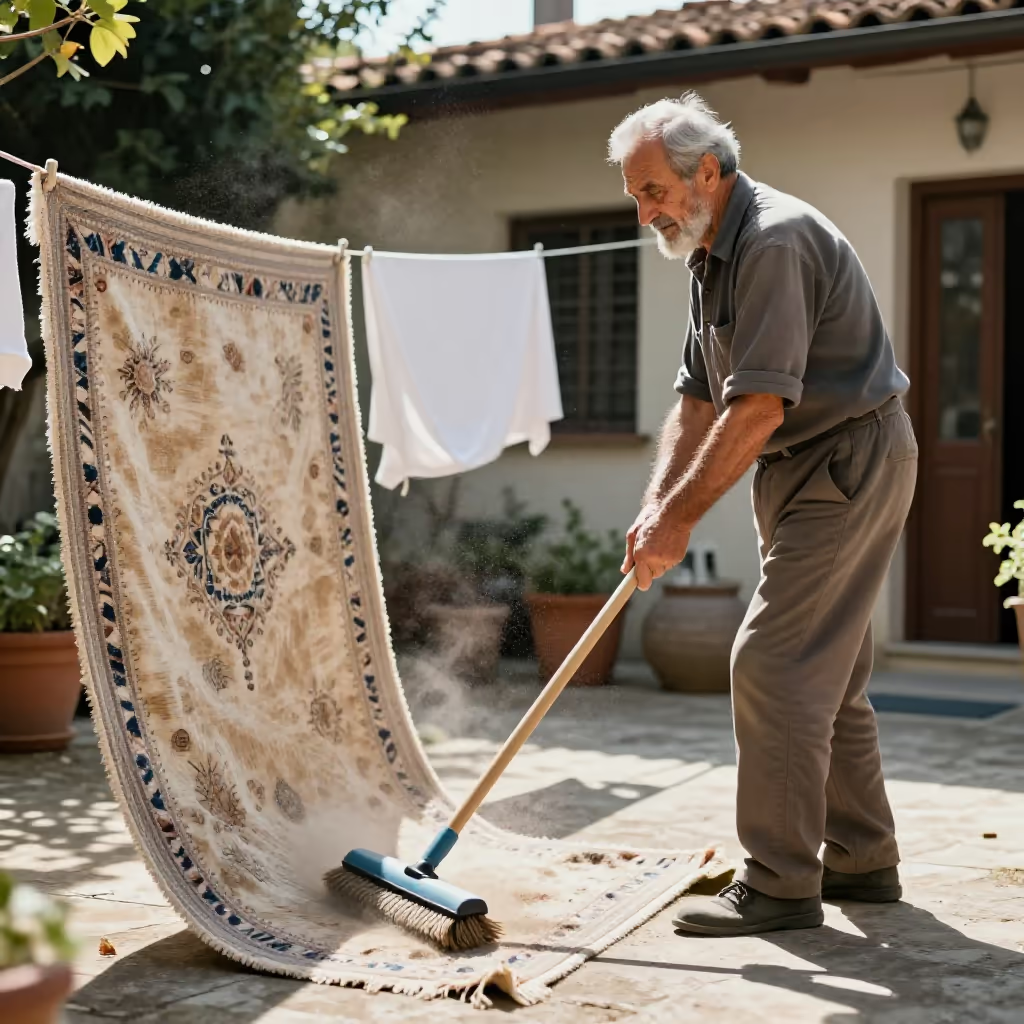
In this meaning, what is supposed to be achieved by knocking or tapping is often described. Typical patterns are 'etwas aus etwas klopfen' (to beat something out of something, e.g., dust out of a rug) or 'etwas flach klopfen' (to pound something flat, e.g., a schnitzel).
Sie klopfte den Staub aus der alten Decke.
She beat the dust out of the old blanket.
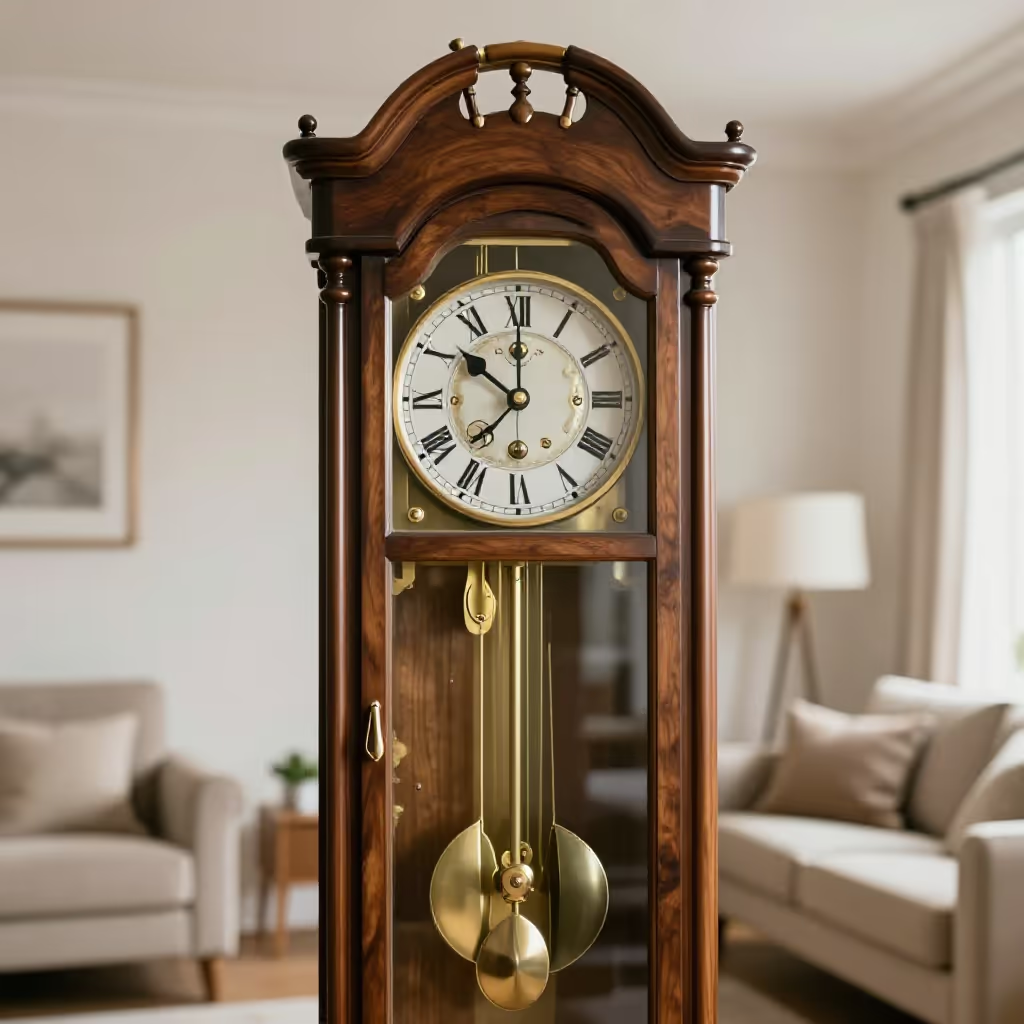
'Auf Holz klopfen' (to knock on wood) is a fixed expression. You do this to symbolically ward off bad luck after speaking about your own good fortune or success. People often say 'Toi, toi, toi' along with it.
Ich hatte dieses Jahr noch keine einzige Erkältung. Schnell auf Holz klopfen!
I haven't had a single cold this year. Quick, knock on wood!
to hit / beat
'schlagen' and 'klopfen' can both mean that something or someone hits a surface. 'schlagen' usually sounds stronger, harder, or more violent. You can hit a person, or bang your fist on the table. 'klopfen' is usually lighter, repeated, and often connected with a specific purpose, for example 'an eine Tür klopfen' (to knock on a door) so that someone opens it. With the heart, both are possible: 'Das Herz schlägt' is neutral, while 'das Herz klopft' often emphasizes excitement, fear, or exertion. Learners may confuse the words because both describe a similar movement. As a guide: 'klopfen' is often audible and rather light, while 'schlagen' is more general and can be much stronger.

Vor dem Betreten des Zimmers klopft die Ärztin kurz an die Tür.
Before entering the room, the doctor briefly knocks on the door.
Der Junge schlug wütend mit der Hand auf den Tisch.
The boy angrily banged his hand on the table.