


pochen
to throb
A strong, rhythmic beating or pounding, especially of the heart or pulse.
EXAMPLE
Nach dem Sprint pochte sein Herz wild in seiner Brust.
After the sprint, his heart throbbed wildly in his chest.
to throb / to insist
Loading your saved state.
to throb
A strong, rhythmic beating or pounding, especially of the heart or pulse.
Nach dem Sprint pochte sein Herz wild in seiner Brust.
After the sprint, his heart throbbed wildly in his chest.

to throb
To cause a pulsating pain, often in a wound or an inflamed body part.
Mein Zahn pocht ununterbrochen, ich muss zum Arzt.
My tooth is throbbing nonstop; I need to go to the doctor.

to insist on
To firmly insist on something or demand something.
Er pochte auf sein Recht, einen Anwalt zu konsultieren.
He insisted on his right to consult a lawyer.
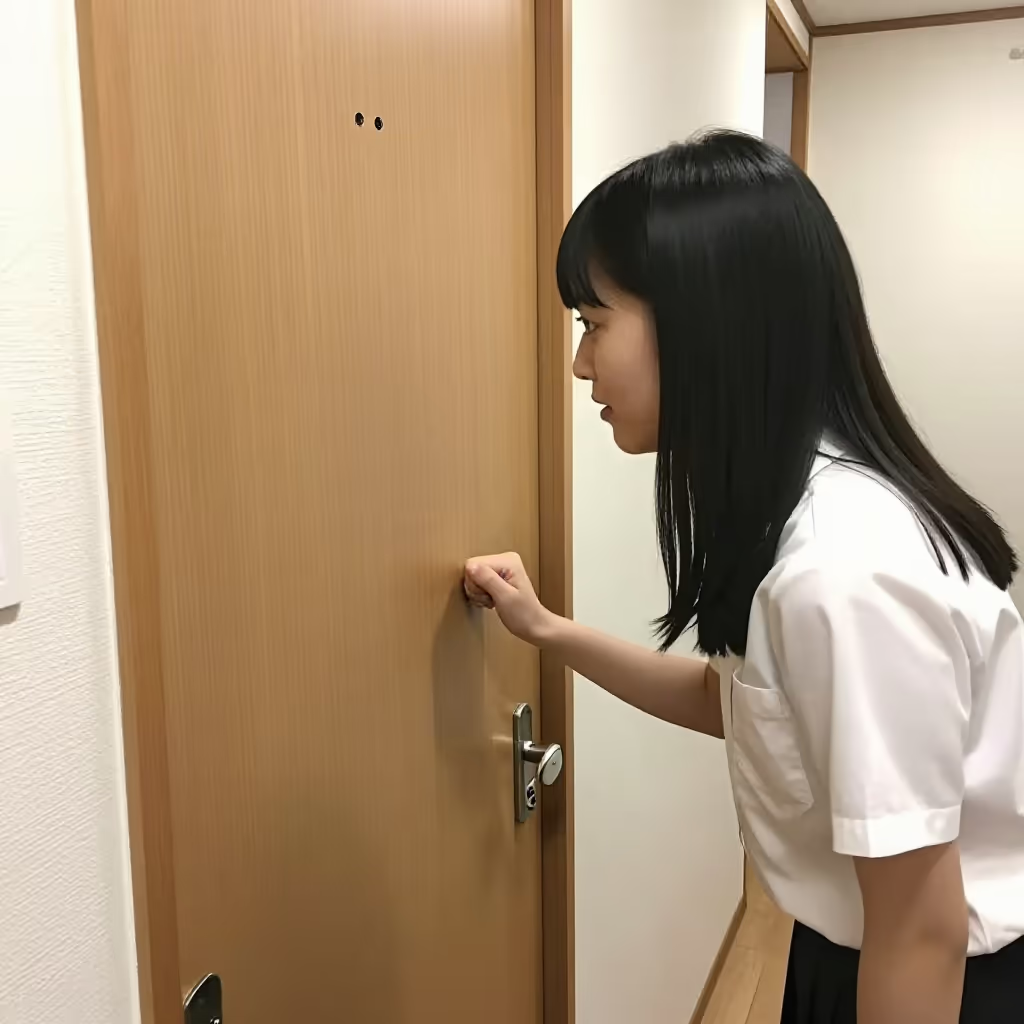
to pound
To knock on something audibly and repeatedly, for example on a door.
Jemand pochte laut an das schwere Eichentor.
Someone pounded loudly on the heavy oak gate.
You can recognize the meaning of 'pochen' (to throb / to insist / to pound) from the sentence structure. If it refers to a bodily sensation, it often stands alone or has the body part as the subject. If someone is demanding something, 'auf' + accusative follows. If someone is knocking, 'an' + dative follows.
Sein Herz pochte vor Aufregung.
His heart throbbed with excitement.
In the meaning 'auf etwas bestehen' (to insist on something), 'pochen' is always used with the preposition 'auf' and the accusative. This structure is fixed and indicates that a demand is being made.
Die Gewerkschaft pocht auf eine Lohnerhöhung von fünf Prozent.
The union is insisting on a five percent pay raise.
When it is about rhythmic beating in the body, the typical subjects are 'das Herz' (the heart), 'der Puls' (the pulse), or 'die Schläfen' (the temples, in the head).
Nach dem Treppensteigen pochte ihr Puls spürbar am Handgelenk.
After climbing the stairs, her pulse throbbed noticeably at her wrist.
When 'pochen' (to throb) describes pain, the subject is often an injured or inflamed body part. Typical examples are 'der Zahn' (the tooth), 'die Wunde' (the wound), or simply 'es' (it) in an impersonal sentence.
Die Wunde an meinem Finger pocht seit Stunden.
The wound on my finger has been throbbing for hours.
In the meaning 'klopfen' (to knock), 'pochen' is often used in literary or older texts. It can describe a stronger or more insistent knocking than the neutral 'klopfen' (to knock).
Der Fremde pochte mit seiner Faust gegen das schwere Holztor.
The stranger pounded with his fist against the heavy wooden gate.
to pass / consist / exist
Auf einem Recht bestehen and auf ein Recht pochen both mean insisting on a right. Bestehen auf sounds more neutral, while auf etwas pochen sounds more combative and emphasizes the claim more strongly. Pochen may therefore be more appropriate when there is clear resistance.

Nach der erneuten Ablehnung pocht die Kundin auf ihr vereinbartes Recht auf Rückgabe.
After the renewed rejection, the customer insists on her agreed-upon right to return the item.
Die Kundin besteht auf ihrem vereinbarten Recht auf Rückgabe.
The customer insists on her agreed-upon right to return the item.