

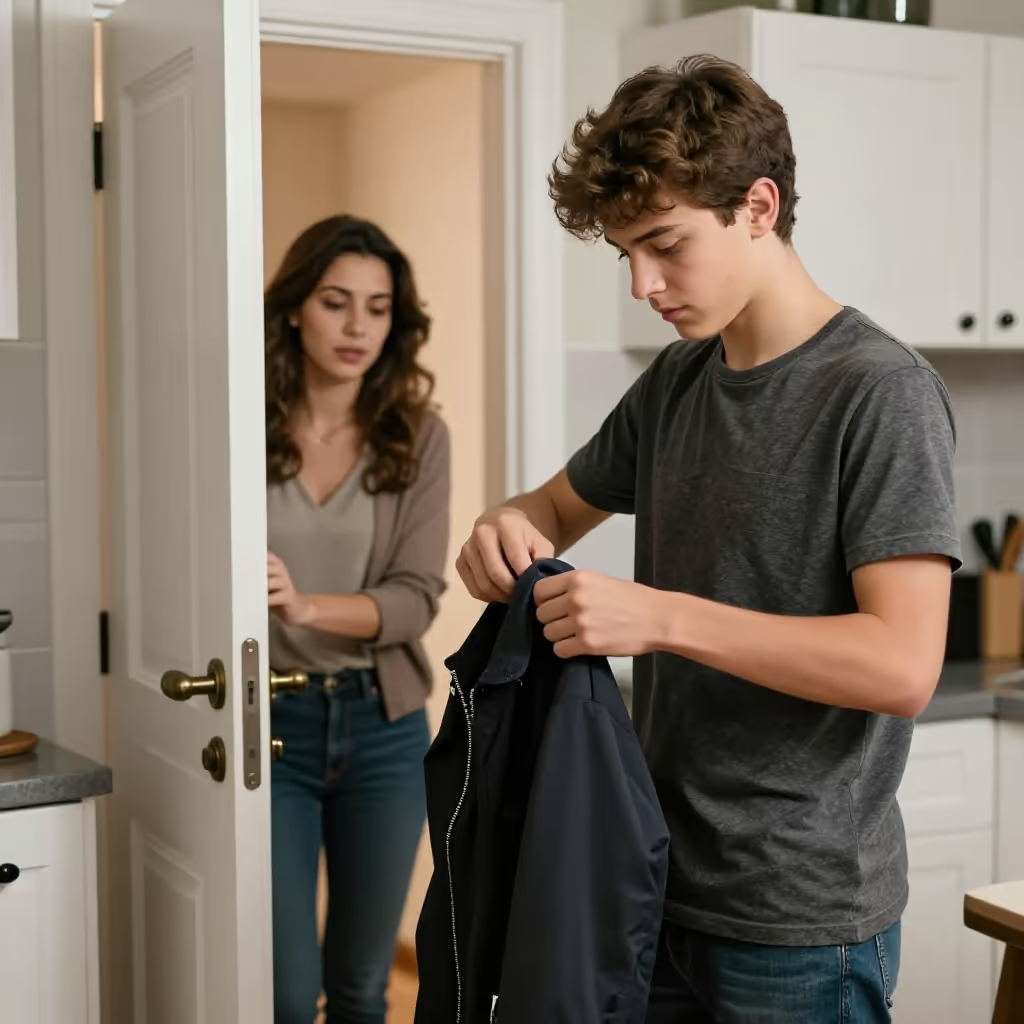
gleich
right away
In a very short moment; immediately, right away.
EXAMPLE
Warte kurz, ich komme gleich!
Wait a second, I'll be right there!
immediate / same
Loading your saved state.
right away
In a very short moment; immediately, right away.
Warte kurz, ich komme gleich!
Wait a second, I'll be right there!

same
Identical or matching in all characteristics; the same.
Wir haben beide das gleiche T-Shirt gekauft.
We both bought the same T-shirt.

equal
Equivalent in value, rights, rank, or importance; having equal rights.
Vor dem Gesetz sind alle Menschen gleich.
Before the law, all people are equal.

to not matter to someone
To be unimportant or a matter of indifference to someone.
Mir ist es gleich, ob wir Pizza oder Pasta essen.
It doesn't matter to me whether we eat pizza or pasta.
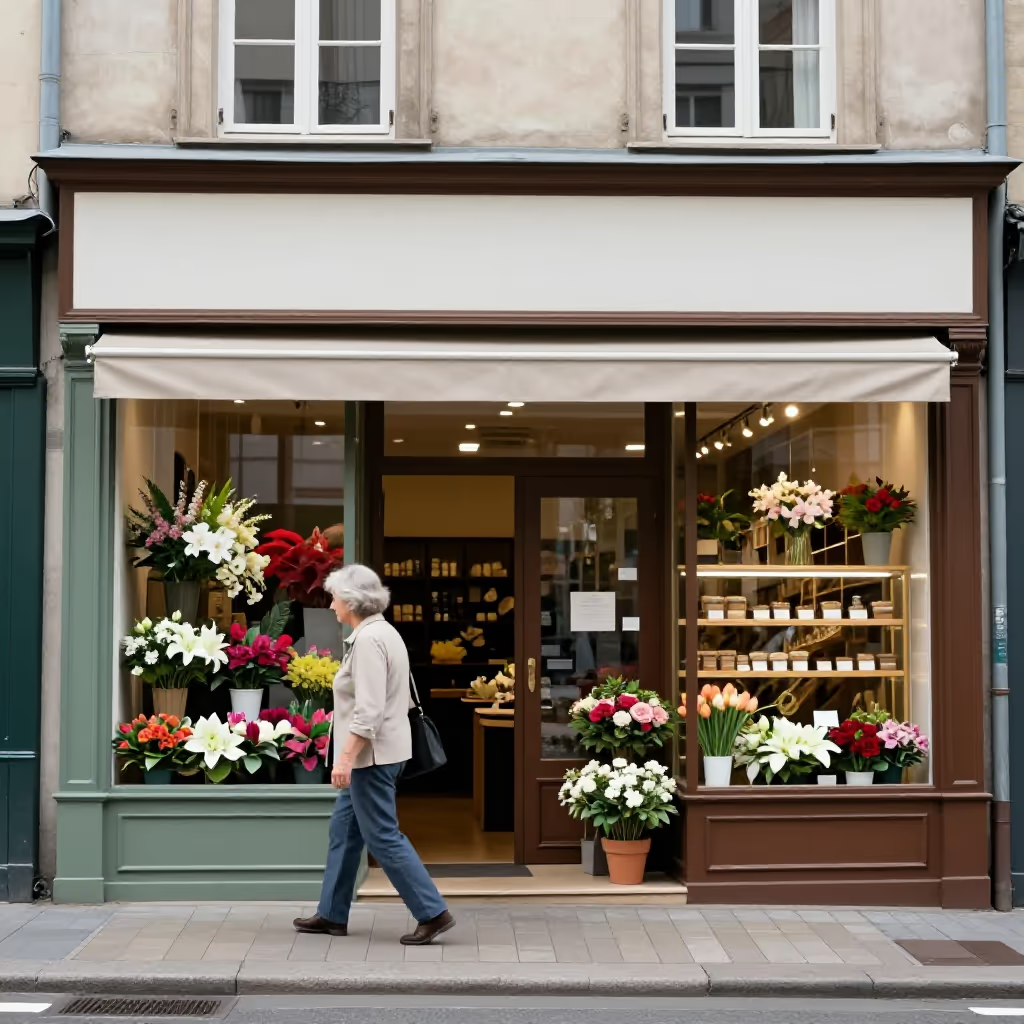
right
Spatially directly next to or in the immediate vicinity.
Die Bäckerei ist gleich um die Ecke.
The bakery is right around the corner.
The meaning of 'gleich' depends strongly on its position and function in the sentence. As an adverb referring to an action, it means 'sofort' (immediately) or 'in Kürze' (shortly). Before a noun, it means 'identisch' (identical). As part of the predicate, it can mean 'egal' (it doesn't matter) or 'gleichberechtigt' (having equal rights).
Das Konzert fängt gleich an.
The concert is about to start.
To express that something is a matter of indifference to someone, the fixed structure 'jemandem gleich sein' (to not matter to someone) is used. The person who doesn't care is always in the dative.
Ob es regnet oder die Sonne scheint, ist ihm völlig gleich.
Whether it rains or the sun shines, it makes absolutely no difference to him.
In the time-related meaning, 'gleich' is part of very common short expressions. 'Bis gleich!' (see you in a bit) is a typical farewell when you will see each other again in a few minutes or hours. 'Ich bin gleich wieder da' (I'll be right back) is also a fixed expression.
Ich gehe nur kurz zum Bäcker. Bis gleich!
I'm just going to the bakery quickly. See you in a bit!
When 'gleich' comes before a noun, it means 'identisch' (identical) and is declined like a normal adjective. It describes that two or more things are of the same type or appearance.
Wir wohnen im gleichen Haus, aber in verschiedenen Wohnungen.
We live in the same house, but in different apartments.
To express direct spatial proximity, 'gleich' is often combined with a location phrase. Typical expressions are 'gleich nebenan' (right next door), 'gleich gegenüber' (right opposite), or 'gleich um die Ecke' (right around the corner).
Die Post ist gleich neben dem Supermarkt.
The post office is right next to the supermarket.
soon / almost
Both words can announce an action in the near future. Gleich usually suggests that something will happen immediately, while bald allows a little more time. Use gleich when it will happen practically right away, and bald when it is only expected to happen in the foreseeable future.
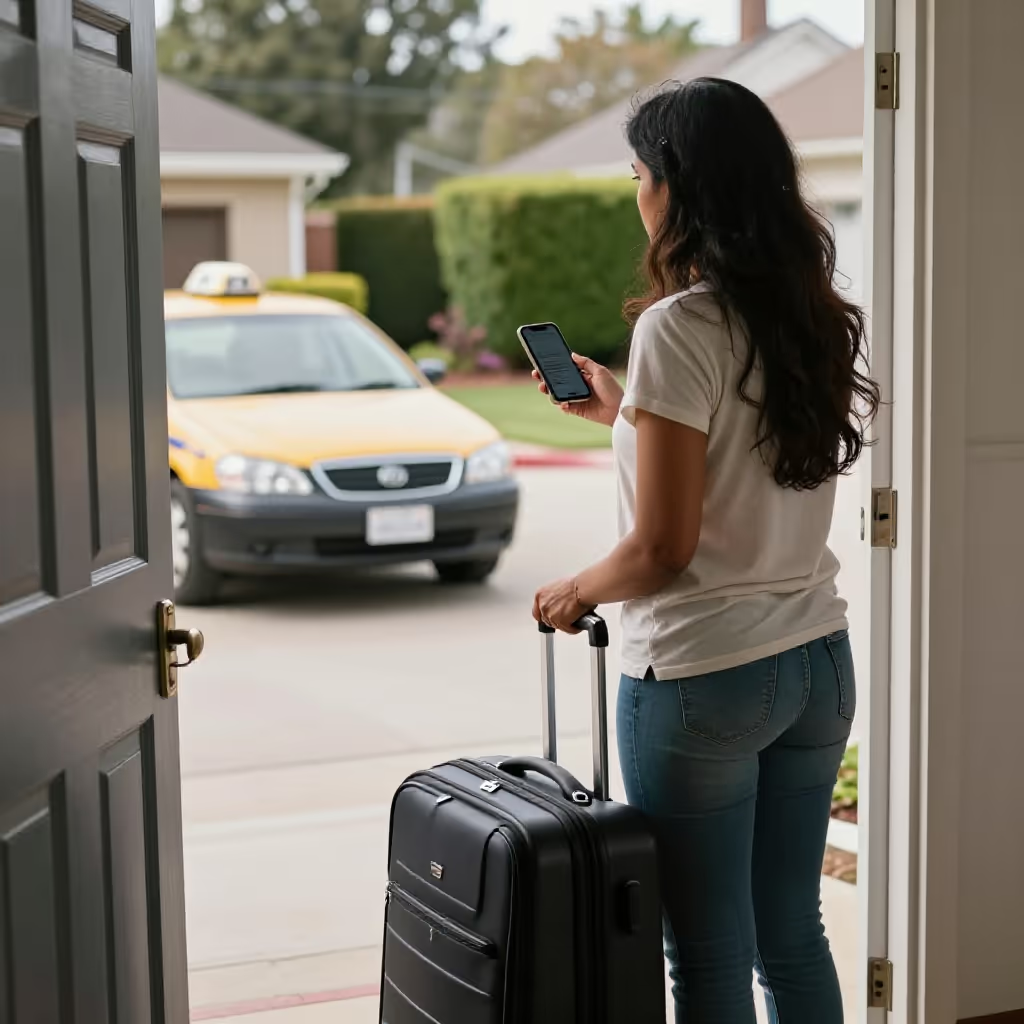
Der Bus kommt gleich, deshalb musst du jetzt einsteigen.
The bus is arriving any moment, so you have to get on now.
Der Bus kommt bald, aber wir können noch kurz auf die Anzeigetafel schauen.
The bus will be here soon, but we can still look at the display for a moment.