

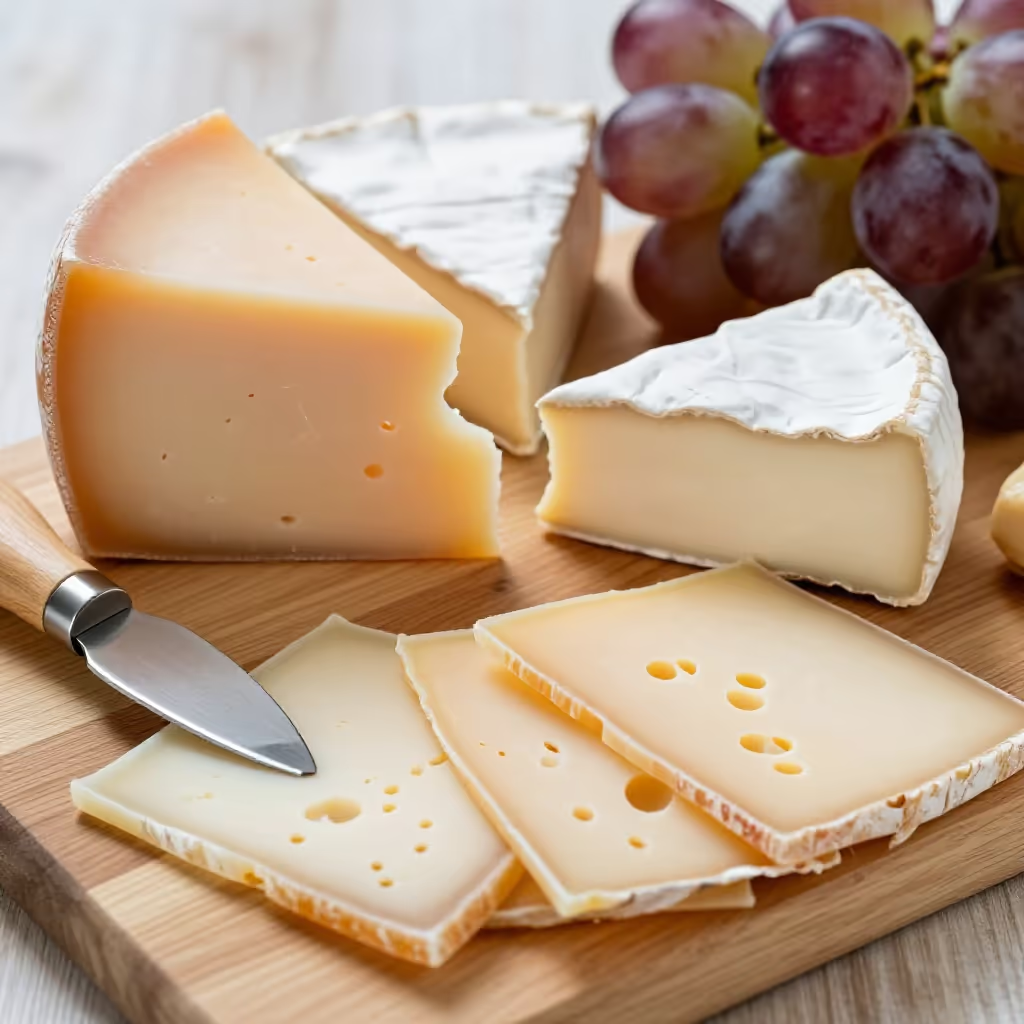
der Käse
cheese
A solid or semi-solid food made by curdling milk.
EXAMPLE
Zum Frühstück esse ich am liebsten Brot mit Käse.
For breakfast, I like eating bread with cheese best.
cheese / nonsense
Loading your saved state.
cheese
A solid or semi-solid food made by curdling milk.
Zum Frühstück esse ich am liebsten Brot mit Käse.
For breakfast, I like eating bread with cheese best.

nonsense
A colloquial expression for nonsense, rubbish, or something worthless.
Was du da erzählst, ist doch alles Käse!
What you're saying there is all nonsense!
The meaning of 'Unsinn' (nonsense) or 'Blödsinn' (rubbish) for 'Käse' (cheese / nonsense) is purely colloquial. It is used to dismiss a statement as stupid, wrong, or irrelevant.
Glaub ihm nicht, er redet nur Käse.
Don't believe him; he's just talking nonsense.
In the colloquial meaning, 'Käse' (cheese / nonsense) appears in fixed expressions. You often hear 'So ein Käse!' (What nonsense!) as an exclamation or the request 'Erzähl doch keinen Käse!' (Don't talk nonsense!). The verb is often 'sein' (to be) or 'erzählen' (to tell).
Seine Ausrede ist doch totaler Käse.
His excuse is total nonsense.
Whether the food or 'Unsinn' (nonsense) is meant is revealed by the context. If it's about eating, cooking, or shopping, it means the food. If it's about opinions, stories, or explanations, it often means 'Unsinn' (nonsense).
Für die Pizza brauche ich noch geriebenen Käse.
I still need grated cheese for the pizza.
nonsense
In colloquial language, both Käse and Quark can dismiss a statement as nonsense. Käse is broader and can also refer generally to something bad or worthless. When referring to something said, Quark emphasizes more strongly that it is false or worthless, and is often used as an exclamation or after “sein” (to be).

Die ganze Idee für den Ausflug ist doch Käse.
The whole idea for the trip is nonsense.
Die Behauptung über den Ausflug ist doch Quark.
The claim about the trip is nonsense.