


die Karte
card
A small, usually rectangular piece of cardboard or plastic for a specific purpose (e.g., postcard, playing card, credit card).
EXAMPLE
Kannst du bitte mit der Karte bezahlen?
Can you please pay by card?
card / map
Loading your saved state.
card
A small, usually rectangular piece of cardboard or plastic for a specific purpose (e.g., postcard, playing card, credit card).
Kannst du bitte mit der Karte bezahlen?
Can you please pay by card?
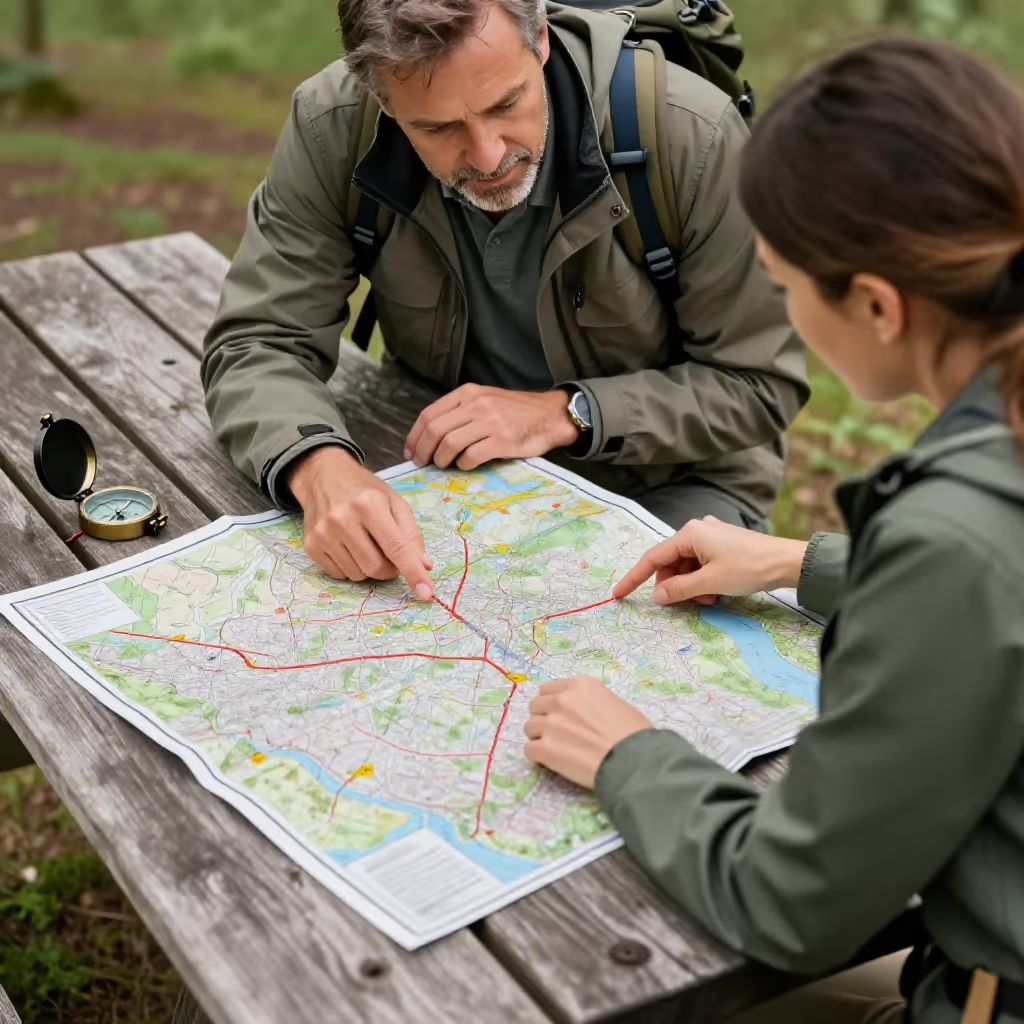
map
A geographic representation of an area; a map.
Lass uns auf der Karte nachsehen, wo das Hotel genau liegt.
Let's check on the map where exactly the hotel is.
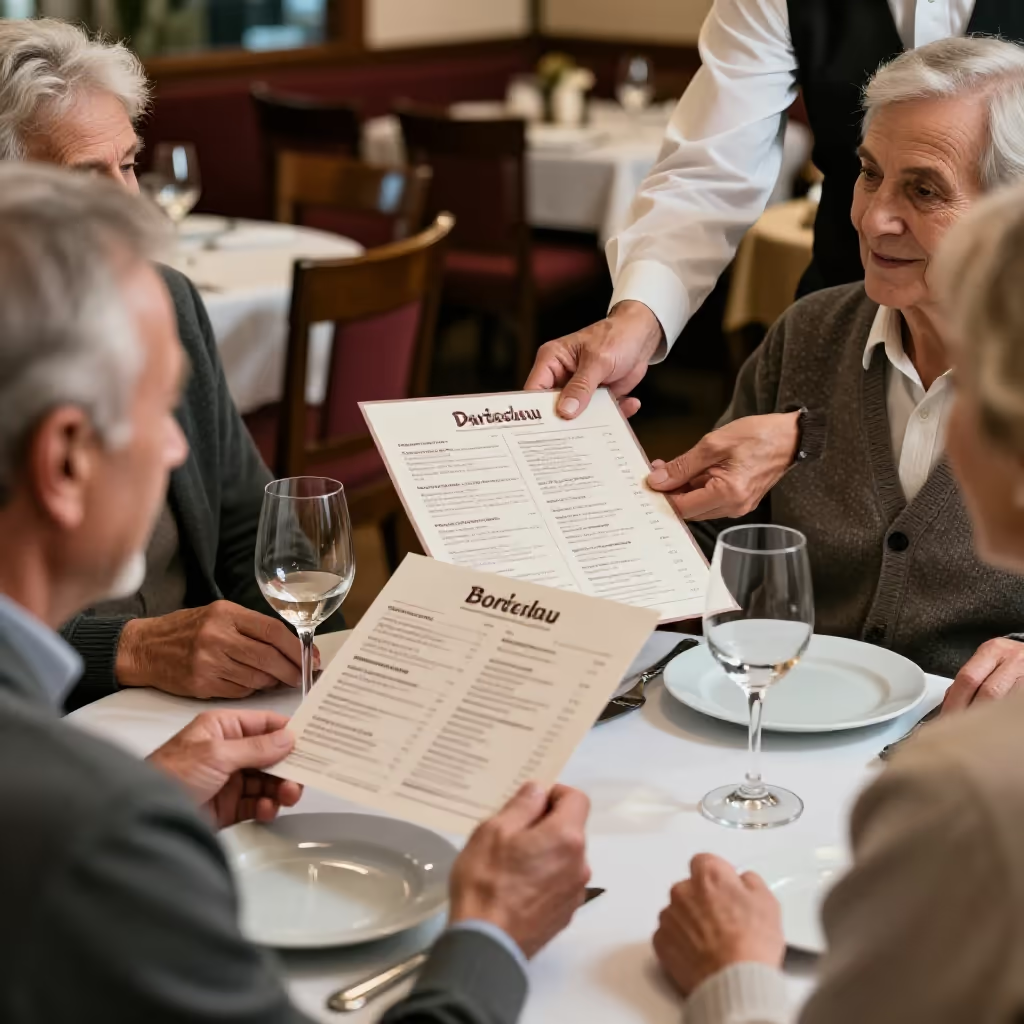
menu
A food menu or drinks menu in a restaurant.
Entschuldigung, könnten wir bitte die Karte haben?
Excuse me, could we please have the menu?
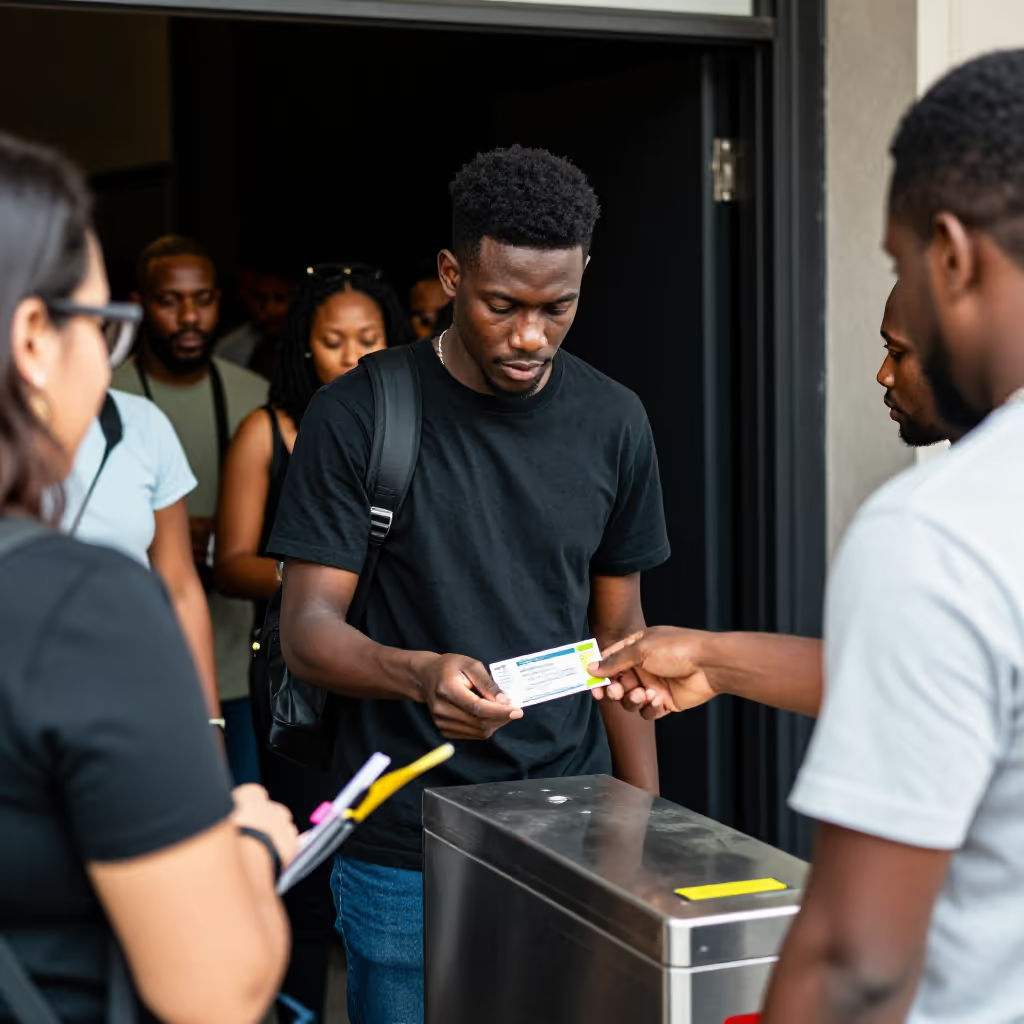
ticket
An admission ticket for an event or a ticket for public transportation.
Ich habe noch eine Karte für das Konzert heute Abend übrig.
I still have one ticket left for the concert tonight.

to have good chances
To have good prospects of success.
Mit seiner Qualifikation hat er bei der Bewerbung wirklich gute Karten.
With his qualifications, he really has good chances in the application process.

to put all eggs in one basket
To risk everything for a single, uncertain possibility.
Mit der Gründung seiner eigenen Firma hat er finanziell alles auf eine Karte gesetzt.
By starting his own company, he financially put all his eggs in one basket.
Because 'Karte' (card/map/menu/ticket) has so many meanings, the exact meaning is often clarified by a compound word. Pay attention to words like 'Kreditkarte' (credit card), 'Landkarte' (map), 'Speisekarte' (menu), or 'Eintrittskarte' (admission ticket).
Hast du die Eintrittskarten für das Museum schon online gekauft?
Have you already bought the admission tickets for the museum online?
For cards made of plastic or paper, typical verbs are 'bezahlen' (to pay) (with a credit card), 'schreiben' (to write) (a postcard), or 'ziehen' (to draw) and 'spielen' (to play) (with playing cards).
Beim Kartenspielen hat er die beste Karte gezogen.
While playing cards, he drew the best card.
When 'Karte' means a map, the preposition 'auf' (on) is often used. Typical verbs are 'lesen' (to read), 'studieren' (to study), or 'nachsehen' (to check/look up).
Wir müssen auf der Karte nachsehen, wie wir zum Hotel kommen.
We have to check on the map how to get to the hotel.
In a restaurant context, 'die Karte' almost always means the food or drinks menu. A typical question to the waiter is: 'Könnten wir bitte die Karte haben?' (Could we please have the menu?)
Ich habe etwas Leckeres auf der Karte entdeckt.
I discovered something delicious on the menu.
The idiom 'gute Karten haben' (to have good cards/chances) means that someone has good chances or prospects of success. The person who has the good chances is the subject of the sentence.
Mit ihrer Erfahrung hat sie für den Job sehr gute Karten.
With her experience, she has very good chances for the job.
The idiom 'alles auf eine Karte setzen' (to put everything on one card) means that you take a high risk for a single possibility. It is often used in financial or professional contexts.
Er hat seinen Job gekündigt und mit seinen Ersparnissen alles auf eine Karte gesetzt.
He quit his job and put all his eggs in one basket with his savings.
plan
Plan and Karte can both help with geographical orientation. A Plan usually shows a place or a limited area in detail and often schematically, whereas a Karte typically represents a larger geographical area. Stadtplan is suitable for individual streets, while Karte is more appropriate for an entire region.
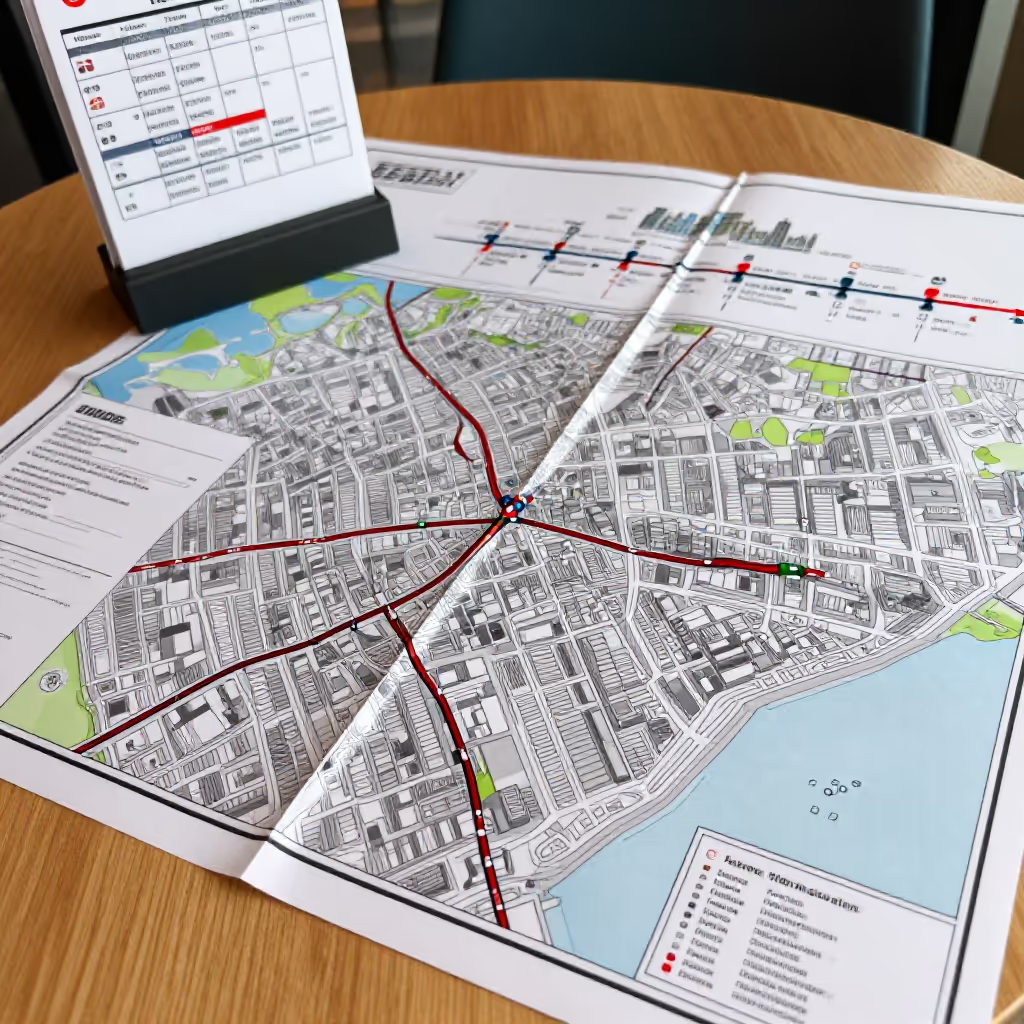
Auf der Karte suchen wir die Region, in der unser Urlaubsort liegt.
We are looking for the region where our vacation destination is located on the map.
Auf dem Stadtplan suchen wir die Straße, in der unser Hotel liegt.
We are looking for the street where our hotel is located on the city map.