A firm connection or entanglement created by tying ropes, threads, or similar material.
example
Der Seemann machte einen komplizierten Knoten, der sich nicht von selbst lösen konnte.
The sailor tied a complicated knot that could not come undone by itself.

Usage tips
Context clues
You can recognize the meaning of 'Knoten' (knot / node) from the context. If it is about ropes, people talk about tying. In traffic or networks, it is an intersection point. In hair or cables, it is a tangle.
EXAMPLE
Kannst du mir helfen, diesen Knoten im Seil zu lösen?
Can you help me untie this knot in the rope?
Typical verbs
When it is about a 'Knoten' (knot) in a rope or thread, the typical verbs are 'einen Knoten machen' (to make a knot) or 'binden' (to tie). The opposite is 'einen Knoten lösen' (to untie a knot) or 'aufmachen' (to undo).
EXAMPLE
Er hat einen festen Knoten in das Seil gemacht.
He made a tight knot in the rope.
Compound nouns
In the meaning of 'central point', 'Knoten' (node / hub) is often used as part of compound nouns. Examples are 'Verkehrsknoten' (traffic hub), 'Eisenbahnknoten' (railway junction), or 'Datenknoten' (data node).
EXAMPLE
Dieser Server ist ein zentraler Knoten im Netzwerk.
This server is a central node in the network.
Fixed expression
The idiom 'der Knoten ist geplatzt' (the knot has come undone) is a fixed expression. It is used to express that a block has suddenly been overcome and something finally works.
EXAMPLE
Nach stundenlangem Nachdenken ist bei mir endlich der Knoten geplatzt und ich habe die Lösung gefunden.
After hours of thinking, the knot finally came undone for me and I found the solution.
Technical language
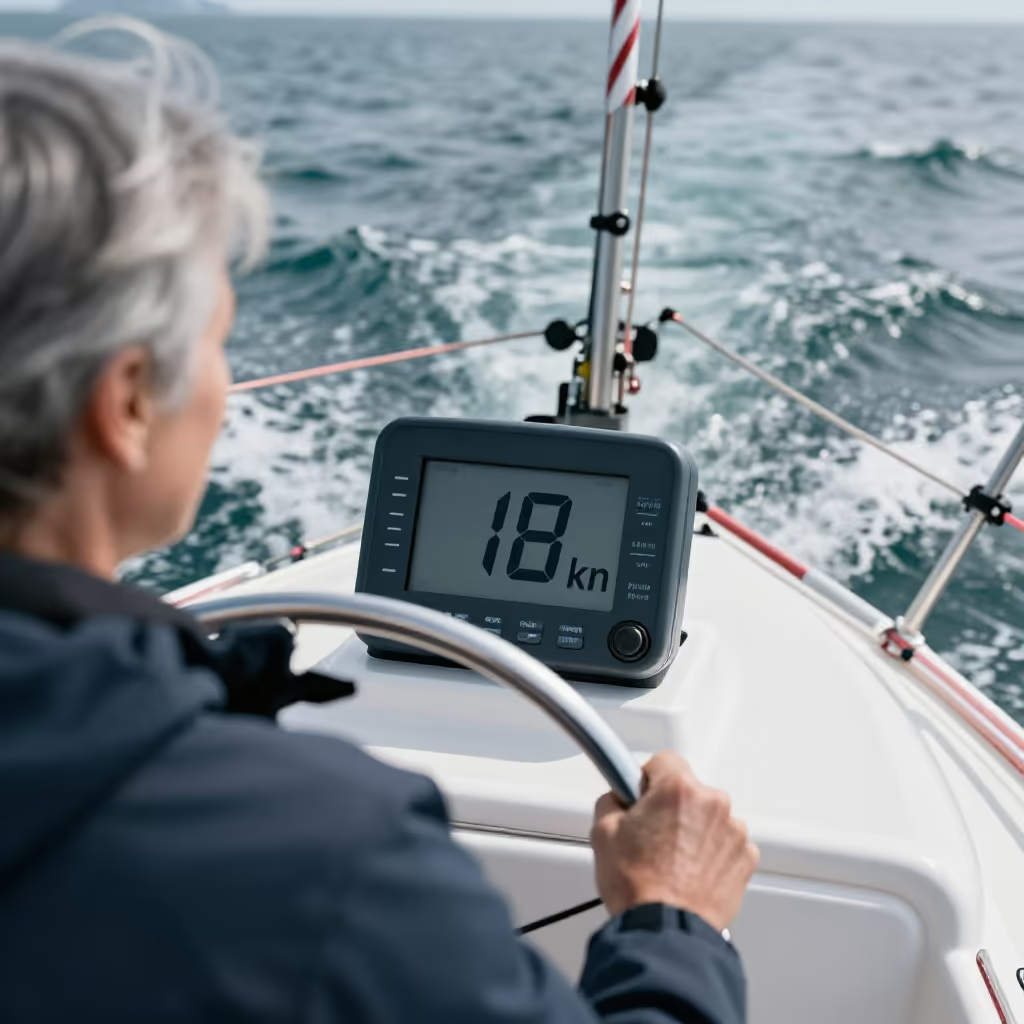
As a unit of measurement, 'Knoten' (knot) is used only in the technical language of maritime and aviation contexts to indicate speed. In everyday life, people use 'Stundenkilometer' (kilometers per hour, km/h).
EXAMPLE
Das Schiff fährt mit einer Geschwindigkeit von 15 Knoten.
The ship is traveling at a speed of 15 knots.
Medical context
In a medical context, 'Knoten' (lump / nodule) describes a palpable thickening in the body. Typical verbs in this context are 'einen Knoten fühlen' (to feel a lump), 'spüren' (to notice/feel), or 'ertasten' (to feel by touch).
EXAMPLE
Der Arzt hat beim Abtasten einen kleinen Knoten gefühlt.
The doctor felt a small lump during the palpation exam.
Compare with
near_synonym · confusable
Knoten vs Kreuzung
intersection / crossing
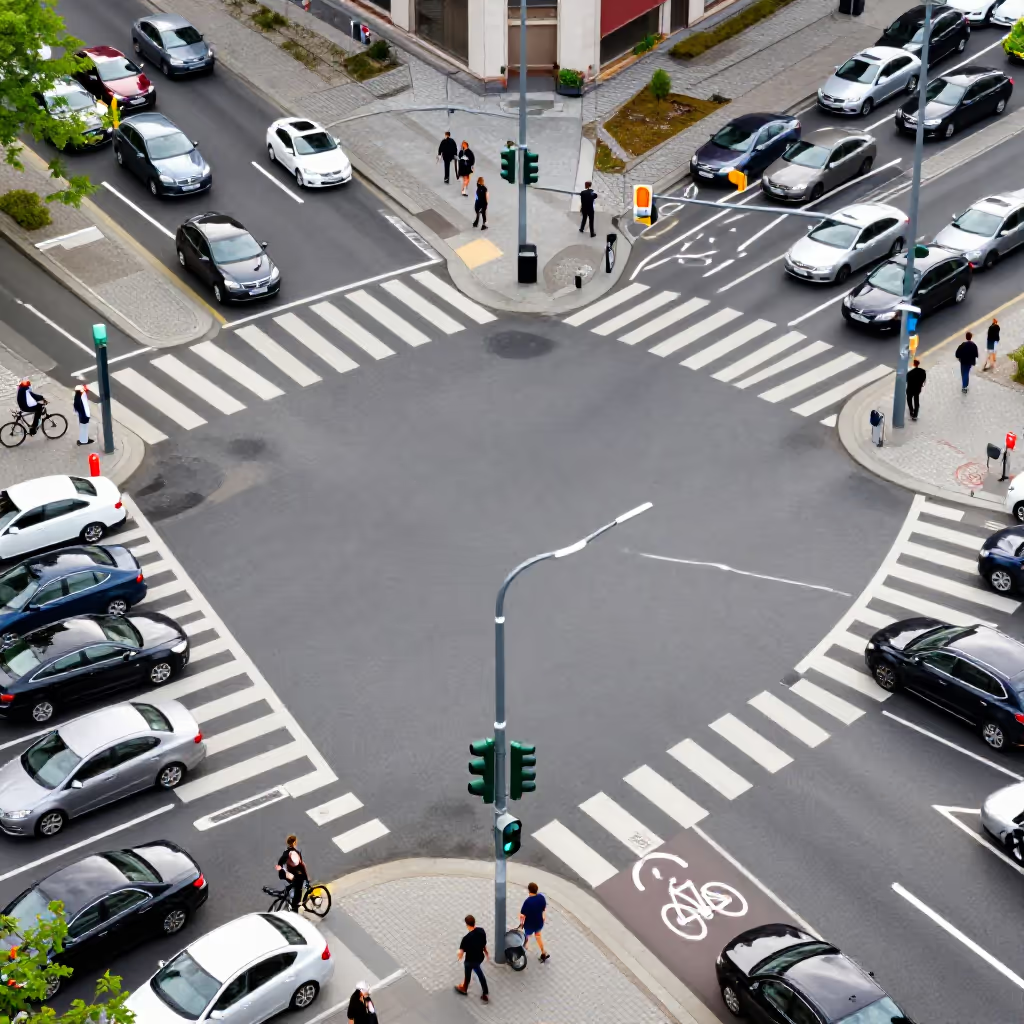
'der Knoten' and 'die Kreuzung' can both refer to a place where routes or lines meet. 'die Kreuzung' is used especially for streets or paths that cross. 'der Knoten' sounds more general and often more technical: it is an important point in a network, for example in traffic, trains, or data connections. They can be confused because a large road intersection can also be part of a traffic hub. In everyday language, for two streets you usually say 'Kreuzung'; for an important connection point with many directions, 'Knoten' fits better.
Knoten
Der Bahnhof ist ein wichtiger Knoten im regionalen Zugverkehr.
The station is an important hub in regional train traffic.
Kreuzung
An der nächsten Kreuzung musst du nach links abbiegen.