

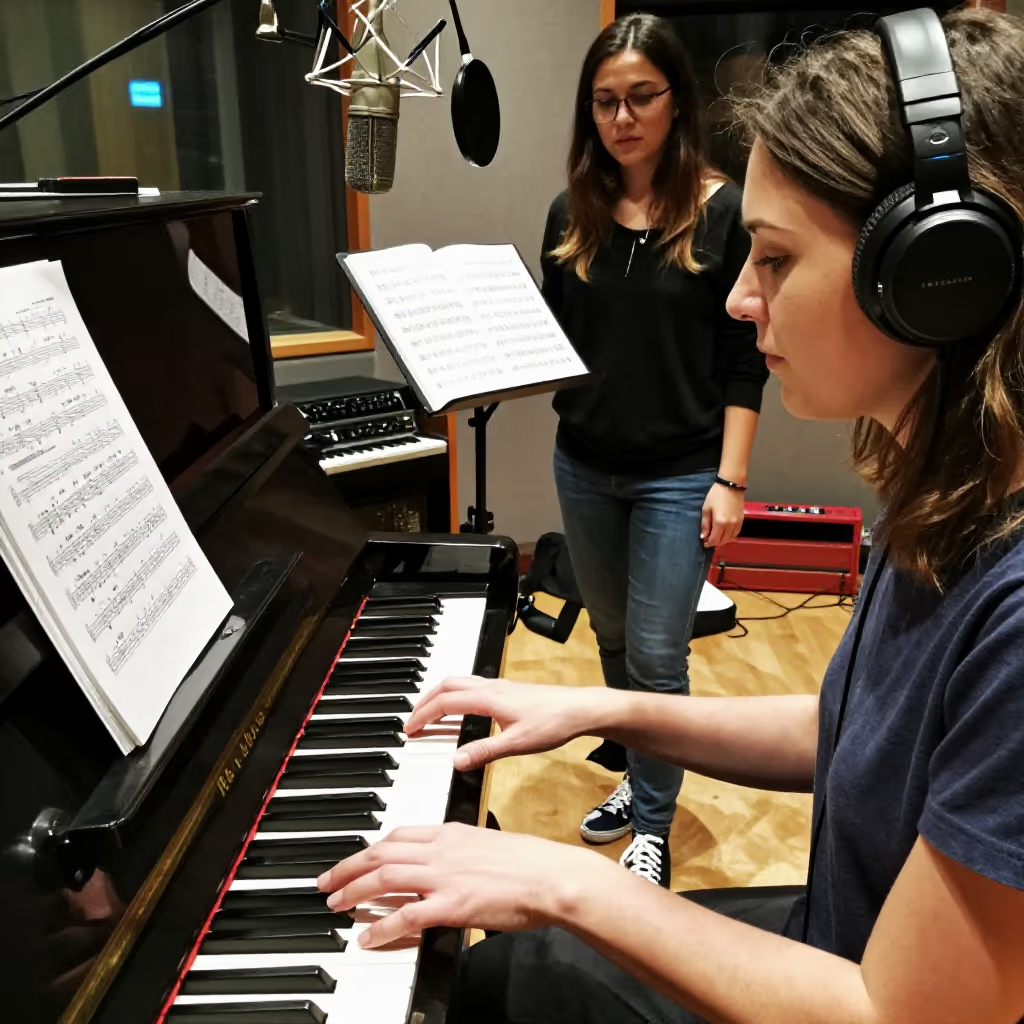
vertonen
to set to music
To provide a text, especially a poem or a libretto, with a musical composition.
EXAMPLE
Franz Schubert hat viele Gedichte von Goethe vertont.
Franz Schubert set many poems by Goethe to music.
to set to music
Loading your saved state.
to set to music
To provide a text, especially a poem or a libretto, with a musical composition.
Franz Schubert hat viele Gedichte von Goethe vertont.
Franz Schubert set many poems by Goethe to music.
'vertonen' (to set to music) is an inseparable verb derived from the noun 'der Ton' (tone/sound). The prefix 'ver-' here means something like 'to provide with something'. So you provide a text with tones, that is, with music.
Der junge Komponist möchte als Nächstes einen Roman vertonen.
The young composer would like to set a novel to music next.
What is set to music is typically a literary work. Common combinations are 'ein Gedicht vertonen' (to set a poem to music), 'einen Text vertonen' (to set a text to music), or 'ein Libretto vertonen' (to set a libretto to music).
Es ist eine große Herausforderung, ein so bekanntes Gedicht neu zu vertonen.
It is a great challenge to set such a well-known poem to music in a new way.
This verb is very often used in the passive in order to put the work at the center. The structure is then: [text] wurde von [composer] vertont ([text] was set to music by [composer]).
Dieses Gedicht wurde bereits von mehreren berühmten Komponisten vertont.
This poem has already been set to music by several famous composers.
to compose
Komponieren refers to creating the music itself. Vertonen is used when an existing text is the starting point and is provided with music. So, for a poem, you can either compose music or set the poem to music, depending on what is central.

Mira vertont ein Gedicht von Goethe.
Mira is setting a poem by Goethe to music.
Mira komponiert die Musik für ein Gedicht von Goethe.
Mira is composing the music for a poem by Goethe.