

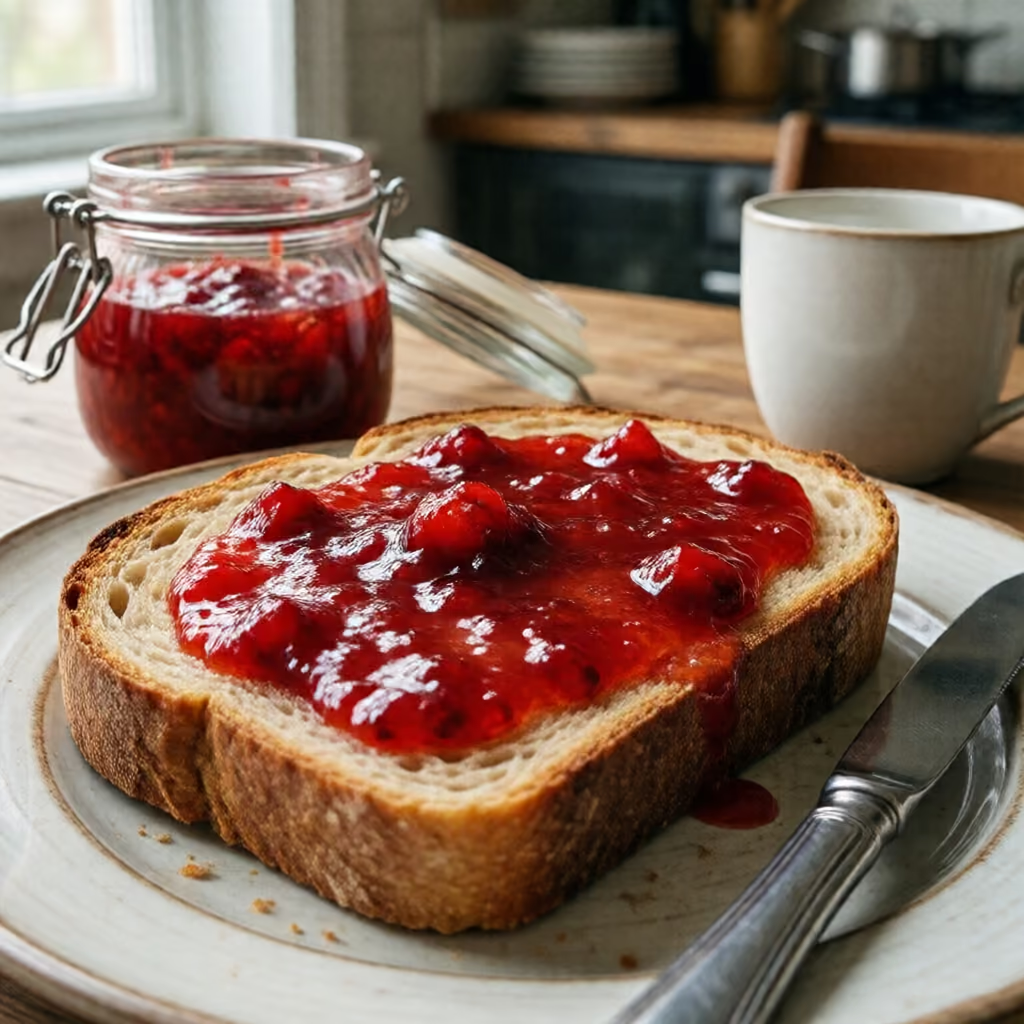
die Konfitüre
jam
A sweet spread made from cooked fruit and sugar, usually with a chunky or jelly-like consistency.
EXAMPLE
Zum Frühstück esse ich gern Konfitüre auf frischem Brot.
For breakfast, I like eating jam on fresh bread.
jam
die Konfitüre, die Konfitüren
Loading your saved state.
jam
A sweet spread made from cooked fruit and sugar, usually with a chunky or jelly-like consistency.
Zum Frühstück esse ich gern Konfitüre auf frischem Brot.
For breakfast, I like eating jam on fresh bread.
| gender | feminine die |
|---|---|
| plural | die Konfitüren |
| genitive | der Konfitüre |
| singular | plural | |
|---|---|---|
| nominative | die Konfitüre | die Konfitüren |
| accusative | die Konfitüre | die Konfitüren |
| dative | der Konfitüre | den Konfitüren |
| genitive | der Konfitüre | der Konfitüren |
The article changes with the case; it is shown in colour.
'Konfitüre' (jam) is often used as the base word in compounds with a type of fruit. Words such as 'Erdbeerkonfitüre' (strawberry jam) or 'Aprikosenkonfitüre' (apricot jam) show which fruit it is made from.
Zum Frühstück gab es Brötchen mit Konfitüre, am liebsten Erdbeerkonfitüre.
For breakfast, we had bread rolls with jam, preferably strawberry jam.
Typical collocations include 'Konfitüre aufs Brot streichen' (to spread jam on bread), 'Konfitüre zum Frühstück essen' (to eat jam for breakfast), and 'Konfitüre selbst machen' (to make jam yourself). Jam is often mentioned together with bread, bread rolls, or toast.
Mein Sohn streicht sich die Konfitüre immer besonders dick aufs Brot.
My son always spreads his jam particularly thickly on his bread.
The verbs 'kochen' (to cook) and 'einkochen' (to preserve by cooking) are often used when talking about making jam. 'selbst gemachte Konfitüre' (homemade jam) is also a typical collocation, especially in recipes and when talking about preserves.
Im Sommer kocht meine Großmutter Konfitüre aus den Früchten ihres Gartens.
In summer, my grandmother makes jam from the fruit in her garden.