

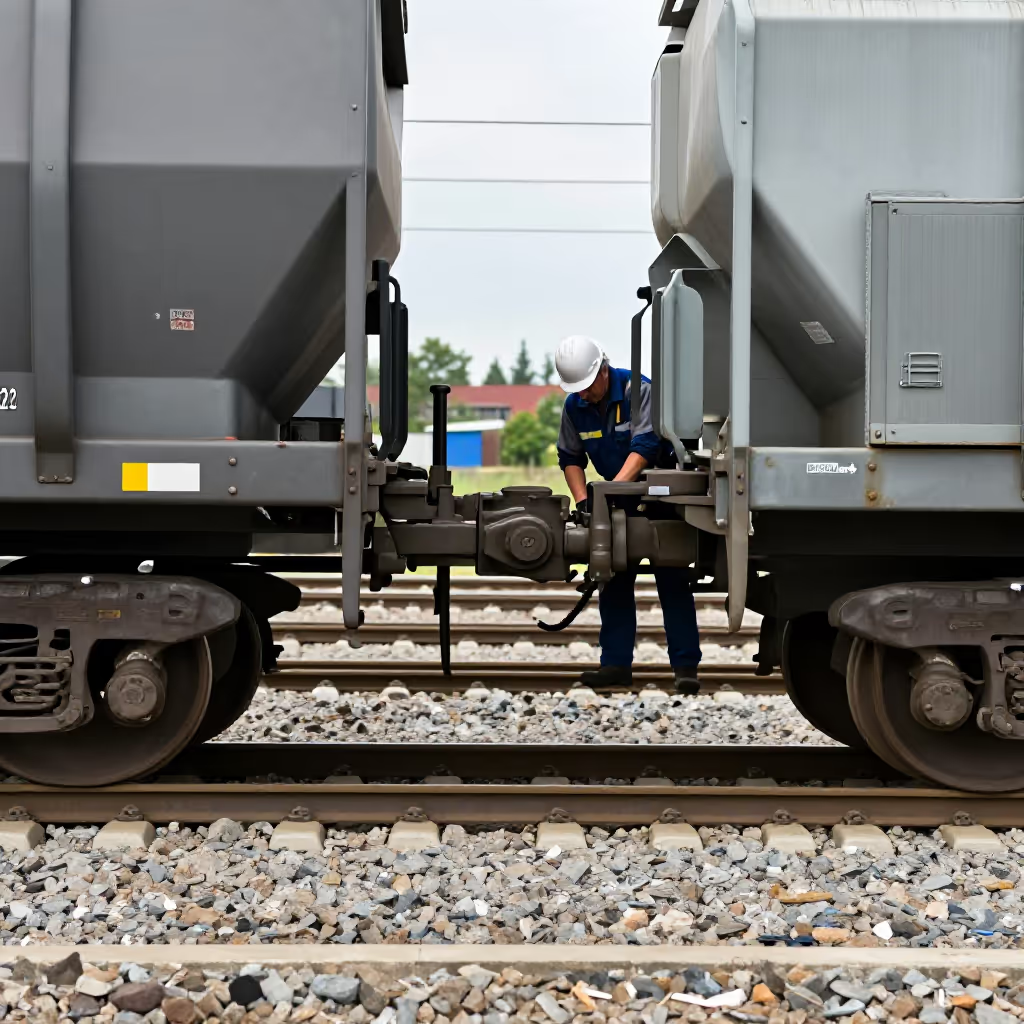
koppeln
to couple
To physically connect two or more things or attach them to each other.
EXAMPLE
Der Lokführer muss die Waggons an die Lokomotive koppeln.
The train driver has to couple the cars to the locomotive.
to couple / connect
Loading your saved state.
to couple
To physically connect two or more things or attach them to each other.
Der Lokführer muss die Waggons an die Lokomotive koppeln.
The train driver has to couple the cars to the locomotive.

to link to
To connect two or more things in terms of content or concept, or make them dependent on each other.
Die Gehaltserhöhung ist direkt an die persönliche Leistung gekoppelt.
The salary increase is directly linked to personal performance.

to pair / connect
In technology, to connect two devices or systems so that they can exchange data or work together.
Ich versuche gerade, mein Smartphone per Bluetooth mit dem Lautsprecher zu koppeln.
I'm trying to pair my smartphone with the speaker via Bluetooth.
The exact meaning of 'koppeln' (to couple/connect) becomes clear from the context. If you are talking about trains or machines, it is a physical connection. If it is about ideas or conditions, it is an abstract link. In technology, it usually refers to a data connection.
Die Waggons werden im Bahnhof gekoppelt.
The cars are coupled at the station.
In the abstract meaning ('abhängig machen von' — to make dependent on), 'koppeln' (to link) is almost always used with the preposition 'an' and the accusative. The structure is: 'etwas an etwas (Akk.) koppeln' (to link something to something).
Die Firma koppelt die Bonuszahlung an das Erreichen der Jahresziele.
The company links the bonus payment to the achievement of the annual targets.
In a technical context, 'koppeln' (to pair/connect) is often used with 'per Bluetooth' (via Bluetooth), 'über WLAN' (via Wi-Fi), or 'mit einem Gerät' (with a device). It can also be used with the preposition 'mit' (with).
Koppeln Sie Ihr Smartphone mit dem Lautsprecher, um Musik zu hören.
Pair your smartphone with the speaker to listen to music.
to connect / to bandage
Both words can refer to technically connecting two devices. verbinden describes generally connecting the devices to each other; koppeln places greater emphasis on enabling them to exchange data or work together as a result. Use koppeln when this functional cooperation is important.
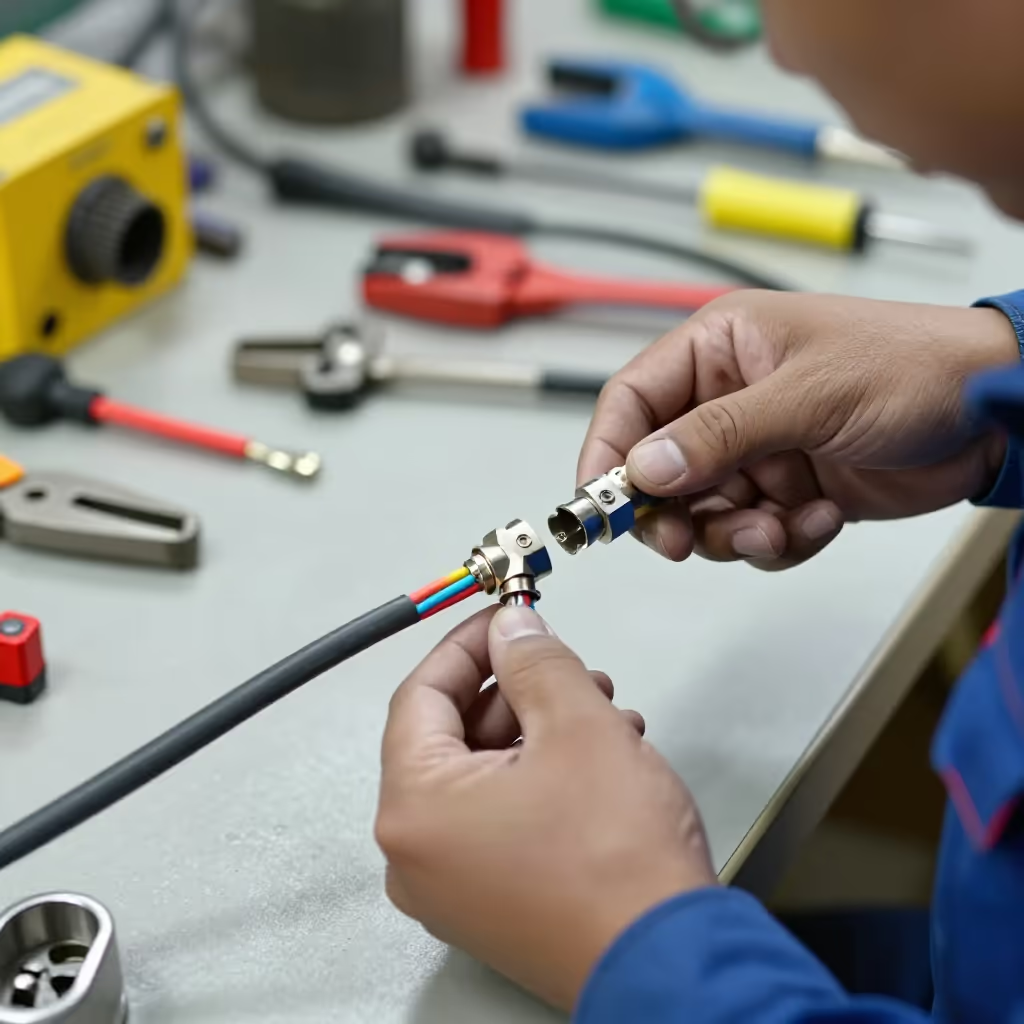
Ich kopple den Drucker mit dem Laptop, damit beide Geräte zusammenarbeiten.
I pair the printer with the laptop so that the two devices can work together.
Ich verbinde den Drucker mit dem Laptop.
I connect the printer to the laptop.