


lesen
to read
To take in written or printed text with the eyes and understand its content.
EXAMPLE
Am Wochenende möchte ich endlich in Ruhe mein neues Buch lesen.
At the weekend, I finally want to read my new book in peace.
to read
Loading your saved state.
to read
To take in written or printed text with the eyes and understand its content.
Am Wochenende möchte ich endlich in Ruhe mein neues Buch lesen.
At the weekend, I finally want to read my new book in peace.

to lecture
To give a lecture or seminar at a university.
Der Professor liest zweimal pro Woche über die Geschichte der Weimarer Republik.
The professor lectures twice a week on the history of the Weimar Republic.

to read
To read off or interpret information from a measuring device, a map, or other data sources.
Der Techniker muss den Zählerstand am Stromkasten lesen.
The technician has to read the meter reading on the electrical box.

to give someone a dressing-down
To sharply reprimand or scold someone.
Nachdem er schon wieder zu spät kam, hat ihm der Chef ordentlich die Leviten gelesen.
After he was late yet again, the boss gave him a proper dressing-down.

to harvest
To gather or harvest fruit, especially grapes, by hand.
Im Herbst helfen viele Saisonarbeiter, den Wein zu lesen.
In autumn, many seasonal workers help harvest the grapes.
'Lesen' (to read) is a strong, irregular verb. Pay attention to the vowel change in the 2nd and 3rd person singular present tense (er liest) and in the past forms (er las, er hat gelesen).
Was liest du da gerade?
What are you reading right now?
The exact meaning of 'lesen' often only becomes clear through the object. Are you reading a book, a map, a meter reading, or harvesting grapes? The noun in the sentence tells you.
Ich kann diese kleine Schrift ohne Brille nicht lesen.
I can't read this small print without glasses.
The meaning 'eine Vorlesung halten' (to give a lecture) is used almost exclusively in the academic context of a university. The subject is typically a professor or lecturer.
Nächstes Semester liest sie über die französische Revolution.
Next semester, she is lecturing on the French Revolution.
The idiom 'jemandem die Leviten lesen' (to give someone a dressing-down) has a fixed structure. The person being criticized is always in the dative.
Als er die Hausaufgaben vergaß, hat ihm die Lehrerin die Leviten gelesen.
When he forgot the homework, the teacher gave him a dressing-down.
In the context of viticulture, 'lesen' means harvesting grapes. This meaning is very specific and is used only in this field.
Die Winzer waren mit der Qualität der gelesenen Trauben sehr zufrieden.
The winegrowers were very satisfied with the quality of the harvested grapes.
to hold
A teacher can give or read a university lecture. Halten is the general, unremarkable term used today for presenting a lecture to an audience. Lesen refers to the same activity at a university, but sounds technical and more traditional.
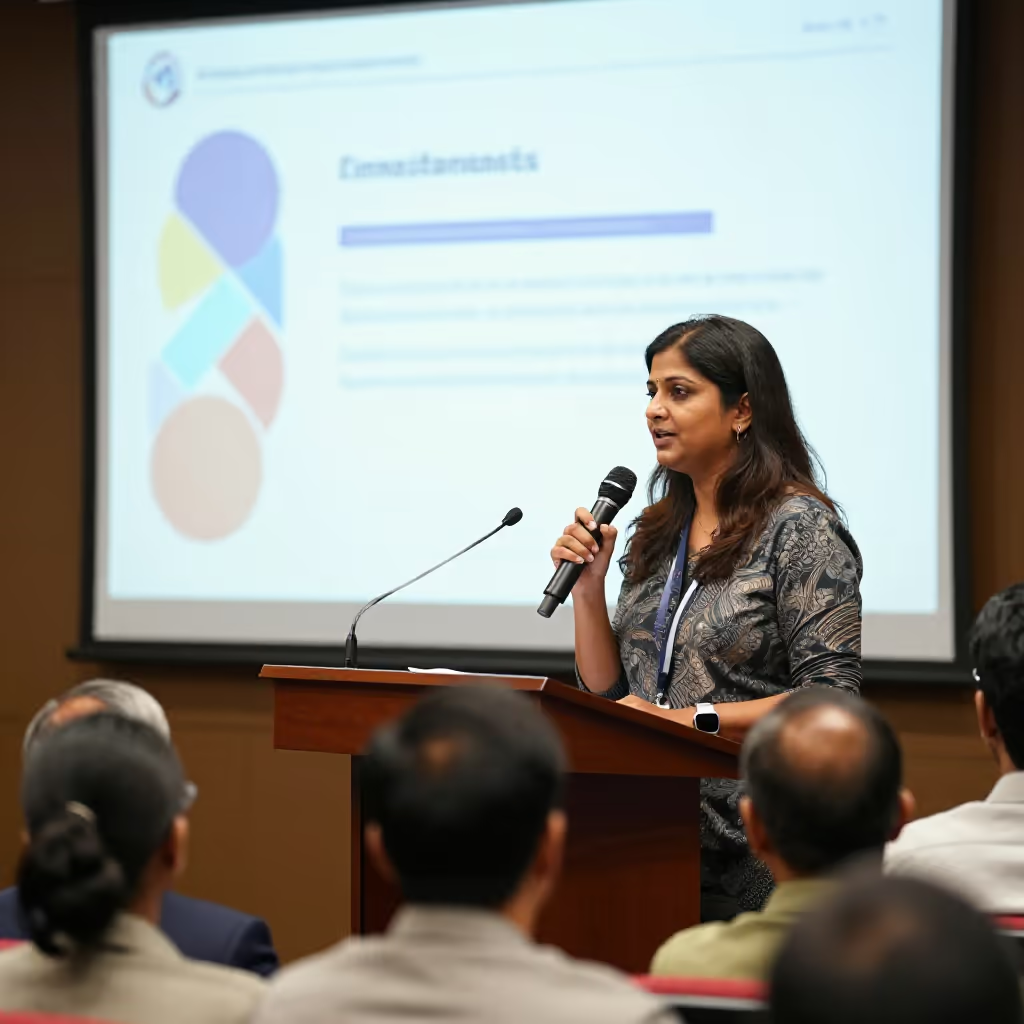
Die Professorin liest heute eine Vorlesung über Sprachgeschichte.
The professor is lecturing on the history of language today.
Die Professorin hält heute eine Vorlesung über Sprachgeschichte.
The professor is giving a lecture on the history of language today.