

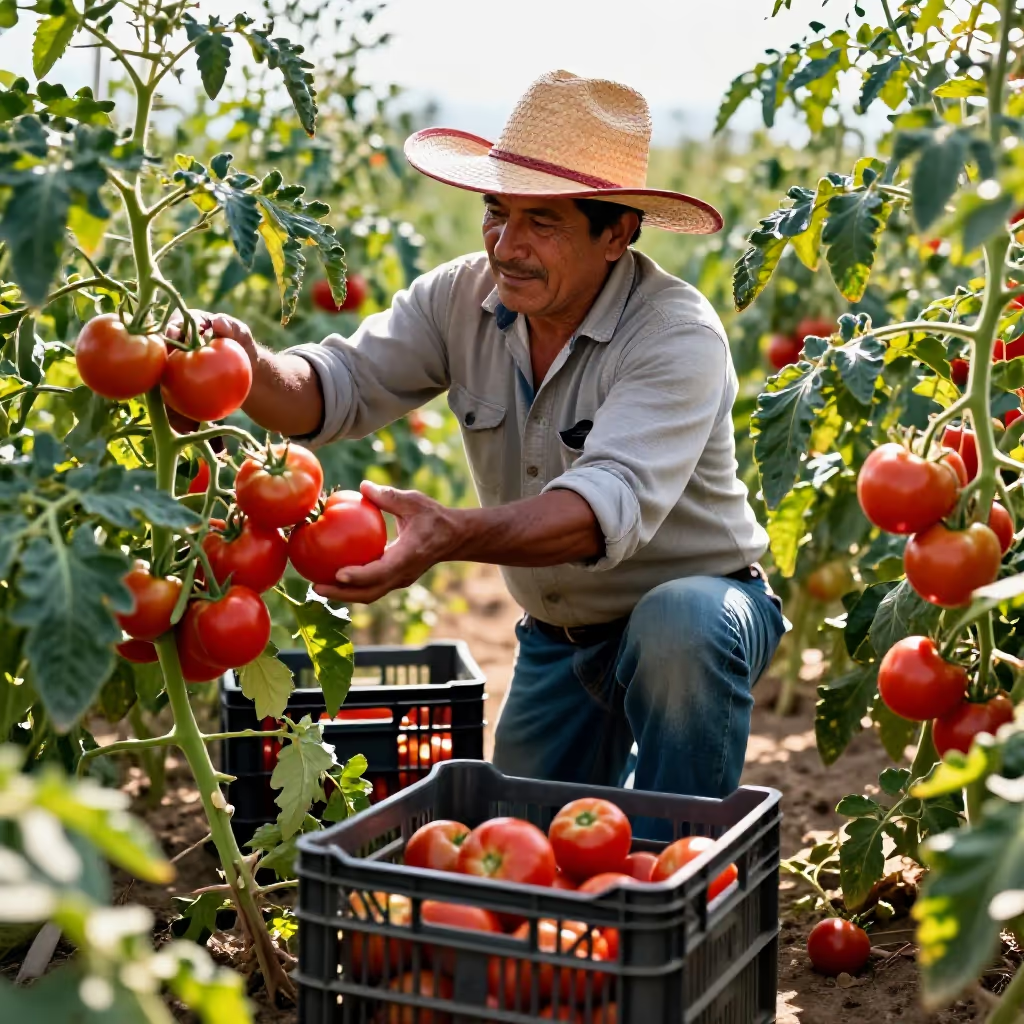
ernten
to harvest
To gather ripe fruit, vegetables, or grain from a field, from trees, or from plants.
EXAMPLE
Im Herbst ernten die Bauern den Mais.
In autumn, the farmers harvest the corn.
to harvest
Loading your saved state.
to harvest
To gather ripe fruit, vegetables, or grain from a field, from trees, or from plants.
Im Herbst ernten die Bauern den Mais.
In autumn, the farmers harvest the corn.

to reap
To receive a certain reaction or result as the consequence of an action, often in a figurative sense. This can be praise, criticism, mockery, or success.
Für seine unüberlegte Äußerung erntete er viel Kritik.
He reaped a lot of criticism for his thoughtless remark.
The verb 'ernten' (to harvest) belongs to the noun 'die Ernte' (the harvest). 'Ernten' is the activity of gathering ripe crops, that is, the harvest.
Nachdem die Bauern den ganzen Sommer gearbeitet hatten, konnten sie im Herbst endlich ernten.
After the farmers had worked all summer, they could finally harvest in autumn.
You can recognize the meaning from the object of the verb. If it is about plants or fruit, the literal meaning is intended. If it is about an abstract reaction, the figurative meaning is intended.
Wir ernten die Kirschen direkt vom Baum.
We harvest the cherries directly from the tree.
In its literal meaning, 'ernten' (to harvest) is combined with agricultural products. Typical phrases are: 'Obst ernten' (to harvest fruit), 'Gemüse ernten' (to harvest vegetables), 'Getreide ernten' (to harvest grain), or 'Weintrauben ernten' (to harvest grapes).
Die Winzer beginnen nächste Woche, die Weintrauben zu ernten.
The winegrowers will start harvesting the grapes next week.
In the figurative meaning, 'ernten' (to reap) describes the result of an action. Common combinations are: 'Lob ernten' (to reap praise), 'Kritik ernten' (to reap criticism), 'Applaus ernten' (to reap applause), or 'Bewunderung ernten' (to reap admiration).
Mit ihrer Präsentation erntete die Studentin viel Lob vom Professor.
With her presentation, the student reaped a lot of praise from the professor.
to get / receive
With praise or criticism, bekommen neutrally describes someone receiving this reaction. Ernten presents it figuratively as the result of an action or achievement. When the connection between the action and the reaction is meant to be emphasized, ernten is the better choice.

Für seinen Vortrag erntete Paul viel Lob.
Paul garnered a lot of praise for his presentation.
Für seinen Vortrag bekam Paul viel Lob.
Paul received a lot of praise for his presentation.