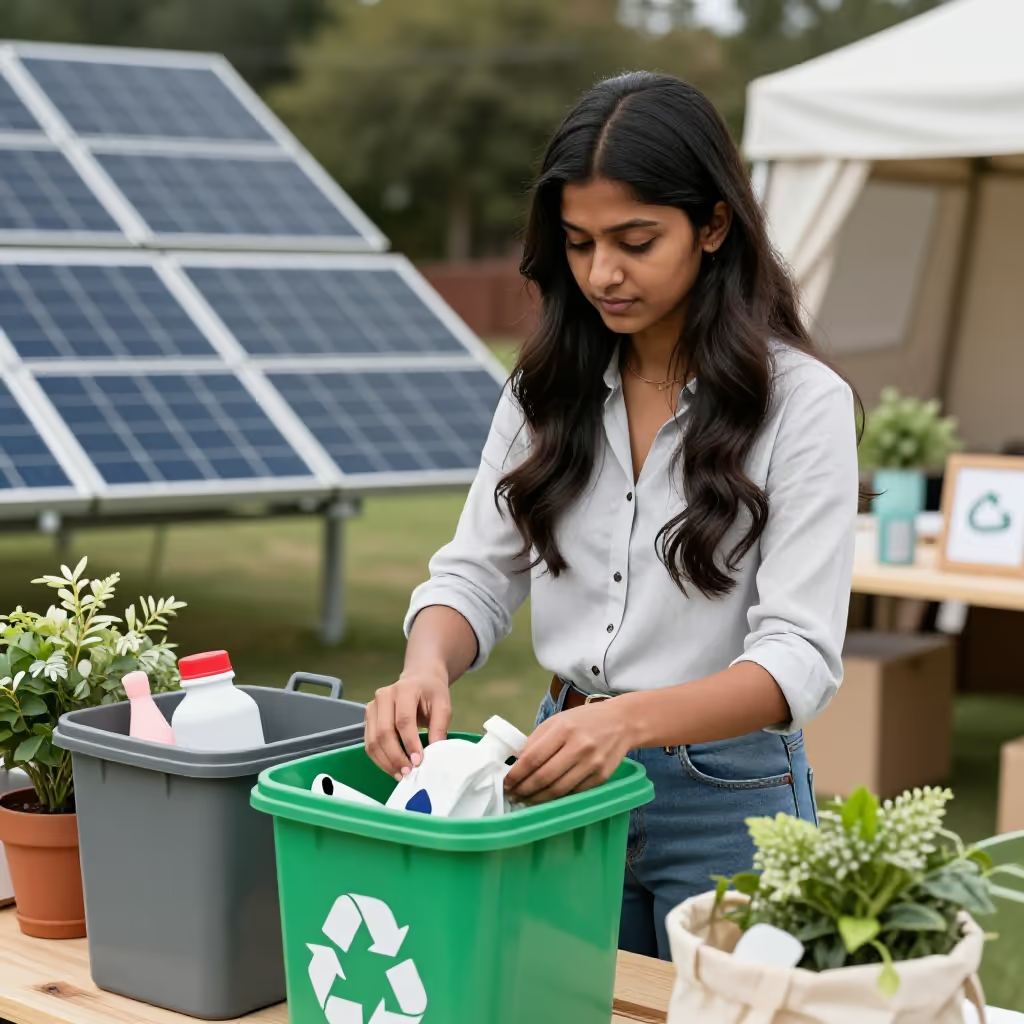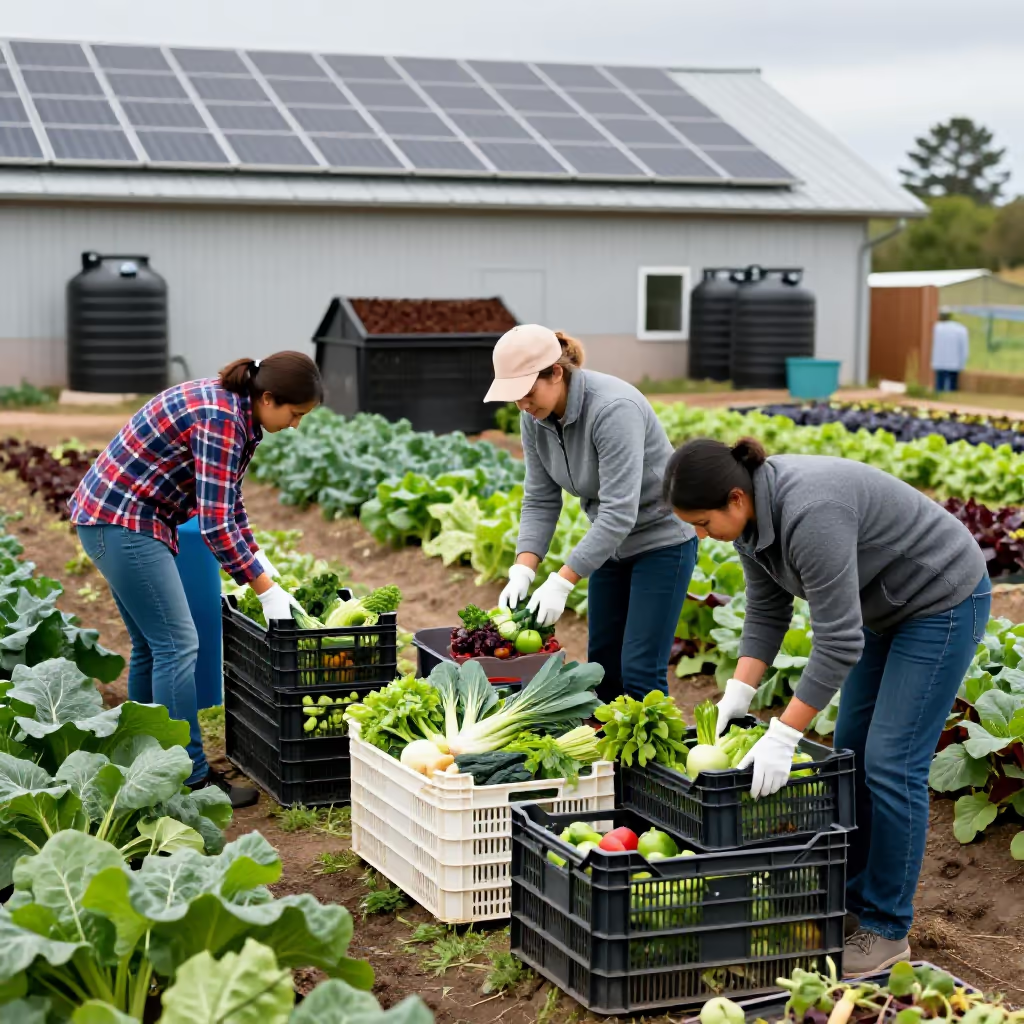
In a way that protects the environment and natural resources so that they are preserved for future generations.
example
Wir achten beim Einkauf auf nachhaltig produzierte Lebensmittel.
When shopping, we pay attention to sustainably produced food.

Usage tips
Word structure
The word is made up of 'nach' (after) and 'halten' (to last/hold). The basic idea is that something 'still lasts afterward' or has an effect that continues for a long time. This connects the ecological meaning and the figurative meaning.
EXAMPLE
Die Entscheidung für den Umzug hat unser Leben nachhaltig verändert.
The decision to move changed our lives in a lasting way.
Context clue
You can recognize the meaning from the context. If it is about the environment, resources, or the economy, the ecological meaning is intended. If it is about experiences, impressions, or changes, it refers to the figurative, long-lasting effect.
EXAMPLE
Viele Firmen werben mit nachhaltigen Verpackungen.
Many companies advertise sustainable packaging.
Typical collocations
In an ecological context, 'nachhaltig' (sustainable) often appears with nouns such as 'Landwirtschaft' (agriculture), 'Energie' (energy), 'Tourismus' (tourism), or 'Konsum' (consumption). It is also frequently combined with verbs like 'leben' (to live) or 'produzieren' (to produce).
EXAMPLE
Nachhaltiger Tourismus versucht, die Natur zu schützen.
Sustainable tourism tries to protect nature.
Use as an adverb
In the meaning 'langanhaltend' (long-lasting), 'nachhaltig' (lasting) is very often used as an adverb to describe a verb. Typical verbs are 'beeinflussen' (to influence), 'verändern' (to change), 'prägen' (to shape), or 'stören' (to disturb).
EXAMPLE
Der Skandal hat den Ruf des Politikers nachhaltig geschädigt.
The scandal caused lasting damage to the politician's reputation.
Compare with
near_synonym · confusable
nachhaltig vs grün
green
'grün' and 'nachhaltig' can both have to do with the environment and nature. 'grün' is often a general word for environmentally friendly ideas, politics, or products. 'nachhaltig' is more precise: it is about conserving resources and acting in a way that keeps things good for the future too. The words can be confusing because they often appear together in advertising and everyday language. As a simple guide: 'grün' sounds broader, while 'nachhaltig' emphasizes the long-term effect.
nachhaltig
Beim Einkaufen achtet Sofia darauf, nachhaltige Produkte ohne viel Verpackung zu wählen.
When shopping, Sofia makes sure to choose sustainable products without much packaging.
grün
Unsere Firma möchte grüner werden und weniger Energie verbrauchen.
Our company wants to become greener and use less energy.