

die Nation
nation
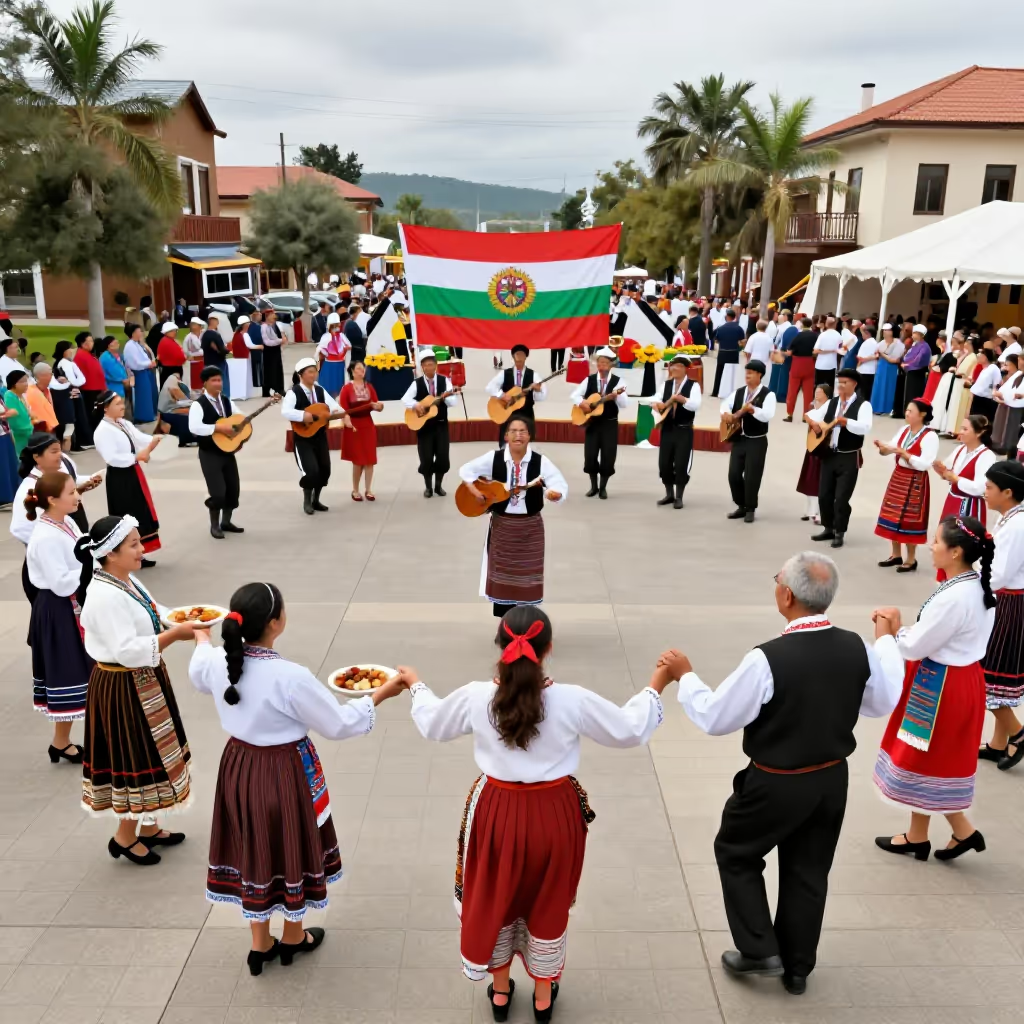
A large community of people with a shared language, culture, history, and origin, often forming a state.
EXAMPLE
Die Kurden sind eine Nation ohne eigenen Staat.
The Kurds are a nation without their own state.
nation
Loading your saved state.
nation
A large community of people with a shared language, culture, history, and origin, often forming a state.
Die Kurden sind eine Nation ohne eigenen Staat.
The Kurds are a nation without their own state.
nation
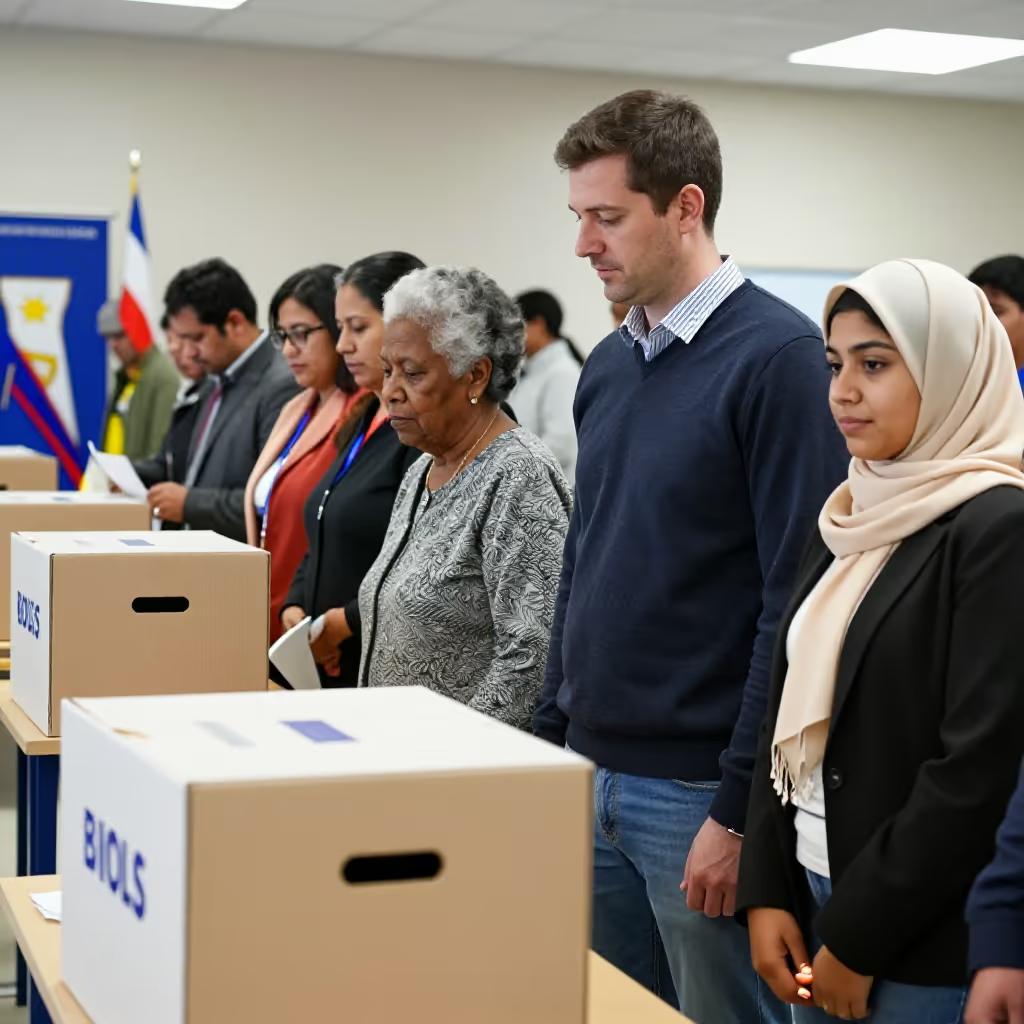
All the citizens of a state; the state as a political unit.
Die ganze Nation fieberte beim Finale der Fußball-Weltmeisterschaft mit.
The whole nation was caught up in the final of the football World Cup.
Many important words are derived from 'Nation' (nation), and you can recognize them easily. These include the adjective 'national' (national), the opposite 'international' (international), and the noun 'die Nationalität' (nationality).
Die Fußball-Nationalmannschaft spielt heute Abend.
The national football team is playing tonight.
The word 'Nation' (nation) is used mainly in political, historical, and journalistic texts. It has a rather formal and official character.
Der Präsident hielt eine Rede an die Nation.
The president gave an address to the nation.
The meaning 'Volksgruppe' (ethnic group/people) (m01) often refers to a cultural community that does not necessarily have its own state. The meaning 'Staatsvolk' (citizenry of a state) (m02) is usually tied to a specific country and its citizens.
Die Sorben sind als nationale Minderheit in Deutschland anerkannt.
The Sorbs are recognized as a national minority in Germany.
The phrase 'die ganze Nation' (the whole nation) is often used to express that all the citizens of a country are emotionally involved in an event, for example at major sporting events.
Als die Mannschaft das Tor schoss, jubelte die ganze Nation.
When the team scored the goal, the whole nation cheered.
country / countryside / land
Land usually refers to the state or its territory, whereas Nation primarily refers to the community of its people. Nation can also refer to the state as a political unit. When the focus is on area and borders, Land is more suitable; when it is on shared culture or population, Nation is more precise.

Die Nation ist durch eine gemeinsame Geschichte und Kultur verbunden.
The nation is united by a shared history and culture.
Das Land erstreckt sich von der Küste bis zu den Bergen.
The country stretches from the coast to the mountains.